HomeServicesConcrete Slabs & Garage PadsCaledon
Concrete Slabs & Garage Pads in Caledon
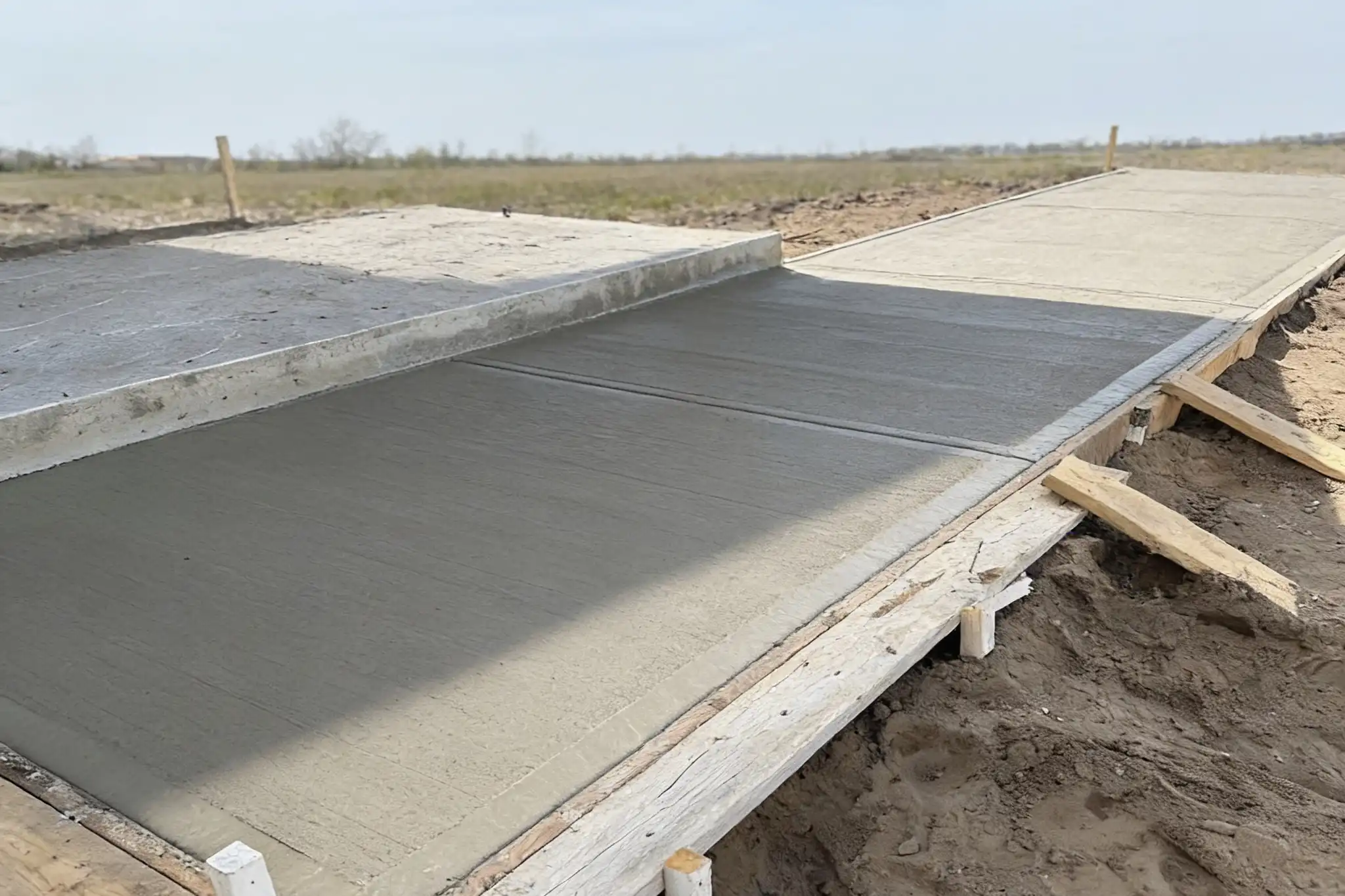
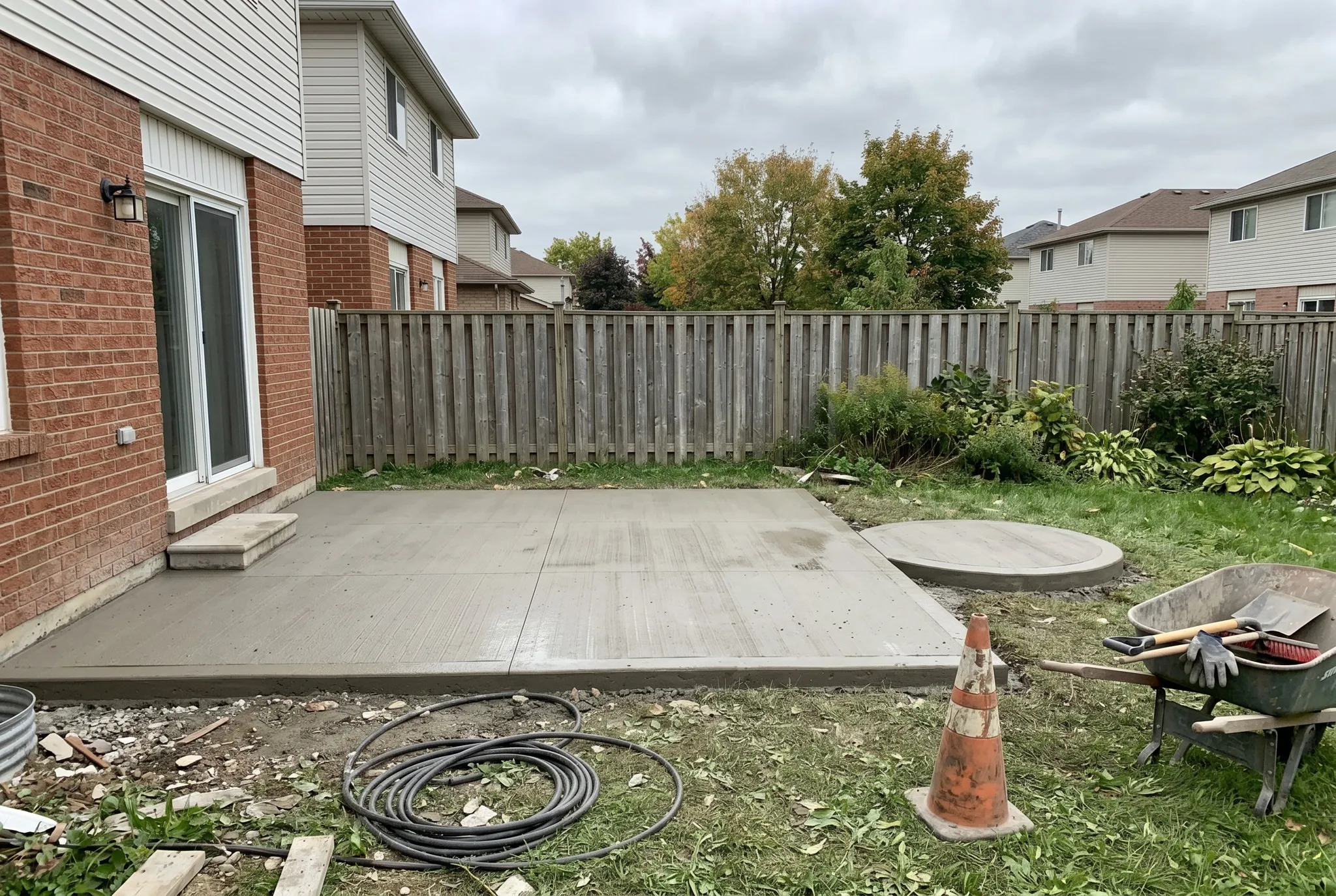
We pour garage pads and farm or shop slabs across Caledon, from Bolton to rural and estate lots. The base is set to the ground the lot sits on: fast-draining sand and gravel on the Oak Ridges Moraine, or clay that holds water on low ground. Union-certified crews, a free written quote, and a lifetime warranty on labour. Caledon books into planned trips with firm dates.
Get a straight quote
Free · no pressure · 1 business day
Reviewed June 2026
Every job is priced individually, not off a price list. Tell us about yours and you get an accurate, no-pressure quote in writing.
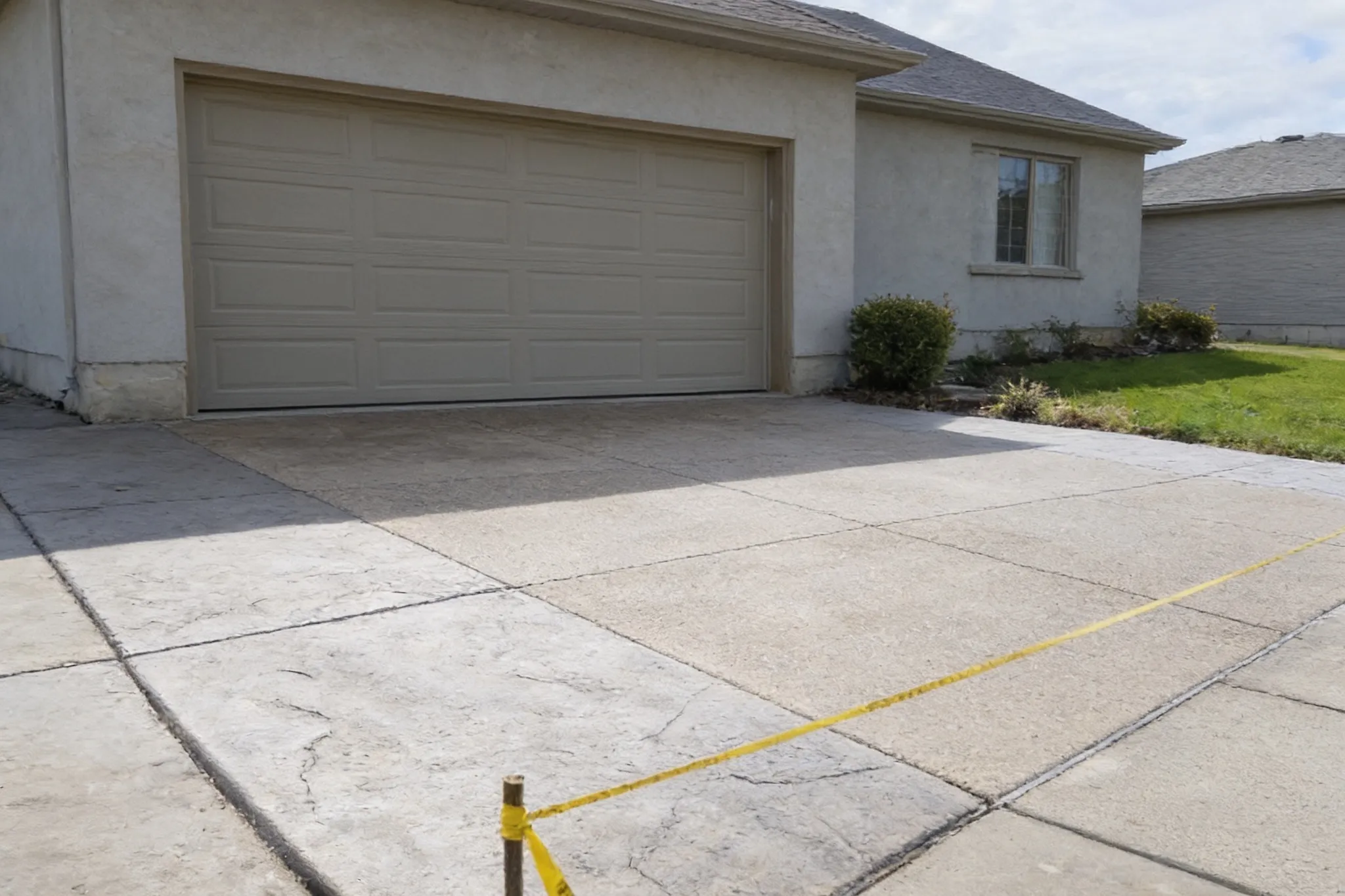
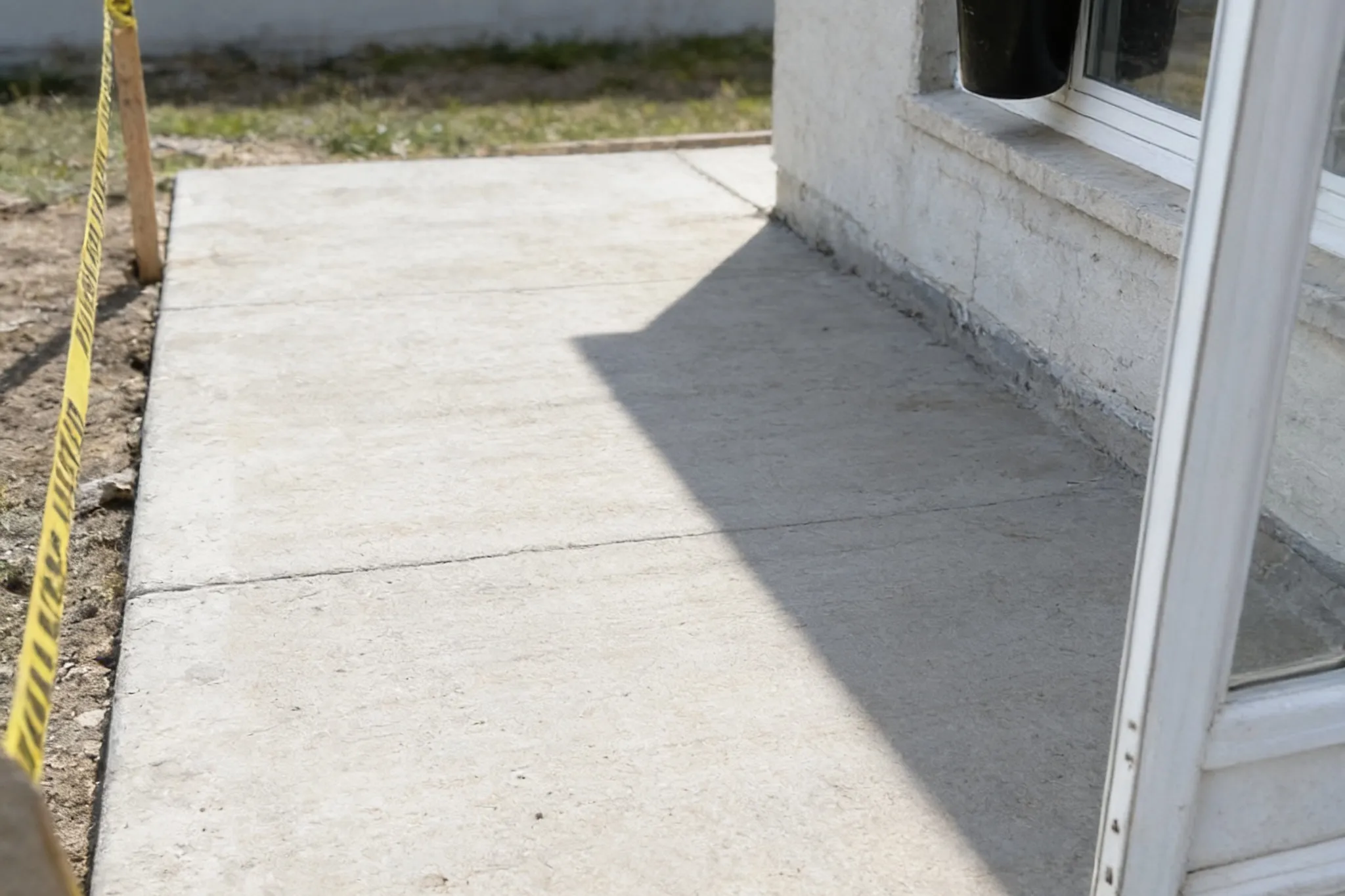
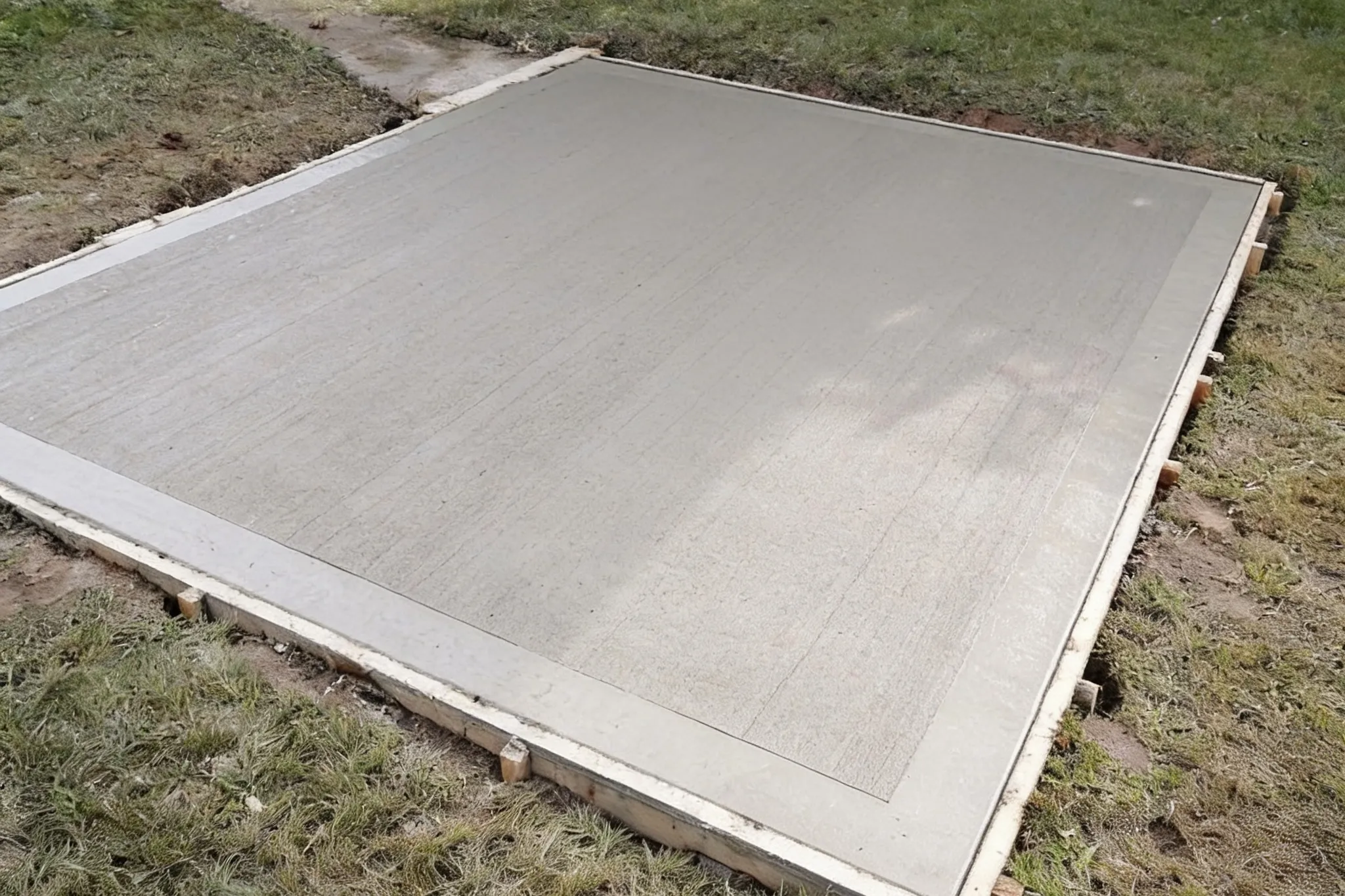
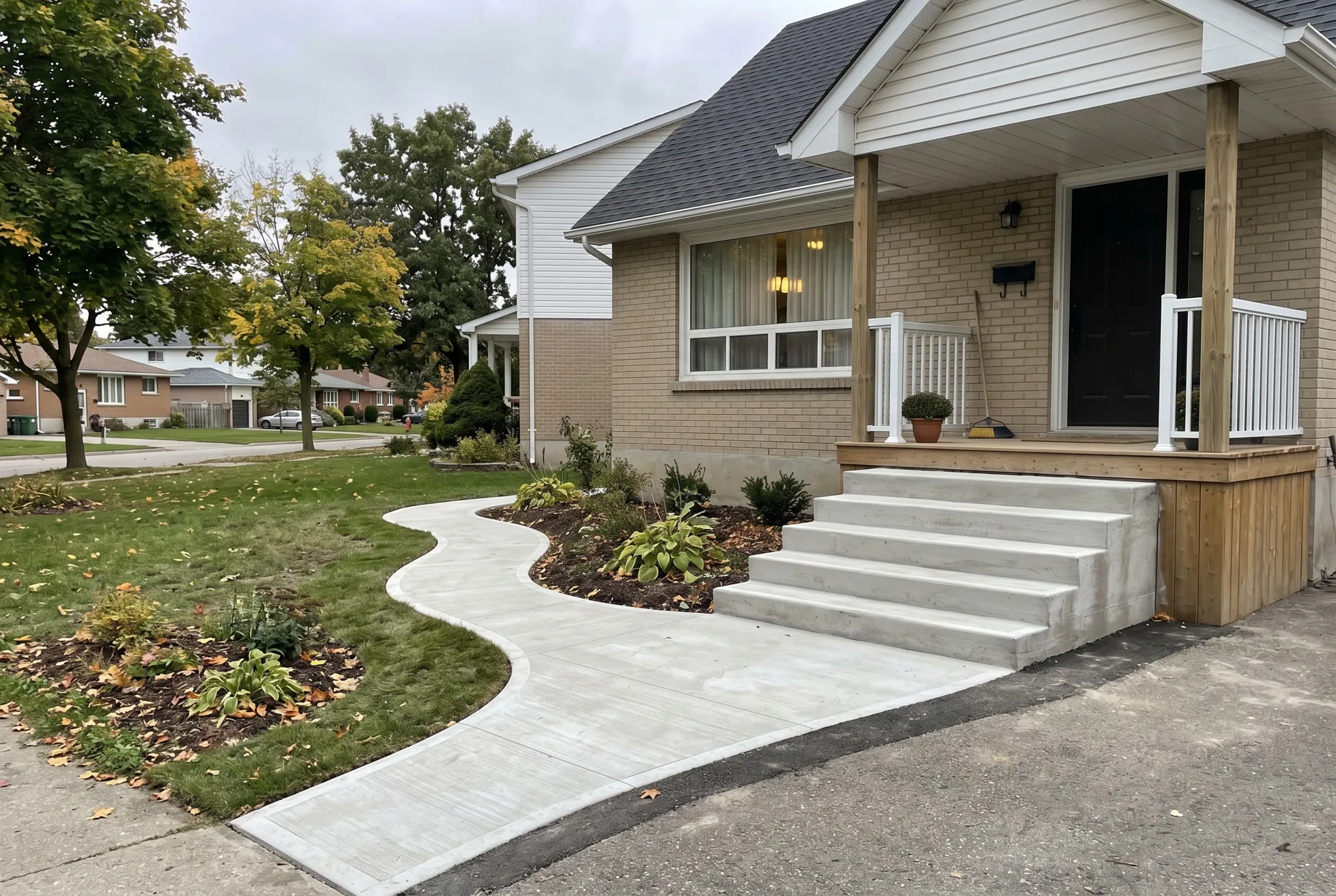
A pad in Caledon is usually one of two jobs. Around Bolton and the village cores it is a garage pad or a walkway-side pad. Out on the farms and estate lots it is a bigger one: a pad for a barn, a shop or a detached garage that has to carry a tractor, a truck or shelving loaded with stock.
Either way, the pad is only as good as the ground under it. The full build, the 32 MPa air-entrained mix, the compacted Granular A base, mesh or rebar by load, is on our concrete slabs and garage pads page. This page covers what Caledon's ground and properties change. The site visit and the written quote are free, and the number on the quote is the number on your invoice unless you change the job.
Moraine sand on one lot, wet clay on the next
Caledon sits where the Niagara Escarpment and the Oak Ridges Moraine meet. The moraine is a deep mix of sand and gravel that drains fast. Lower down, near the creeks and river flats, the ground is often heavy clay that holds water.
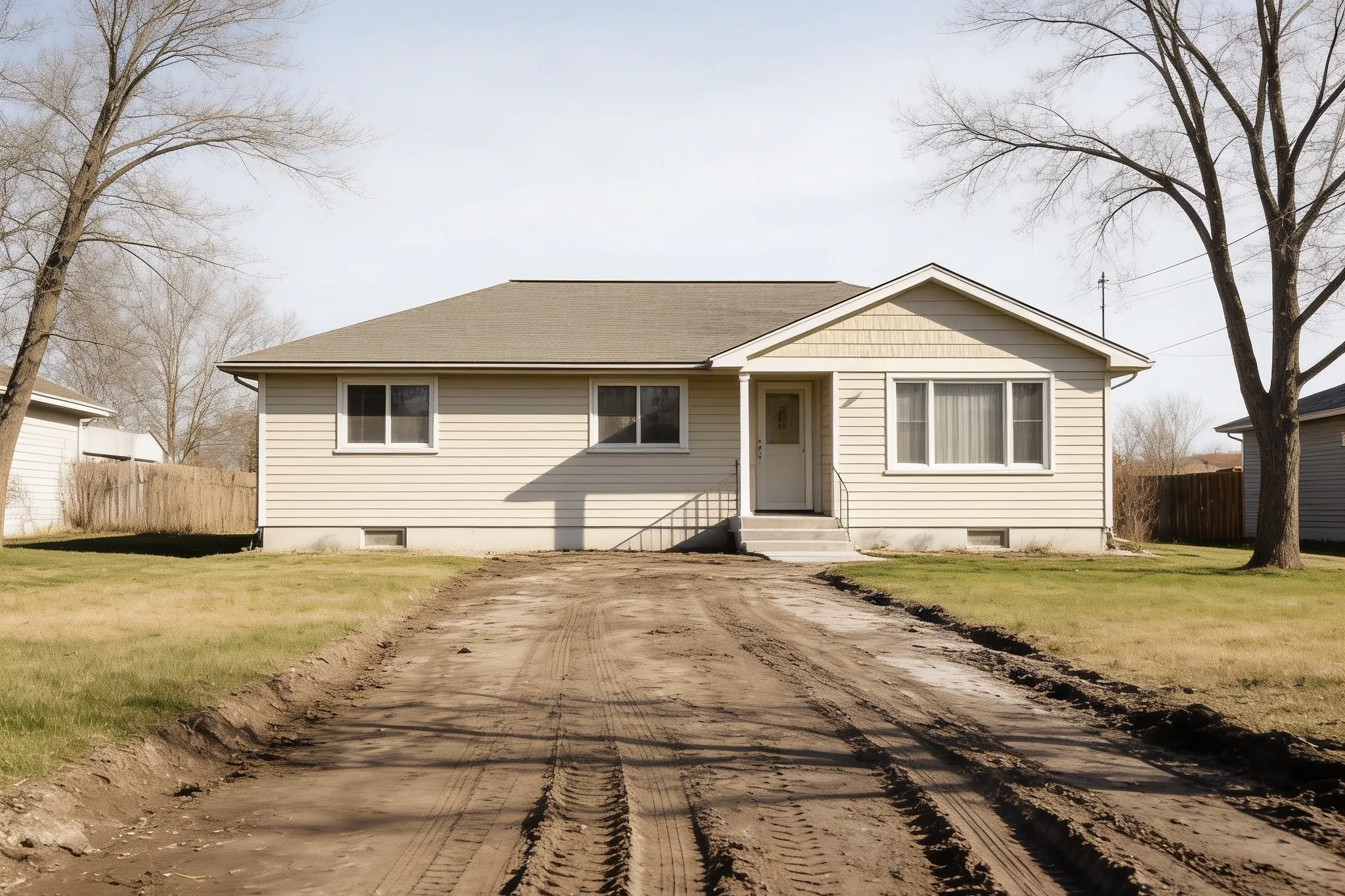
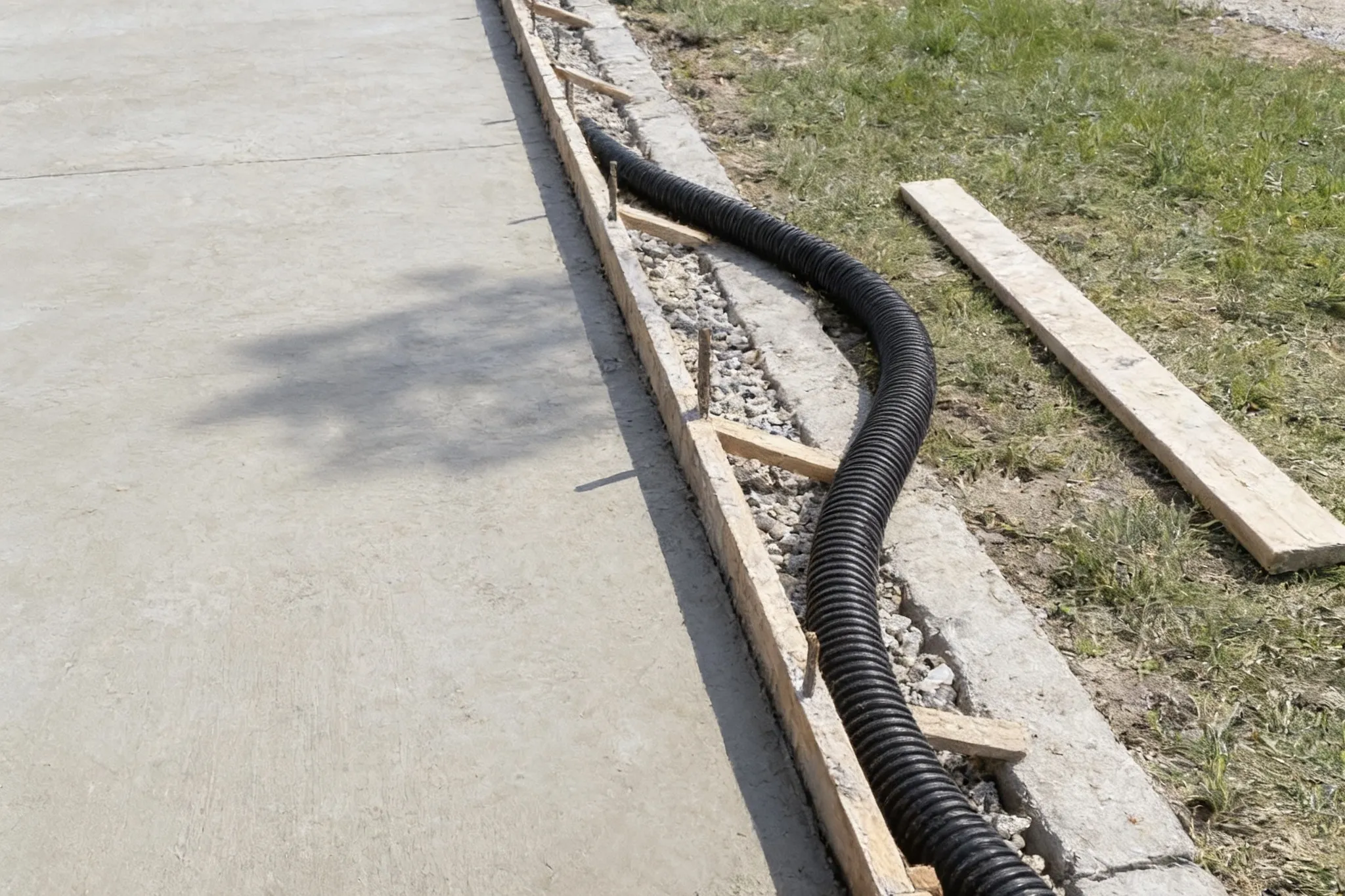
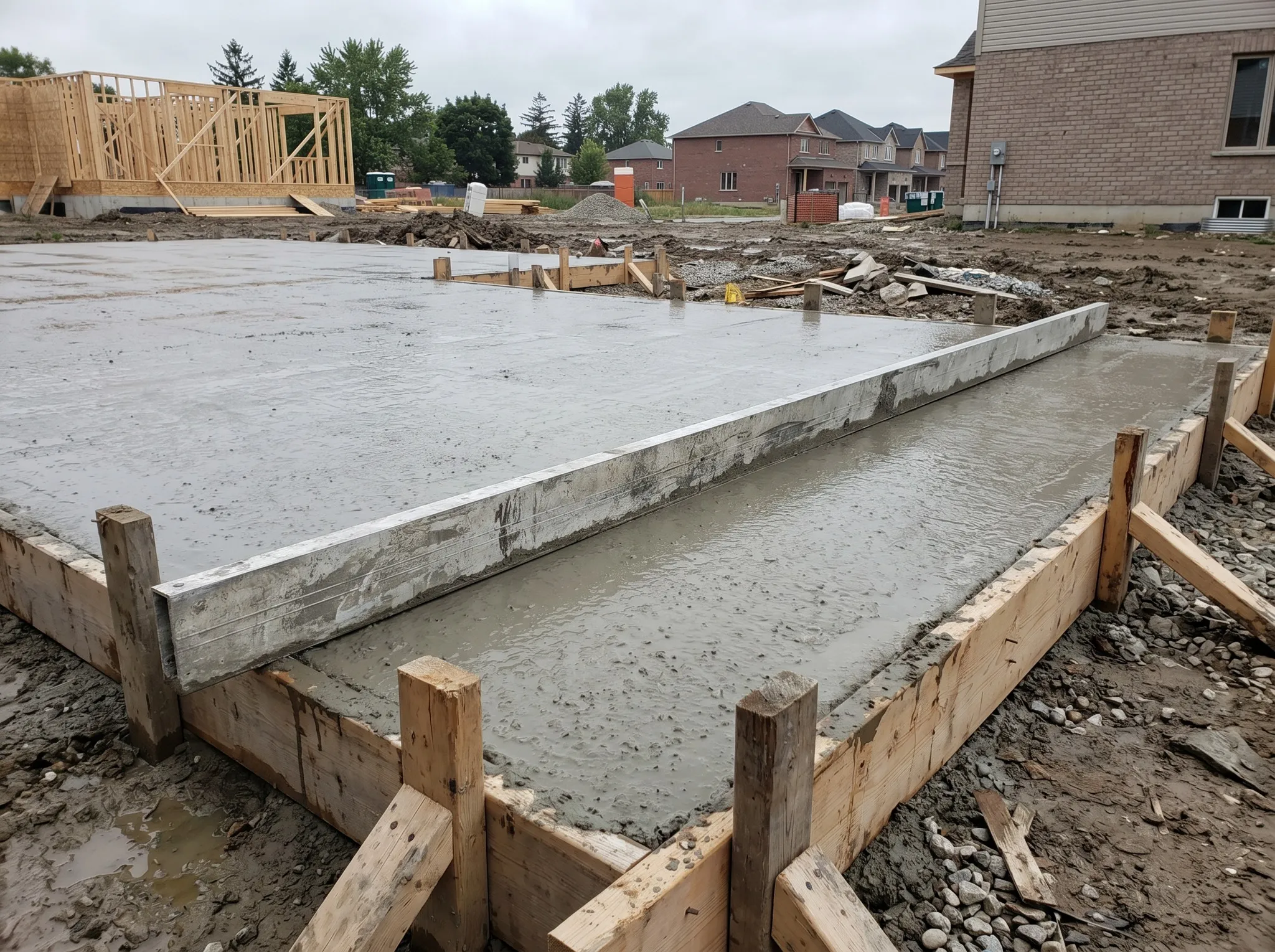
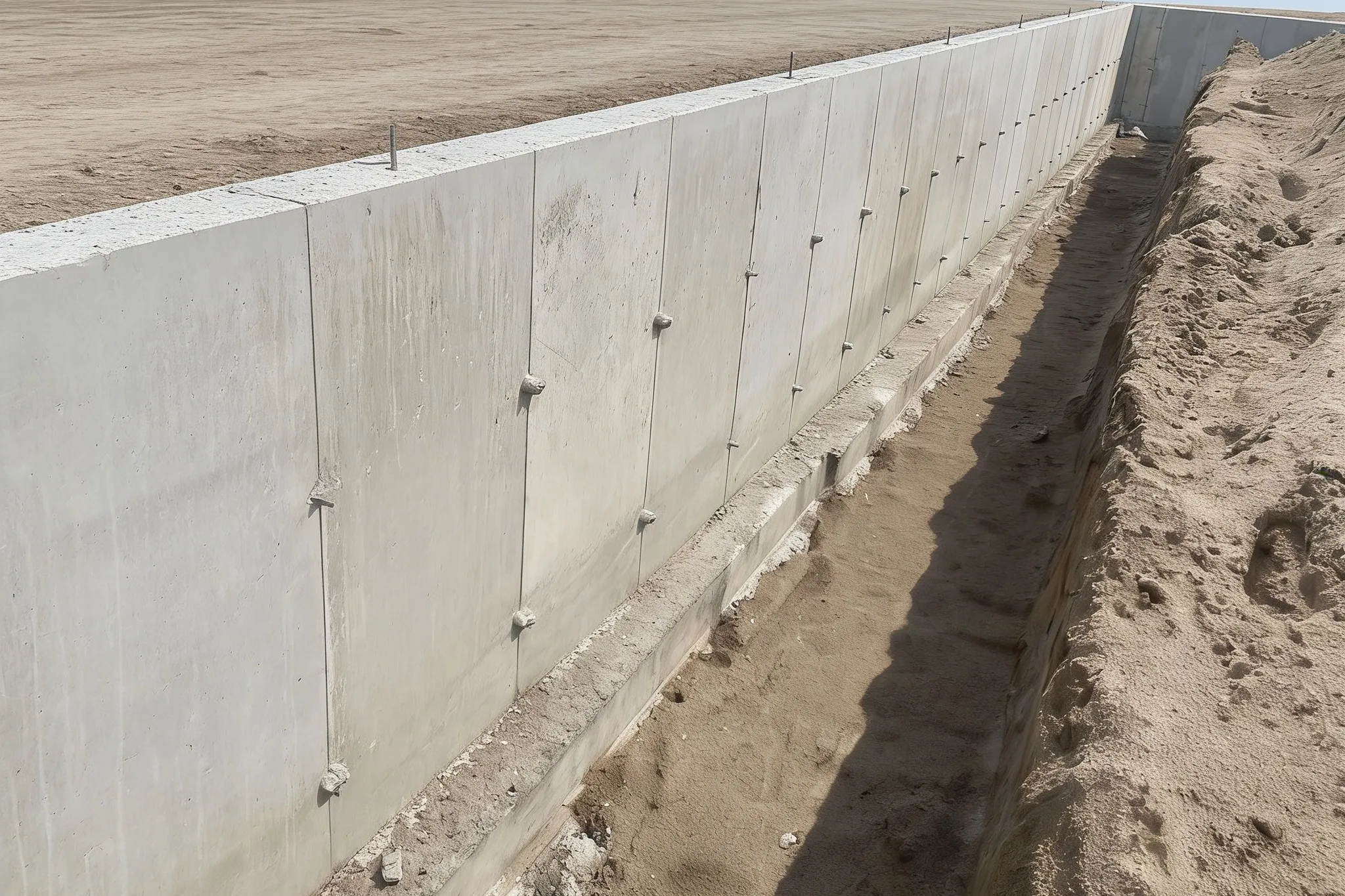
A detached garage or shop pad needs a base that suits the ground under it. On moraine sand the worry is loose sand washing out or shifting under the slab, so we contain and compact the base and grade water away from the concrete. On clay and wet low ground, water under a thin base freezes and lifts the slab, so the base goes deeper. We look at the ground the lot is actually on before we set the depth.
Barn, shop and farm pads built for the load
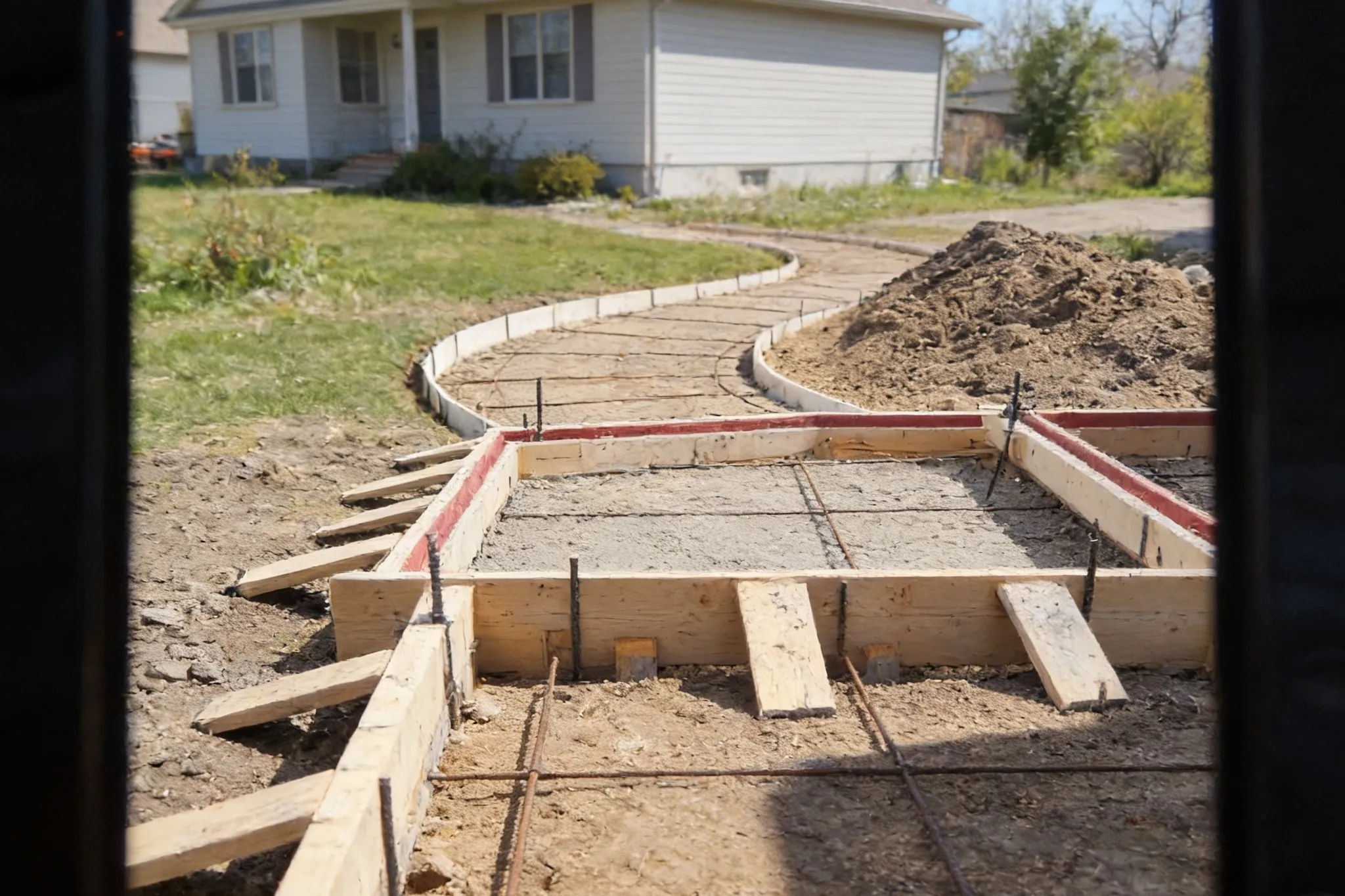
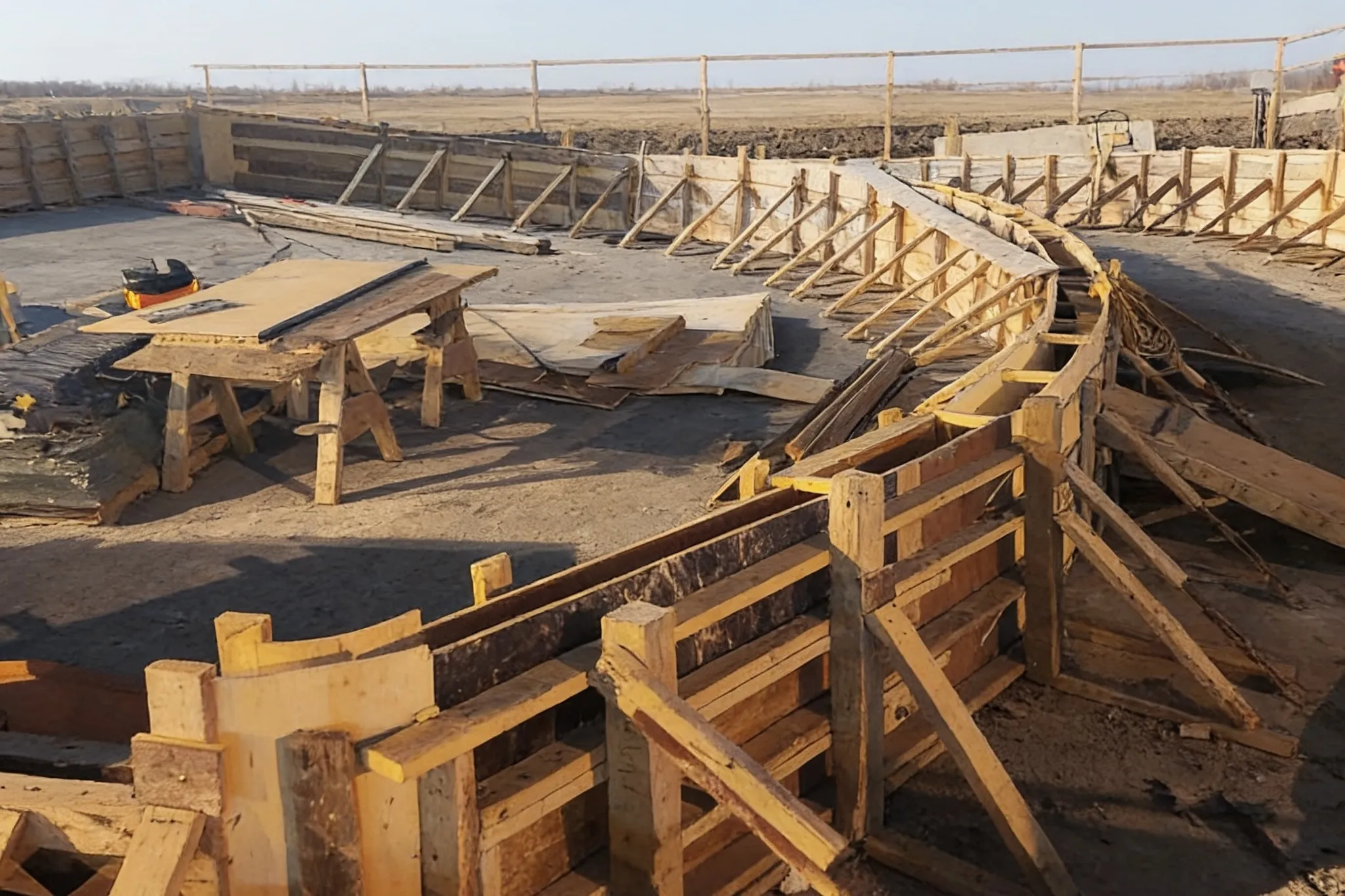
Farm and shop pads are common work out here. A slab that takes a tractor, a truck or loaded shelving is thicker and more heavily reinforced than a garden pad. We confirm the use, the loads and how vehicles get on and off, then set the thickness, the reinforcing and the base to match.
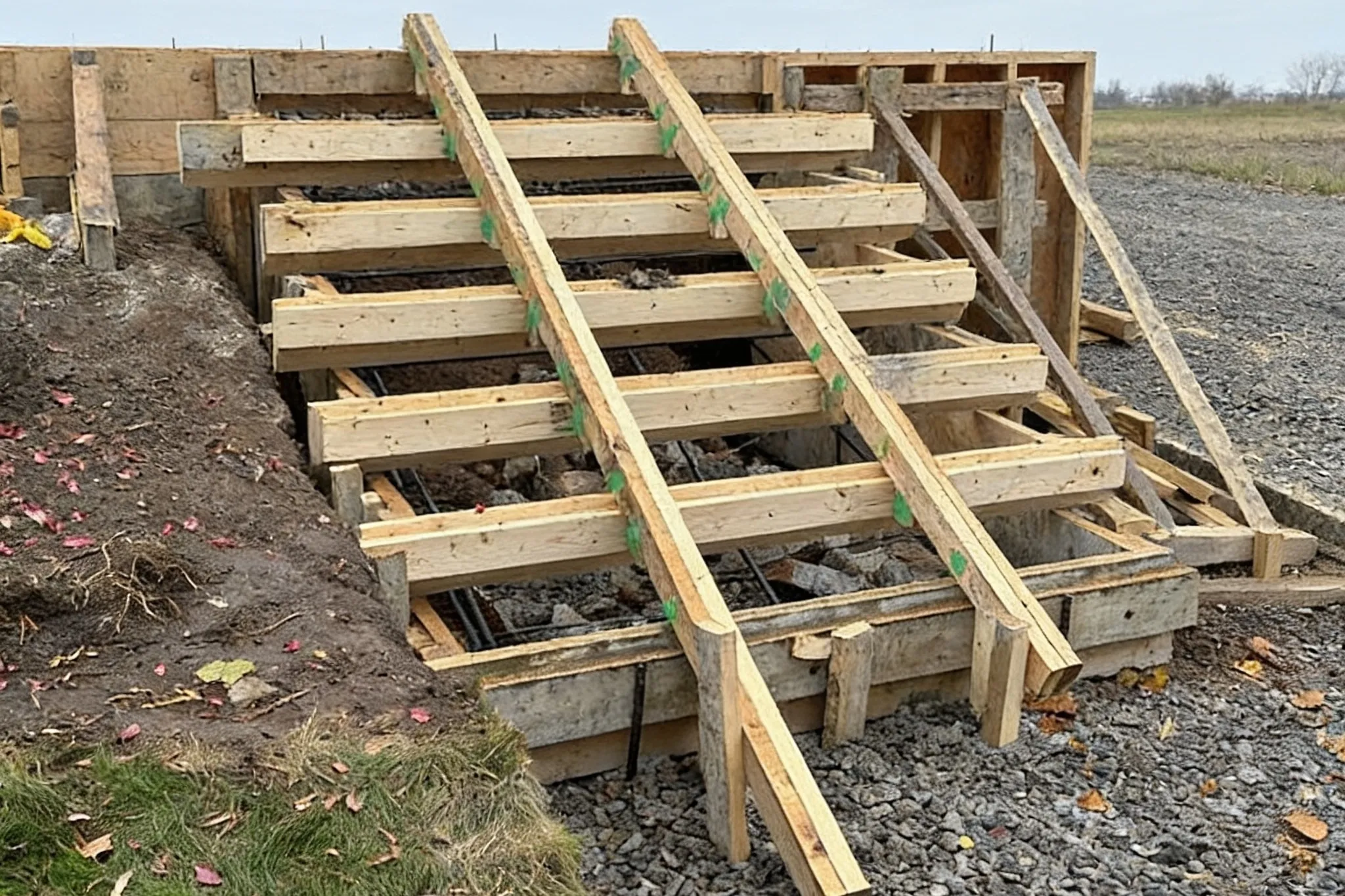
A garage or shop floor carries vehicles, so it gets a 10M rebar grid at a 400 mm spacing and a slab 125 to 150 mm thick. A shed pad takes welded wire mesh. A light resin shed does fine on a compacted gravel pad, and we will say so at the visit rather than sell concrete you do not need.
Permits for a detached garage, shop or barn
Most detached garages in Ontario need a building permit, many small sheds do not, and where the cutoff sits depends on the municipality. In Caledon, the town sets the rules and the fee, so check with the town early, before the pour date is fixed. The slab is usually the easy part of the application. The structure on top is what the municipality cares about.
A floating slab for a detached garage
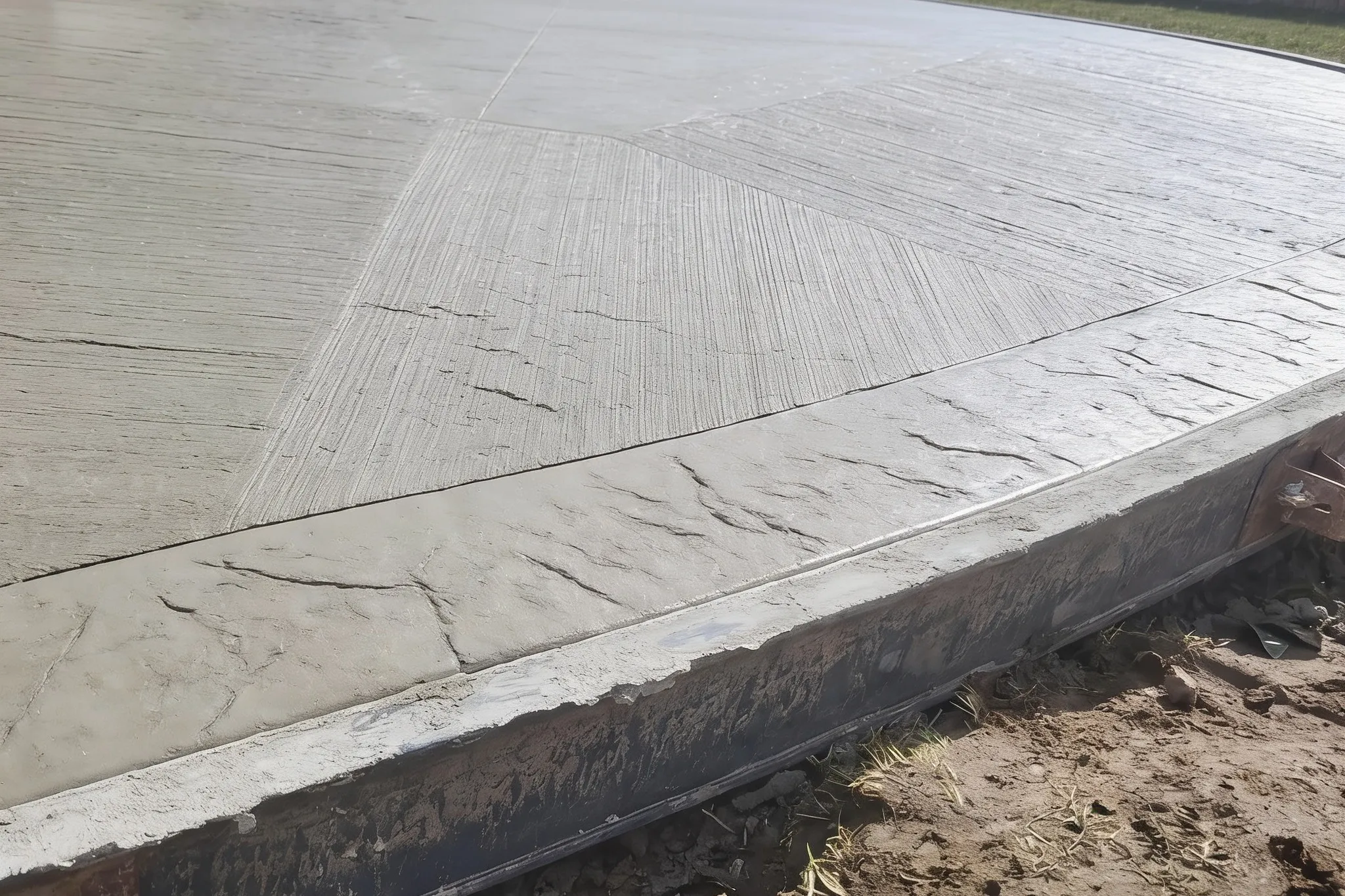
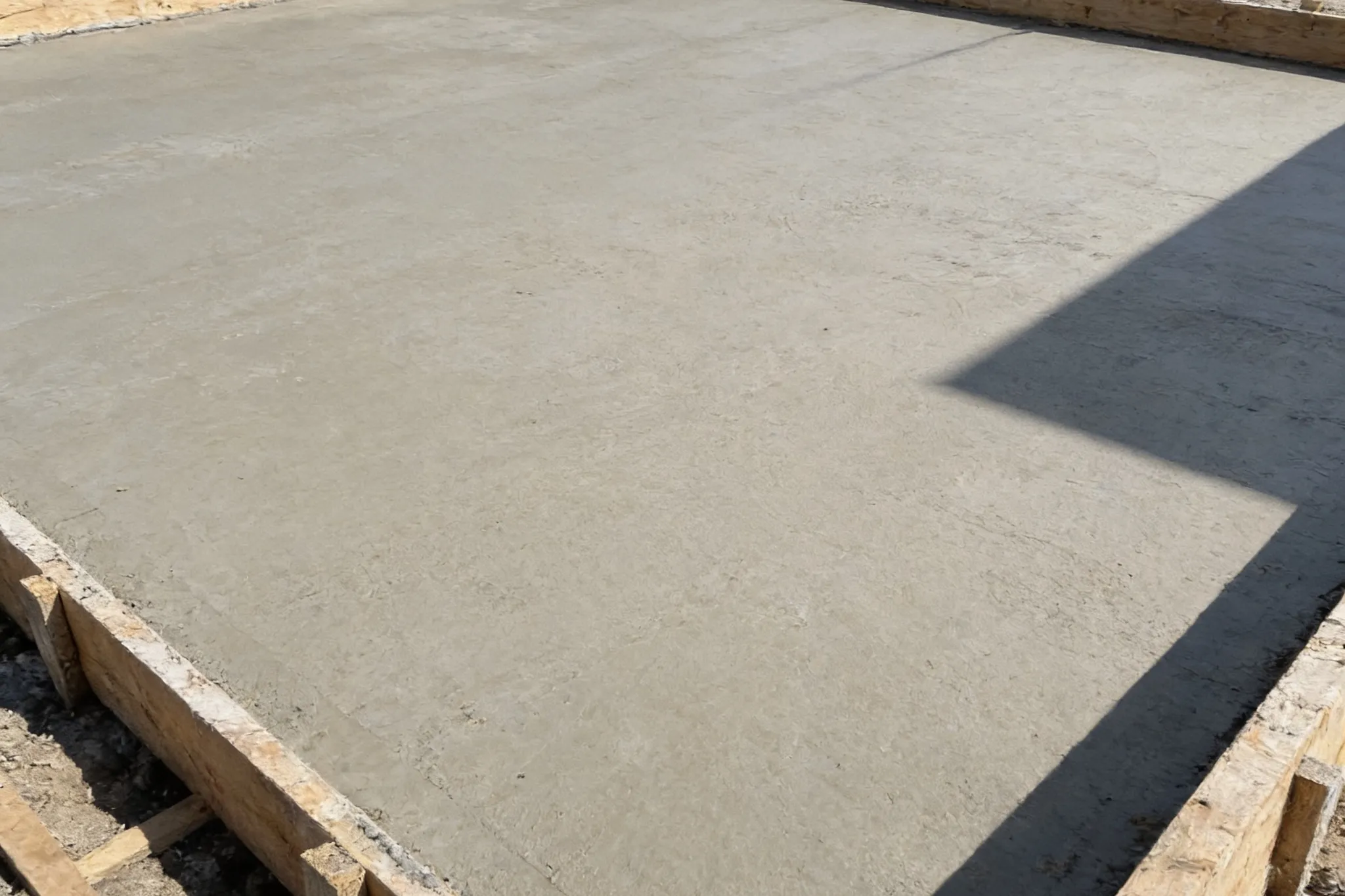
A detached garage pad is usually a floating slab. There is no deep foundation, and the whole pad rides minor frost movement as one piece. That works only if the parts you never see are right. The edges are thickened to about 300 mm so they can carry the walls. The base is compacted granular, deep enough to drain. The slab is 125 to 150 mm thick, with 10M rebar on a 400 mm grid instead of light mesh.
On a Caledon lot, we set that base to the ground we find. Moraine sand needs a contained, well compacted base. Clay and low wet ground need a deeper one. Anchor bolts go into the wet concrete on pour day, because they hold a garage's bottom plate far better than anything drilled in later. The floor also slopes gently toward the door, so snowmelt off the car finds its way out.
Old pads and pads beside the driveway
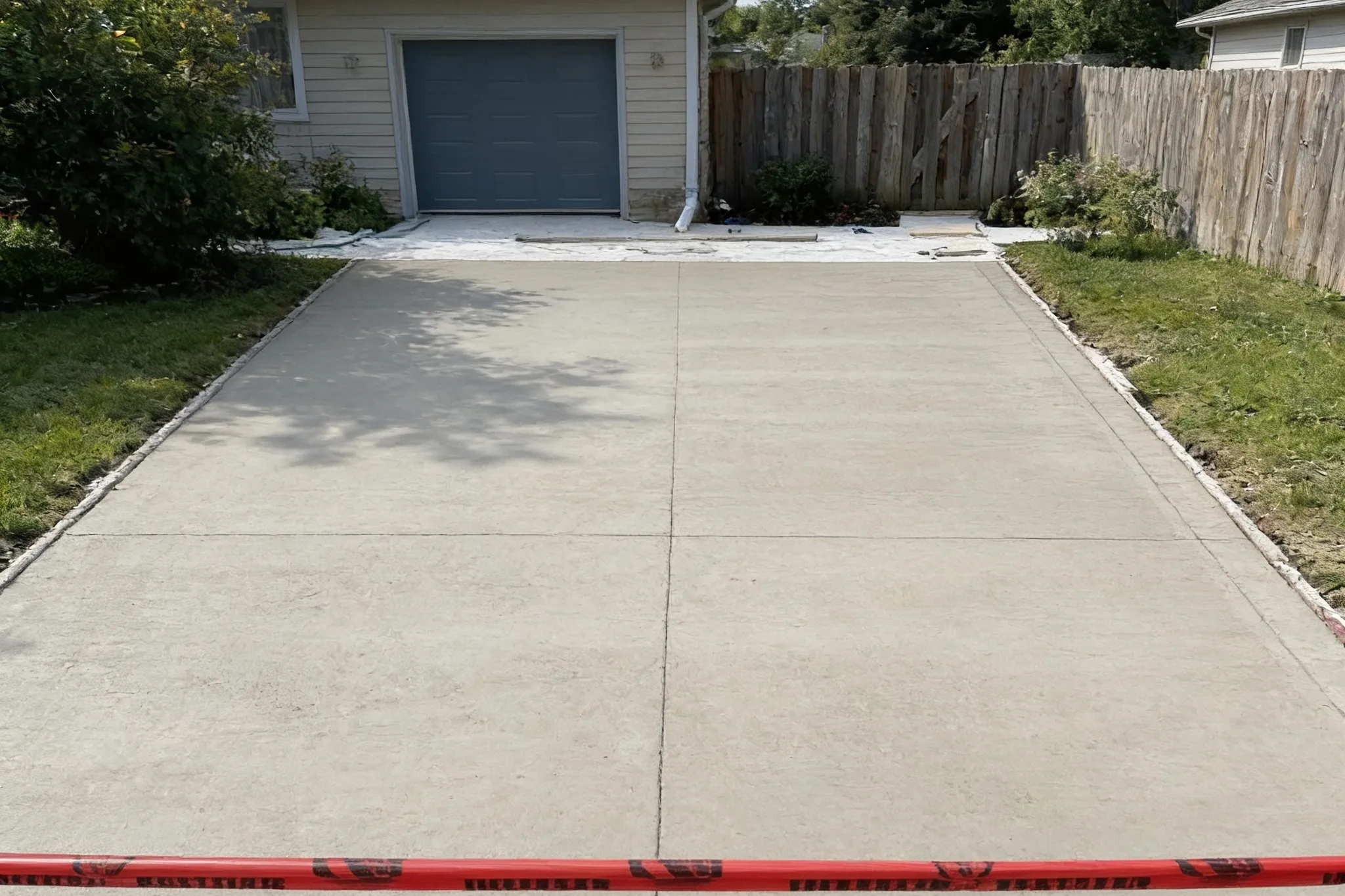
If an old cracked pad has to come out first, see our concrete removal and demolition page. If a driveway or walkway is part of the plan, see our concrete driveways in Caledon.
Water, salt and the first winter
A country winter is hard on a pad. Water gets into the surface, freezes and thaws, and salt from parked cars makes it worse. That is why a garage floor takes 32 MPa air-entrained concrete. On a farm or estate lot, also check where roof water goes. A downspout that empties onto the slab soaks the same spot every time and freezes it overnight, so aim it off the pad.
Plan for the cure before you plan the build. Vehicles can go on the slab after 48 hours at the earliest, framing can start after about 7 days, and the concrete reaches full design strength at 28 days. If the pour is late in the season, our fall checklist for garage pads and slabs covers what to do before freeze-up, and the guide to 4 inch and 6 inch garage slabs explains why a garage floor is thicker than a shed pad.
When a gravel pad is enough
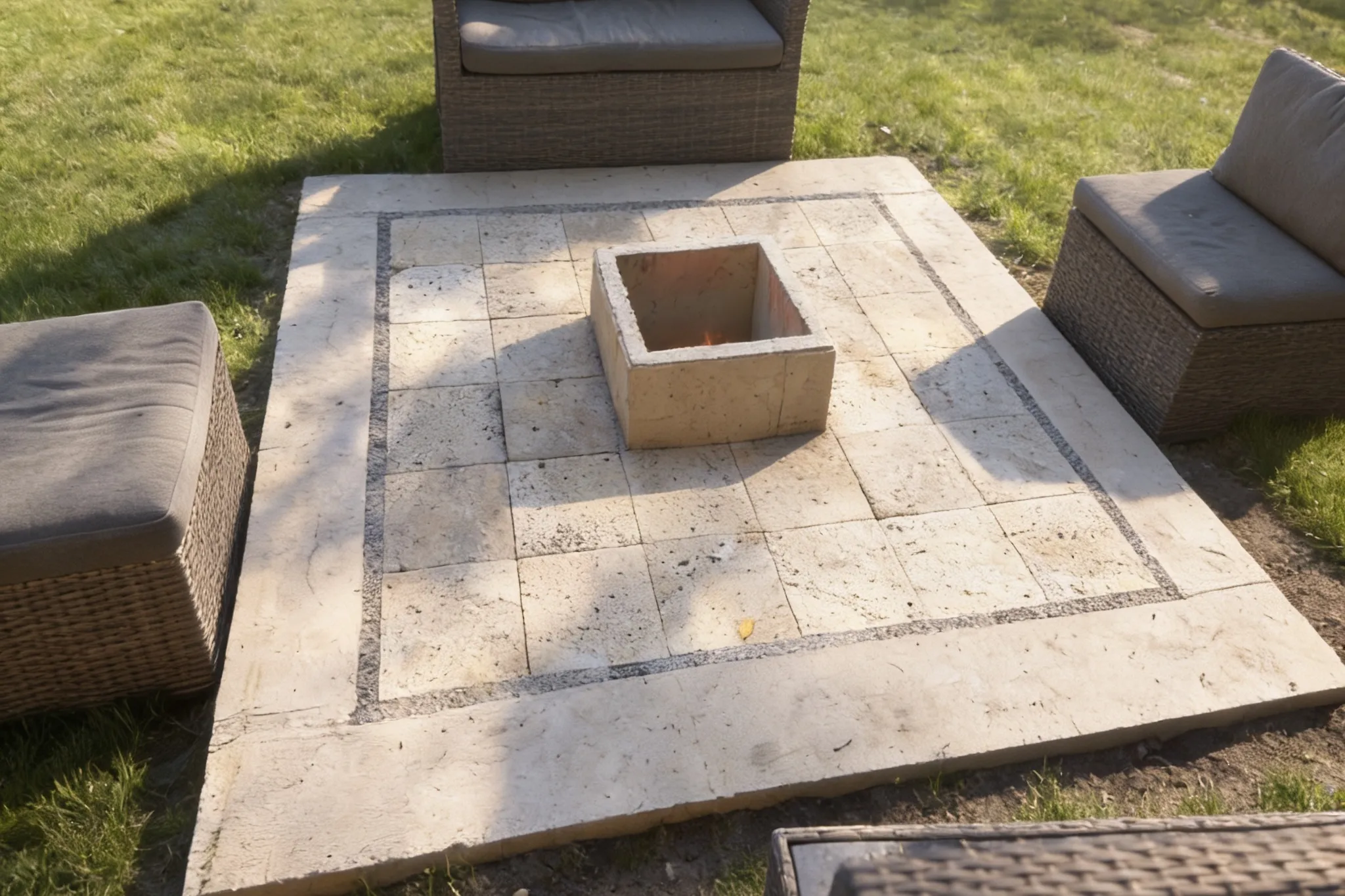
Not every Caledon property needs concrete. A light resin shed sits happily on a compacted gravel pad, and we say so at the site visit rather than pour concrete you do not need. Concrete is the right answer when the building is a workshop, stores anything heavy, parks a vehicle, or needs anchoring against wind. A shed or hot tub pad is normally 100 mm thick with welded wire mesh, while a garage or shop floor gets the heavier build.
Planned trips, firm dates
Caledon is a long haul north from our home routes, so jobs here book into planned trips into Peel and the GTA with firm dates, not a same-week or same-day truck. Ask for the free site visit and we will give you a date for it, then a written quote that holds.
Straight answers
Does Caledon's sandy moraine ground change how you build a garage pad?
It does. Sand and gravel drain fast, so heave is less of a worry, but loose sand can wash out or shift under a slab. We contain and compact the base and grade runoff away from the concrete.
We need a pad for a barn, a shop or a detached garage on our Caledon property. Do you pour those?
Yes, farm and shop pads are common work for us out here. We confirm the use, the loads and how vehicles get on and off, then set the thickness, the reinforcing and the base to match. The labour carries the same written warranty as any other job.
Do I need concrete for a shed in Caledon, or will gravel do?
A light resin shed does fine on a compacted gravel pad, and we will tell you so. Concrete is the right answer once the shed is a workshop, stores anything heavy, or needs anchoring against wind.
How much does a concrete garage pad cost in Caledon?
Size, thickness, the reinforcement the load needs, access to the site and the base the ground needs all move the number. A garage or shop floor costs more than a shed pad because it is thicker and carries more steel, and wet clay can add base work. We give you a written quote after a free site visit, and the number on the quote is the number on your invoice unless you change the job.
Do I need a building permit for a garage pad in Caledon?
Most detached garages in Ontario need a building permit, many small sheds do not, and the cutoff varies by municipality. The town sets the fee. We flag at the site visit which side your project lands on, and the slab is usually the easy part of the application.
How thick should a shop or garage floor be?
A garage or shop floor that carries vehicles is poured 125 to 150 mm thick with a 10M rebar grid at 400 mm, over 150 to 200 mm of compacted Granular A. A light shed or hot tub pad is about 100 mm thick with welded wire mesh.
How long before I can drive on a new pad, or start framing?
Vehicles can go on a new slab after 48 hours at the earliest, framing can start after about 7 days, and the concrete reaches full design strength at 28 days.
Is a floating slab right for a detached garage in Caledon?
It usually is. A floating slab has no deep foundation and rides minor frost movement as one piece, with edges thickened to about 300 mm to carry the walls. The base under it is set to the ground on your lot, deeper on clay and low wet ground.
Keep reading
- Concrete Slabs & Garage Pads across Southern OntarioThe full build: mix, thickness, reinforcement, base, anchors and cure times.
- Concrete Contractors in CaledonEverything else we pour and repair in Caledon, from Bolton to the estate lots.
- Concrete Driveways in CaledonThe same moraine sand and wet clay under a driveway, plus long rural approaches.
- Concrete Slab and Garage Pad Cost FactorsHow use, load, thickness, reinforcement, base and access shape a pad quote.
- Garage Pad and Slab Fall Checklist Before Freeze-UpWhat to check on an existing pad before the ground freezes.
- Is a 4 Inch Slab Thick Enough for a Garage?Thickness, steel, base and edges for a garage floor.
Tell us about the job.
Send the details and we'll get back to you within one business day with next steps. If water is coming in right now, check the box and we flag it urgent.
Get a straight quote
Free · no pressure · 1 business day