HomeServicesStamped & Decorative Concrete
Stamped & Decorative Concrete in Southern Ontario
My Concrete Pros installs stamped and decorative concrete across Southern Ontario: patios, pool decks, walkways, and driveway borders in slate, flagstone, cobblestone, and wood-plank patterns. Stamped work is a finish upgrade over a standard broom slab, priced per job and quoted free and in writing. The colour and stamping are handled by union-certified crews, and the labour carries a lifetime warranty.
Get a straight quote
Free · no pressure · 1 business day
Reviewed June 2026
Every job is priced individually, not off a price list. Tell us about yours and you get an accurate, no-pressure quote in writing.
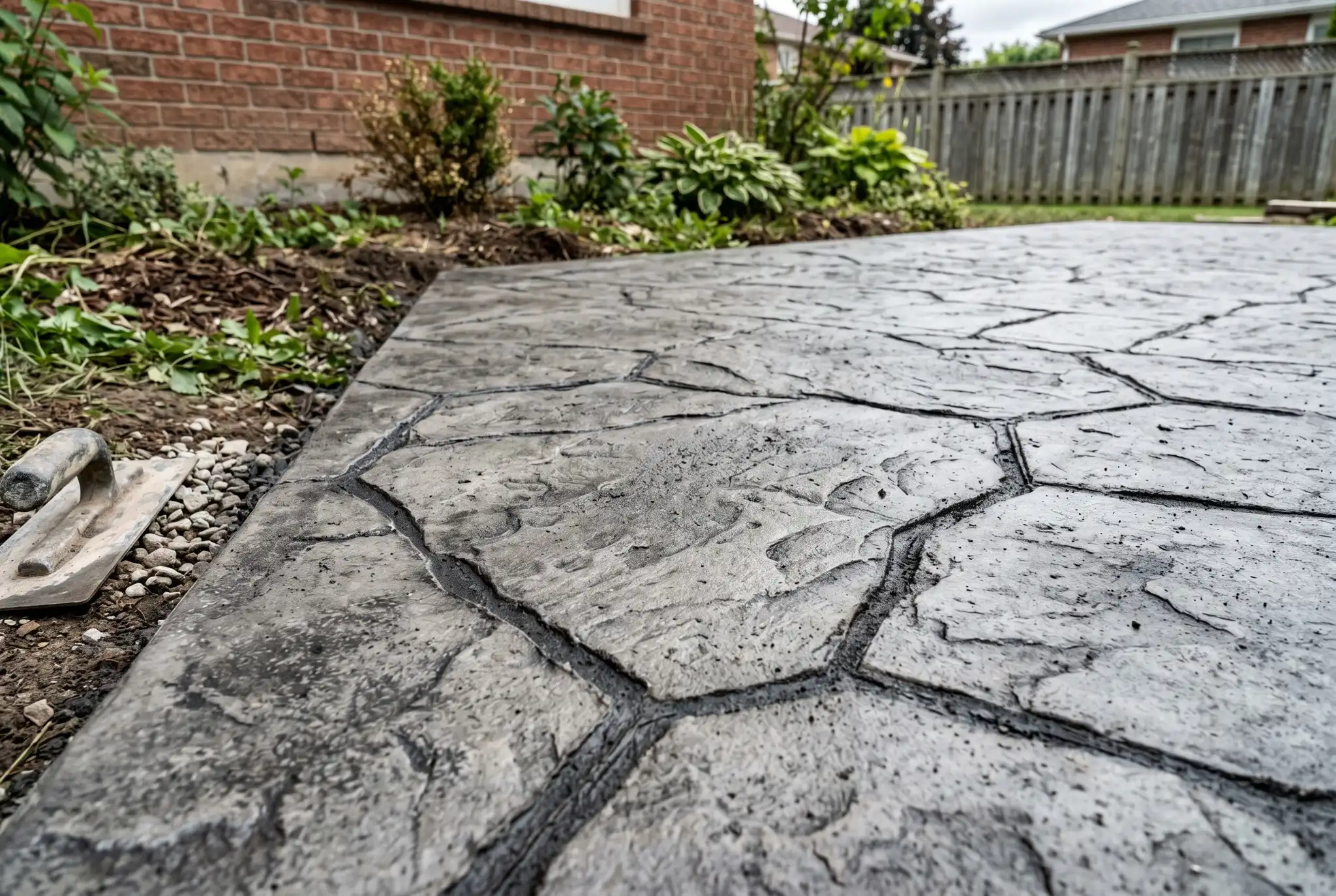
Stamped concrete is a regular pour with two extra trades layered on top: colour worked into the surface, then patterns pressed in while the concrete is still soft. Done well, it reads as slate, flagstone, or cobblestone from the sidewalk. It's the part of our work people photograph, and the part where finishing skill shows fastest.
It's also where cheap work hides in plain sight. Stamping is a race against the set. Once the truck pours, the crew has a window of a couple of hours to colour, stamp, and detail the whole surface, and a crew short on hands or experience gets caught mid-slab. You can see it for the next 25 years: crisp pattern on one side, mush on the other. The other classic shortcut is colour applied as one thin dusting that wears through within a few winters.
We staff stamped pours for the stamping, with enough certified finishers to beat the set, and we have the maintenance conversation before you sign anything. Decorative concrete keeps its colour with a resealing schedule, and we put that schedule in writing. If you want the look without the upkeep, we'll point you at exposed aggregate instead and explain the trade honestly.
- A free site visit and a written quote that holds, with the pattern and colours named in it.
- Pattern and colour selection from manufacturer charts, matched against your brick, stone, or siding.
- The same base discipline as any slab we pour: excavation, compacted granular base, and 32 MPa air-entrained concrete.
- A stamping crew sized to the pour, because pattern work has to finish before the concrete sets.
- Control joints cut along the pattern's grout lines, where they disappear instead of slicing across it.
- The first coat of sealer plus a written resealing schedule, and a lifetime warranty on labour in writing.
The numbers we build to
| Mix | 32 MPa air-entrained | exterior exposure class, same as plain flatwork |
|---|---|---|
| Thickness | 100 mm (4 in.) patios and walkways | 100-125 mm on driveways and parking slabs |
| Colour system | Colour hardener plus antiquing release | integral colour available for solid tones |
| Sealer | Acrylic with anti-slip additive | reapply every 2-3 years to hold colour |
| Joints | Saw cuts aligned to pattern lines | shrinkage cracks steered into the grout lines |
What affects the cost of stamped concrete?
Think of stamped as an upgrade on the slab you were already buying. You're paying for the base concrete plus the extra trades layered on top: colour worked into the surface and patterns pressed in before it sets. How much that adds depends on the pattern, how many colours are in play, and how much hand-detailing the layout needs. A single-colour ashlar field is the simpler end; multi-colour work with borders and banding is more.
Because of that, full-coverage stamping is a real step up from a plain pour, which is exactly why we often suggest a stamped border around a broom or exposed aggregate field. You get most of the look for a fraction of the upgrade, and on a driveway especially that can be the difference that keeps the project sensible.
Decorative work attracts loose pricing because homeowners have little to check it against. Our answer isn't a number on a web page, it's a written quote that itemizes the slab, the colour, the stamping, and the sealing separately, so you can see exactly what each part costs and it doesn't grow after you sign. Book a free site visit and you get that quote in writing.
Patterns and colours that suit Ontario houses
The pattern menu is wide but four families do most of the work around here: ashlar slate, the rectangular cut-stone look and the most popular choice on patios; random flagstone, with irregular joints and a relaxed feel; cobblestone, traditional and busy, strongest on borders and aprons; and wood plank, the boardwalk look that holds up where real wood rots. We bring manufacturer charts to the site visit so you're choosing from real options with real photos, then we talk you out of anything that fights the house.
Colour is two layers. A colour hardener gets worked into the fresh surface for the base tone, then an antiquing release adds the darker accent that settles into the pattern's low spots. That two-tone depth is what makes stamped concrete read as stone instead of paint. One tip from our finishers: pick the base colour off your brick or trim, and go a shade quieter than the chip you fall in love with. Colour reads stronger across 400 square feet than it does on a sample card.
Decorative concrete also covers more than full-field stamping. Coloured broom finish, exposed aggregate, a stamped border framing a plain field, banding to break up a long walkway: these mixed approaches usually get the budget version of the look without reading as a compromise.
Stamped concrete or interlock pavers? The honest version
We do concrete, not pavers, so weigh our take accordingly. Here's the honest comparison anyway. Interlock is modular: individual stones can be lifted, re-levelled, and replaced, which is a genuine advantage. The price for it is joints. Hundreds of sand joints grow weeds, feed ants, and let water work underneath, so interlock carries its own maintenance schedule of polymeric sand and edge repair, and it can settle into waves wherever the base was rushed.
Stamped concrete is one piece. There are no joints to weed, and no stones to wander out of level one at a time. The price for that is permanence: concrete moves as a slab, and if a crack ever escapes the control joints, it's harder to disguise in a stamped surface than in a broom one. Resealing every two to three years is the other standing commitment.
Our plain advice: if you want a surface you can take apart and rebuild section by section, hire a good interlock company, and we mean that. If you want the stone look with a slab's flatness and maintenance you can put on a calendar, stamped concrete is the better tool, and it's the one our crews are certified to finish.
The sealing truth: what stamped concrete asks of you
Stamped concrete keeps its colour the way a deck keeps its stain: with maintenance. The acrylic sealer that gives the surface its depth wears under sun, salt, and snow shovels, and once it's gone the colour fades and the surface starts drinking water. Plan on resealing every two to three years. As concrete work goes it's one of the cheapest things you'll do, and a spring afternoon covers most patios.
Two more truths the brochures skip. Sealed stamped concrete is slippery when wet, so we mix an anti-slip additive into every coat, and you should insist on the same from whoever reseals it later. And go easy on de-icing salt in year one. New decorative concrete is still gaining strength through its first winter, and salt is hardest on it then. Sand for grip the first season, sealer in the spring, salt sparingly ever after.
If that schedule sounds like more commitment than you want, say so at the quote. Exposed aggregate gives you texture and stone character with less upkeep, and we would rather pour the right surface than the fancier one.
Recent work
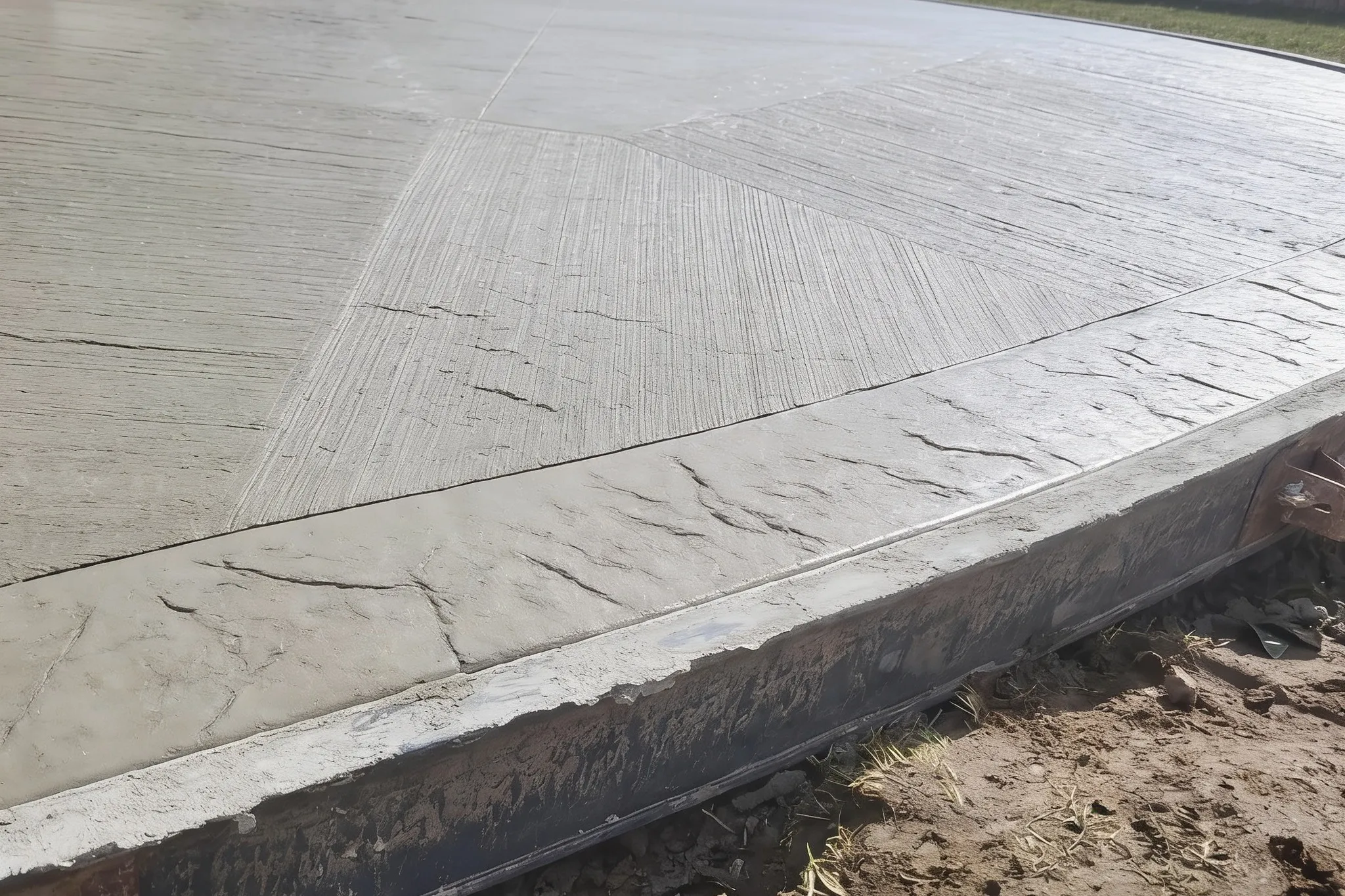
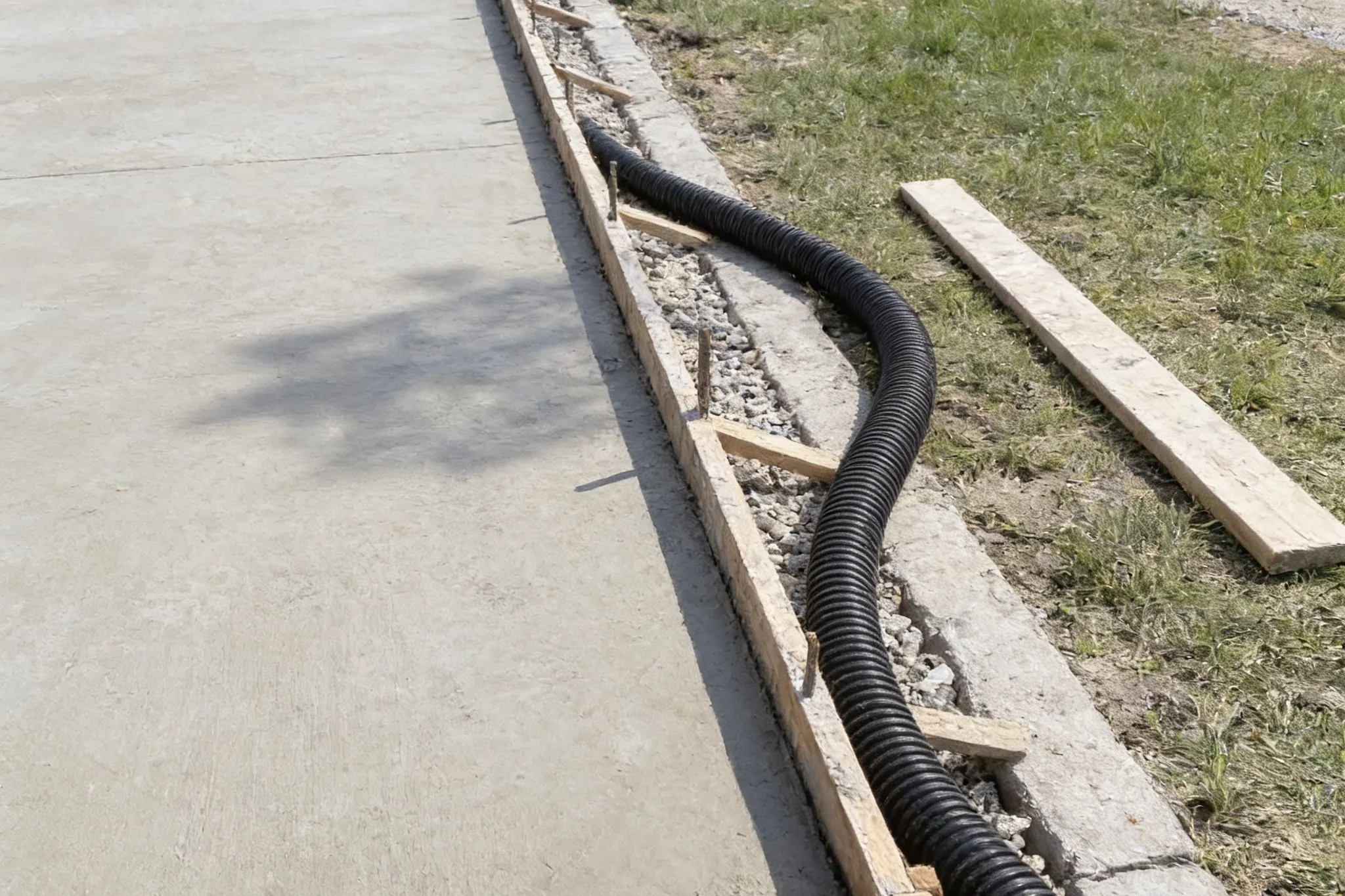
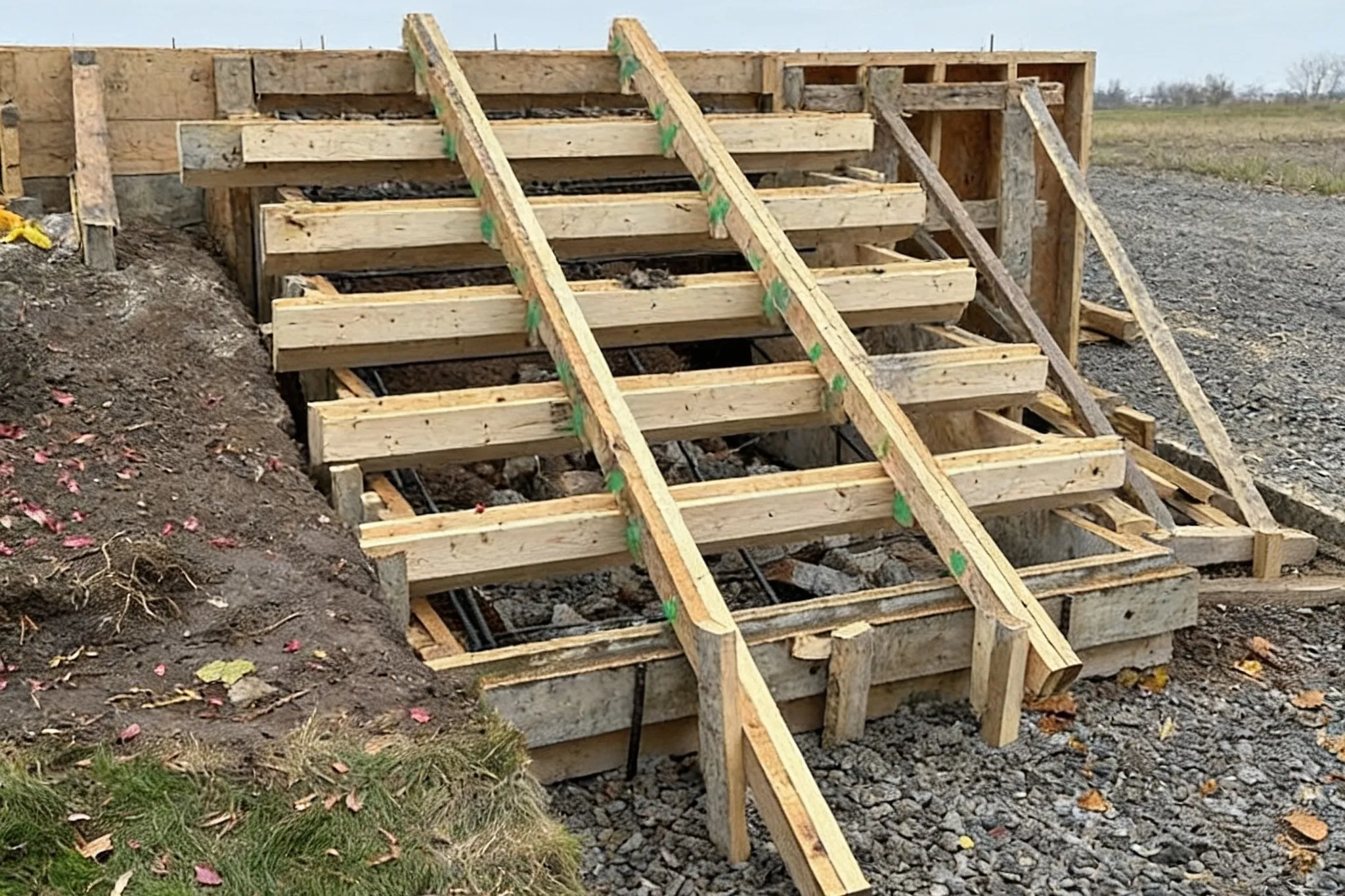
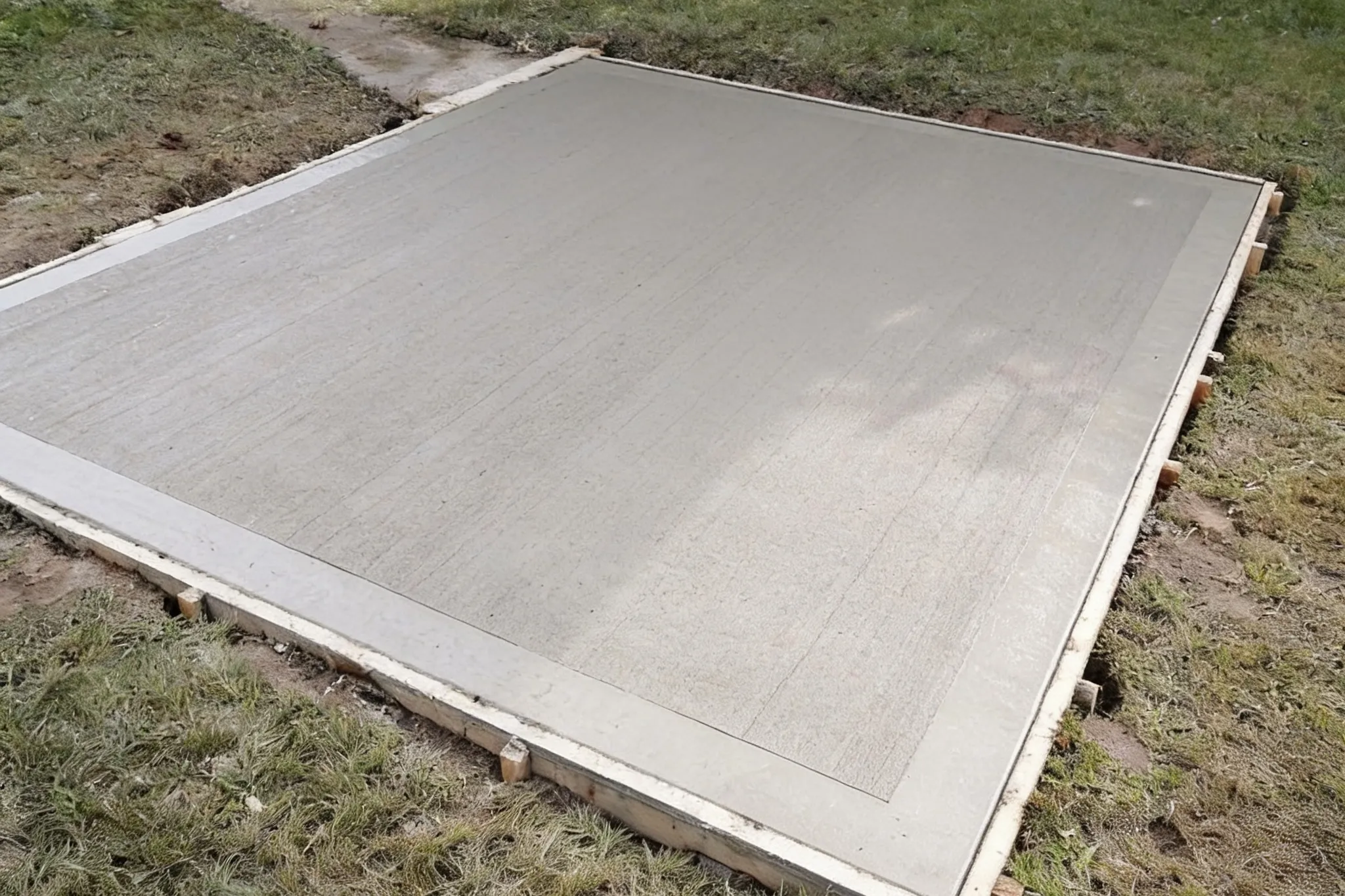
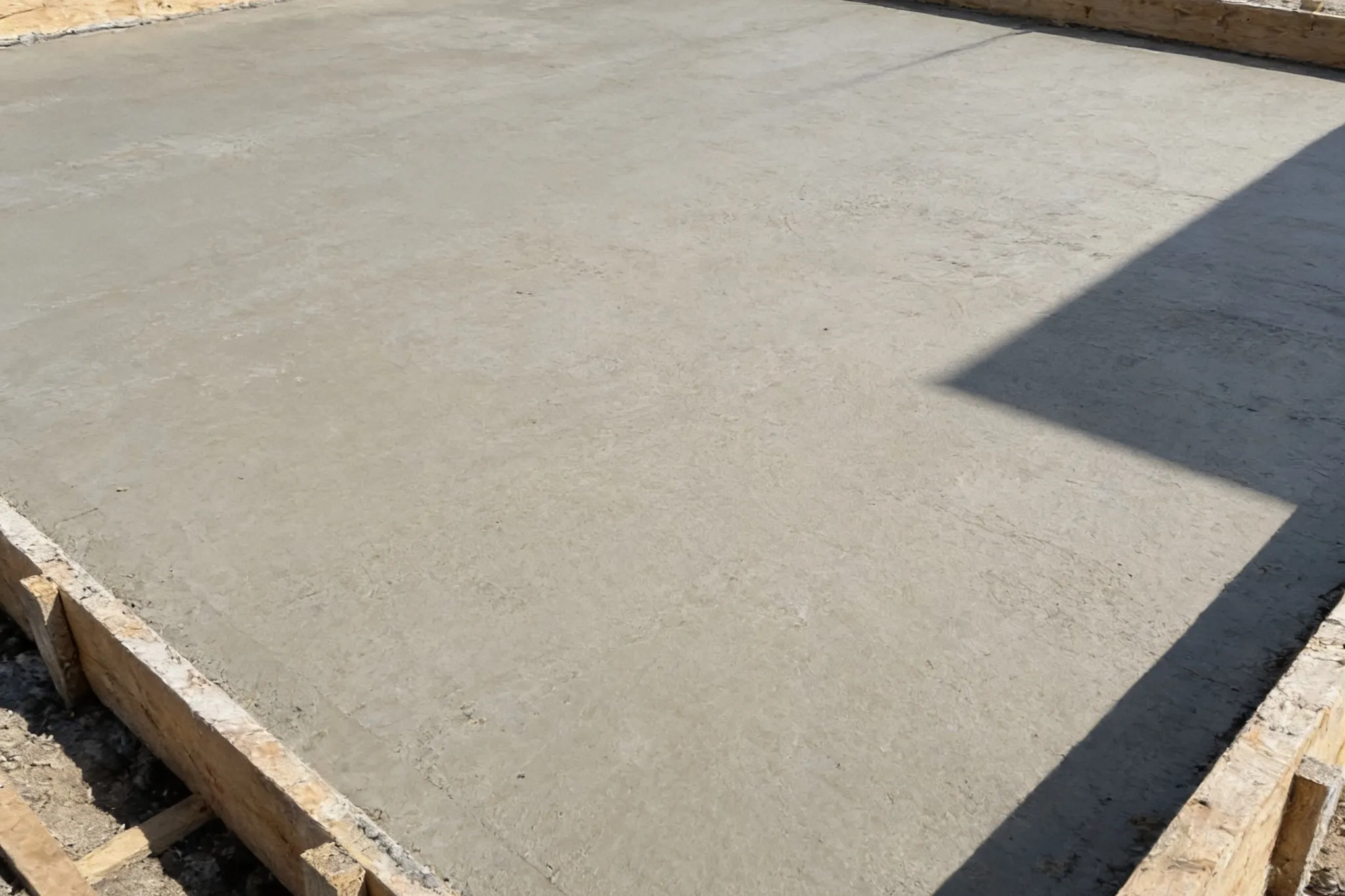
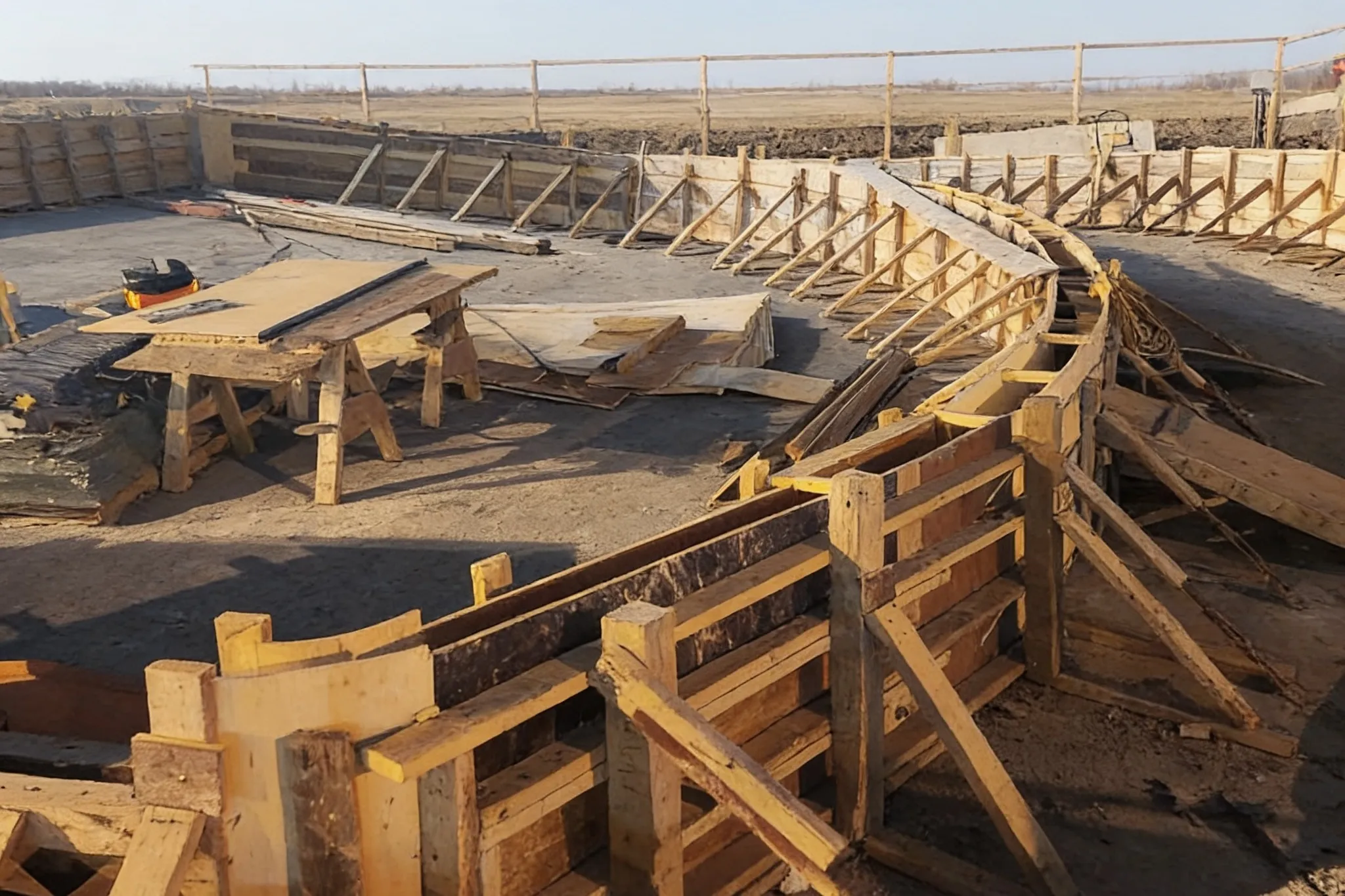
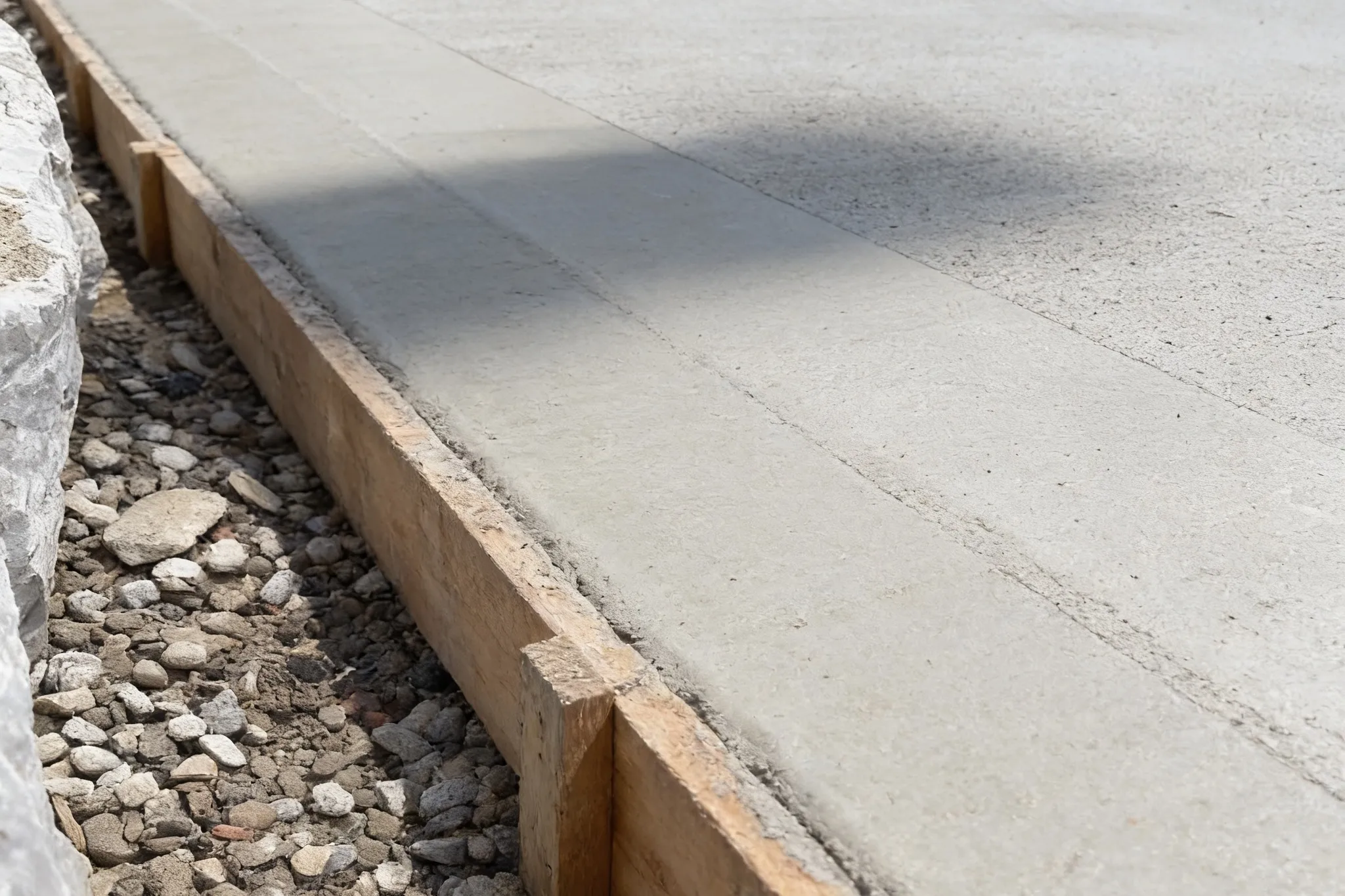
Stamped concrete · Southern Ontario 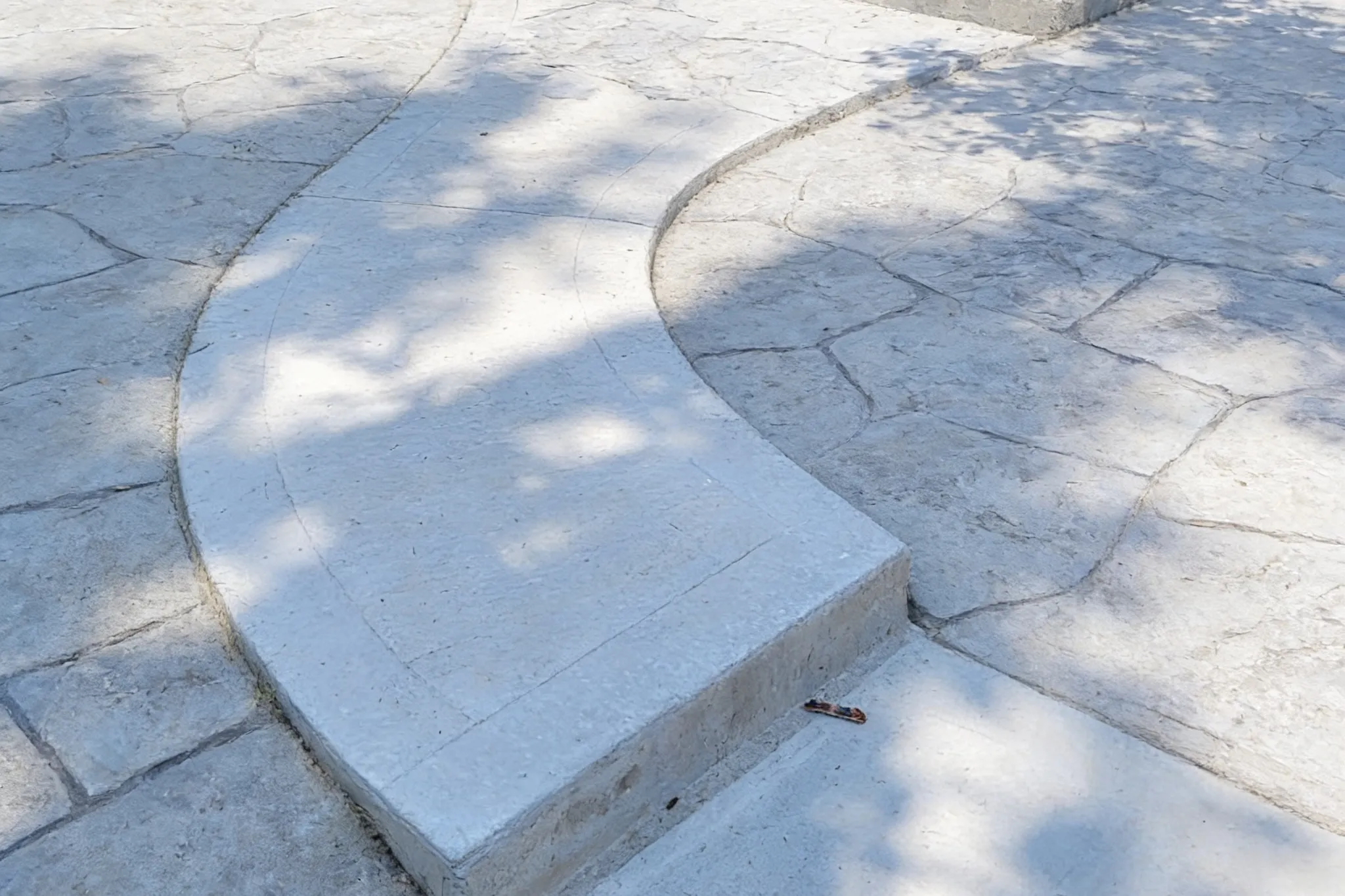
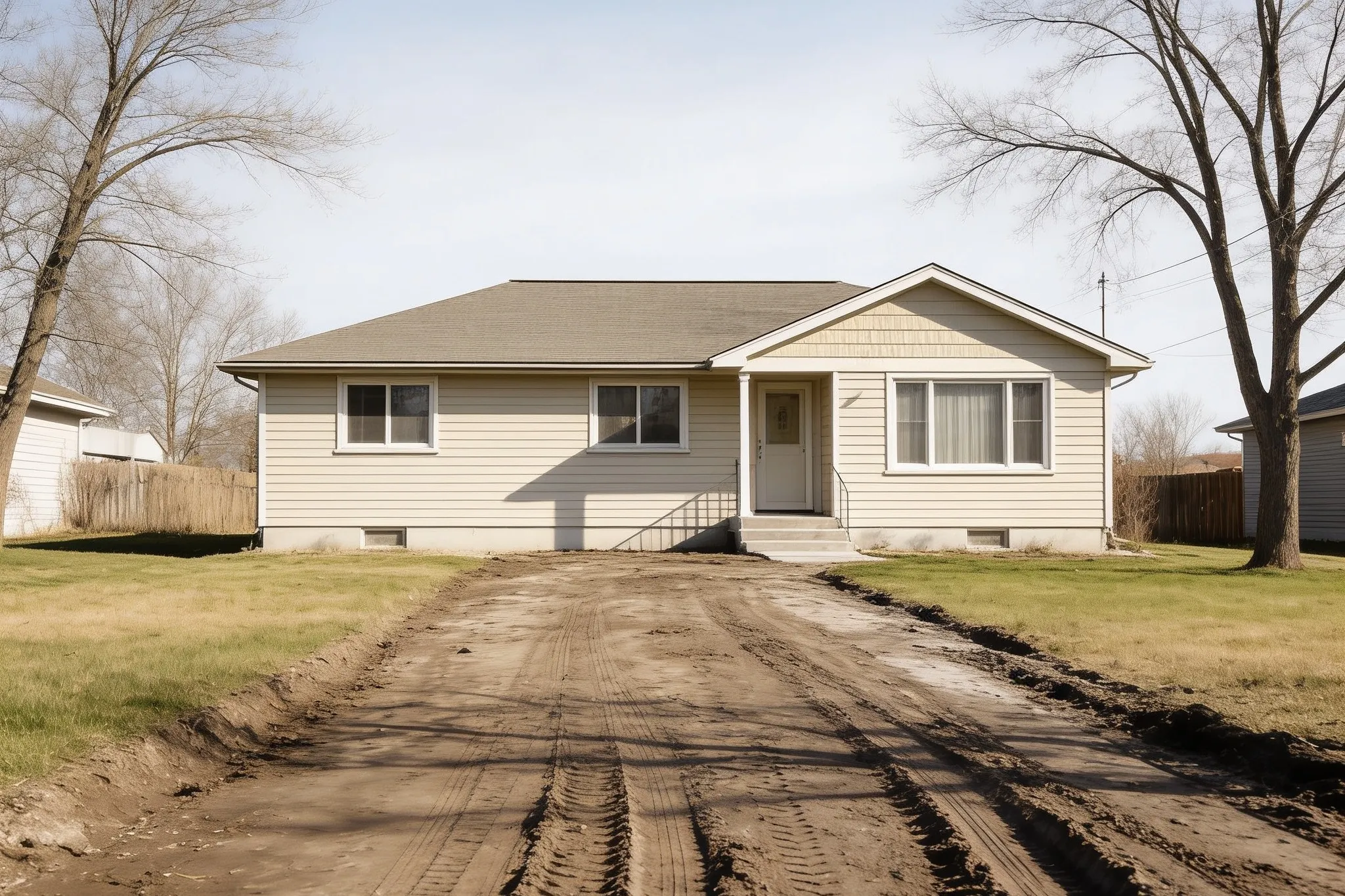
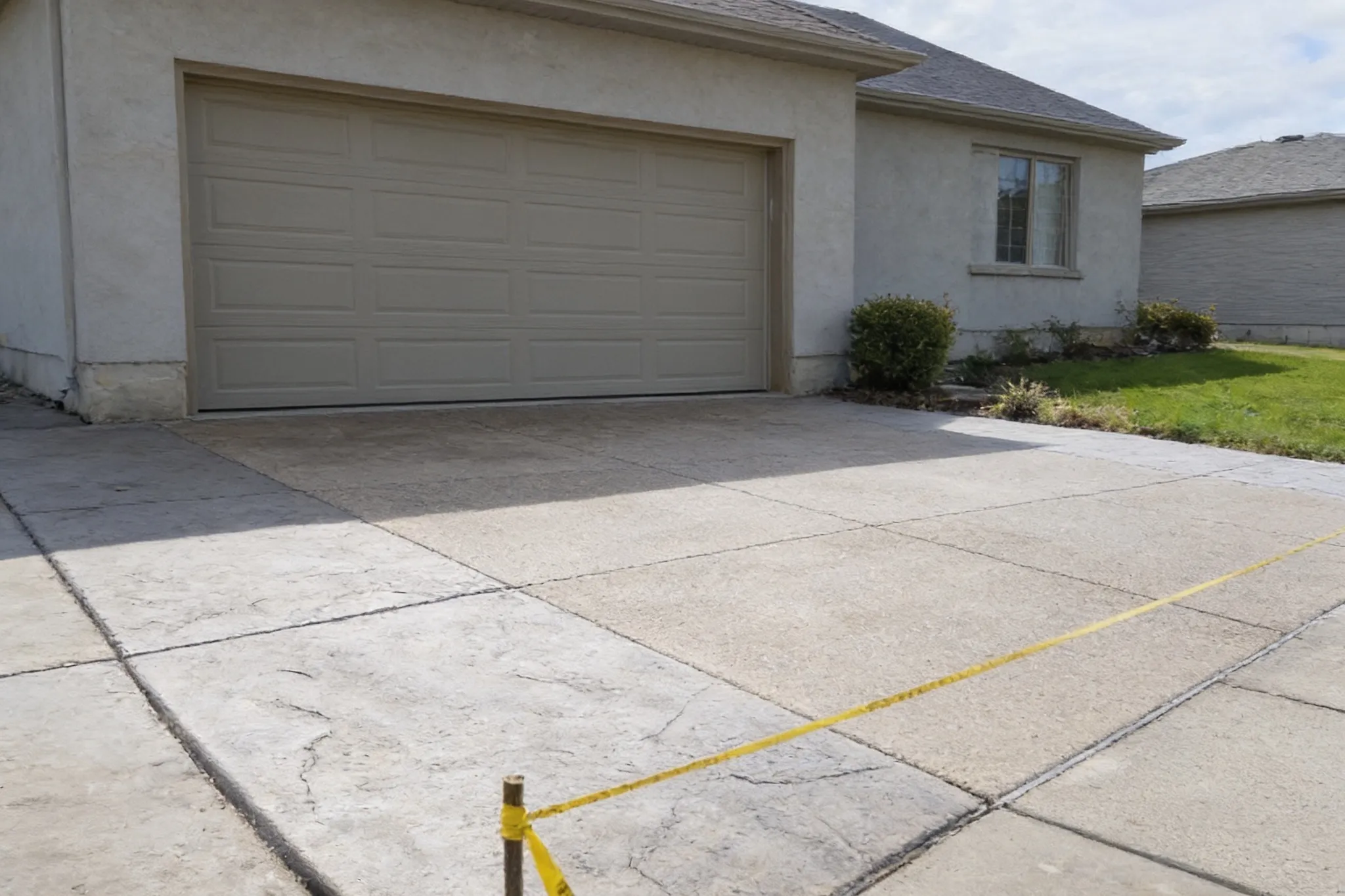
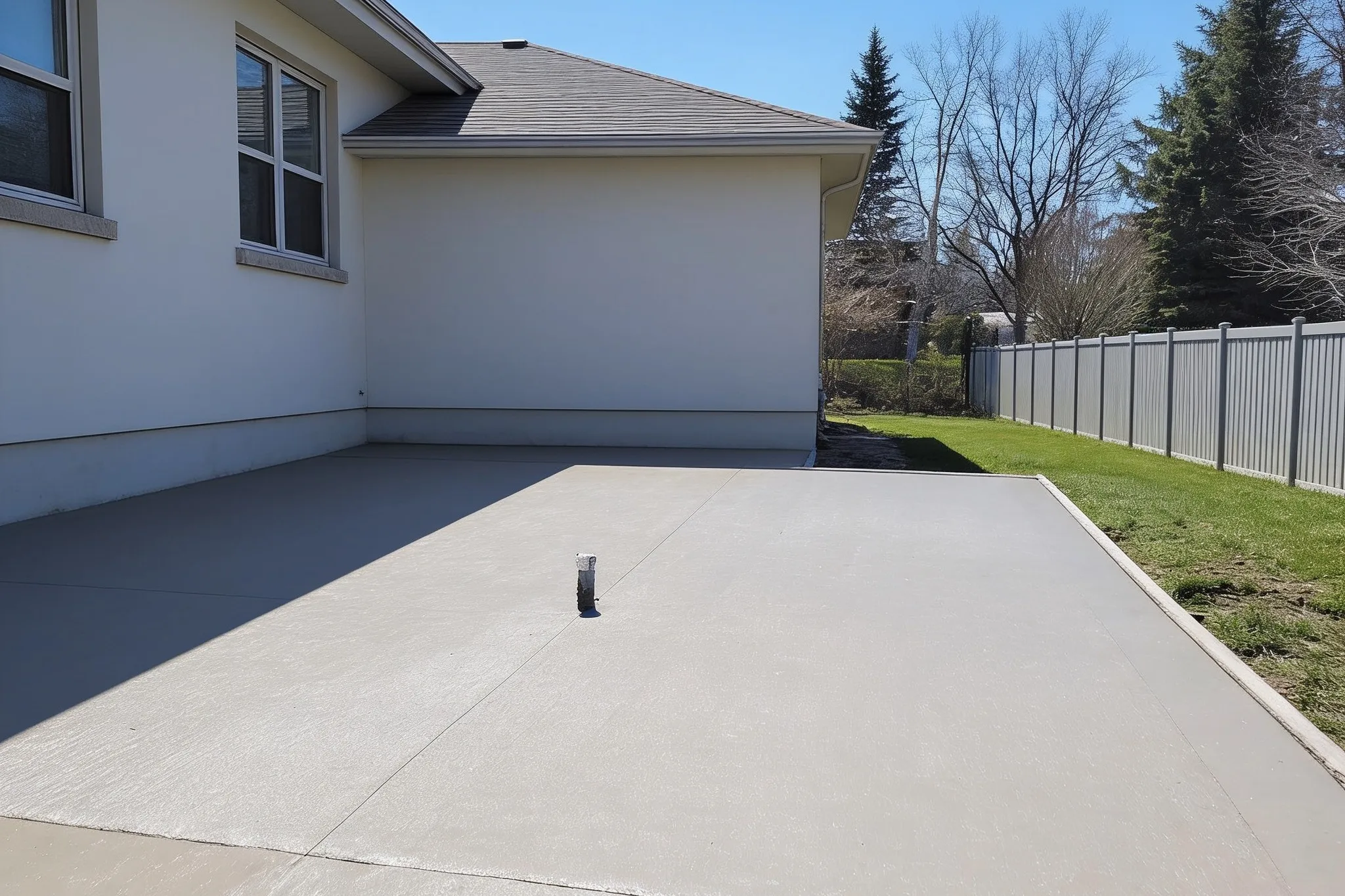
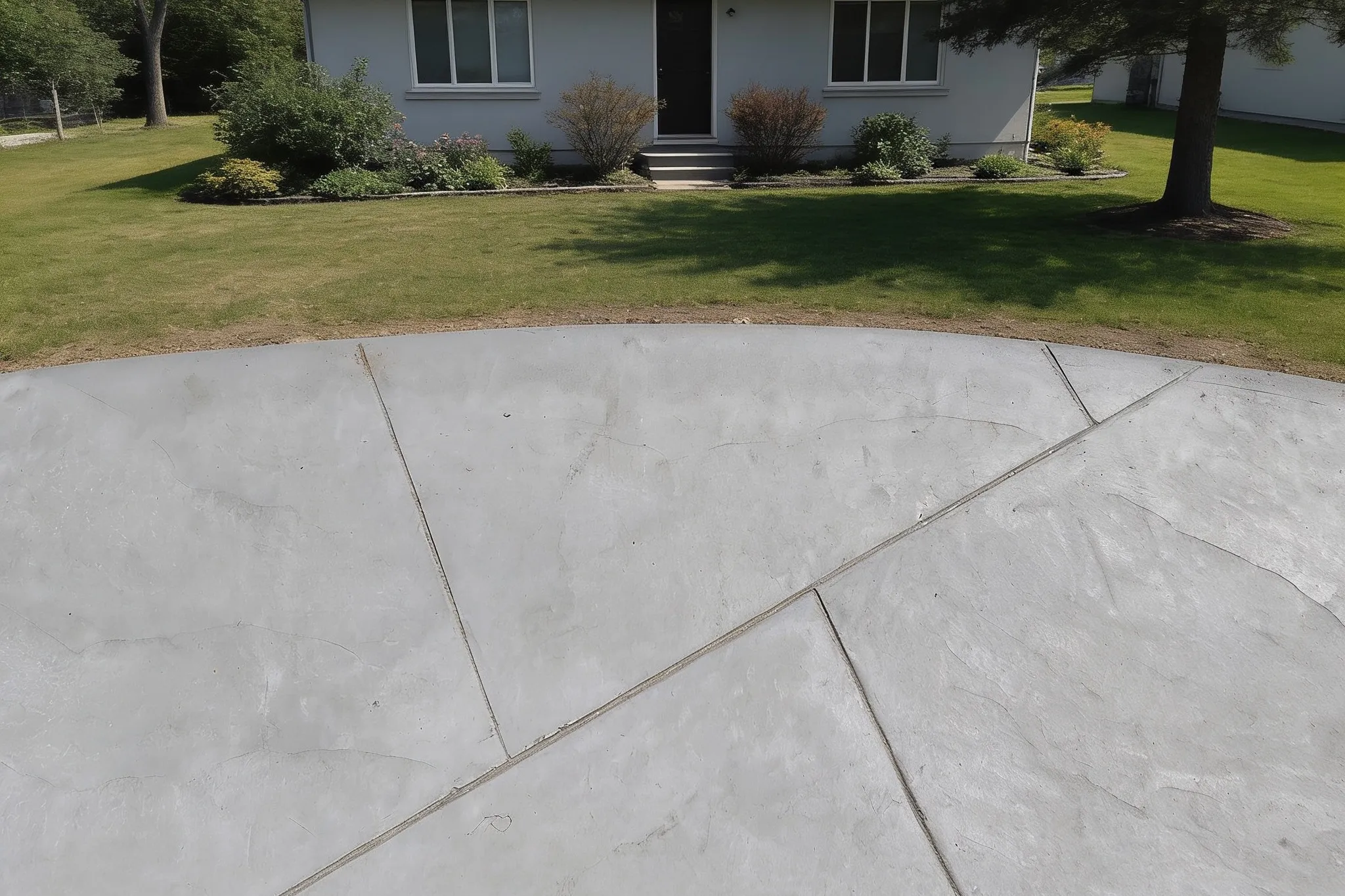
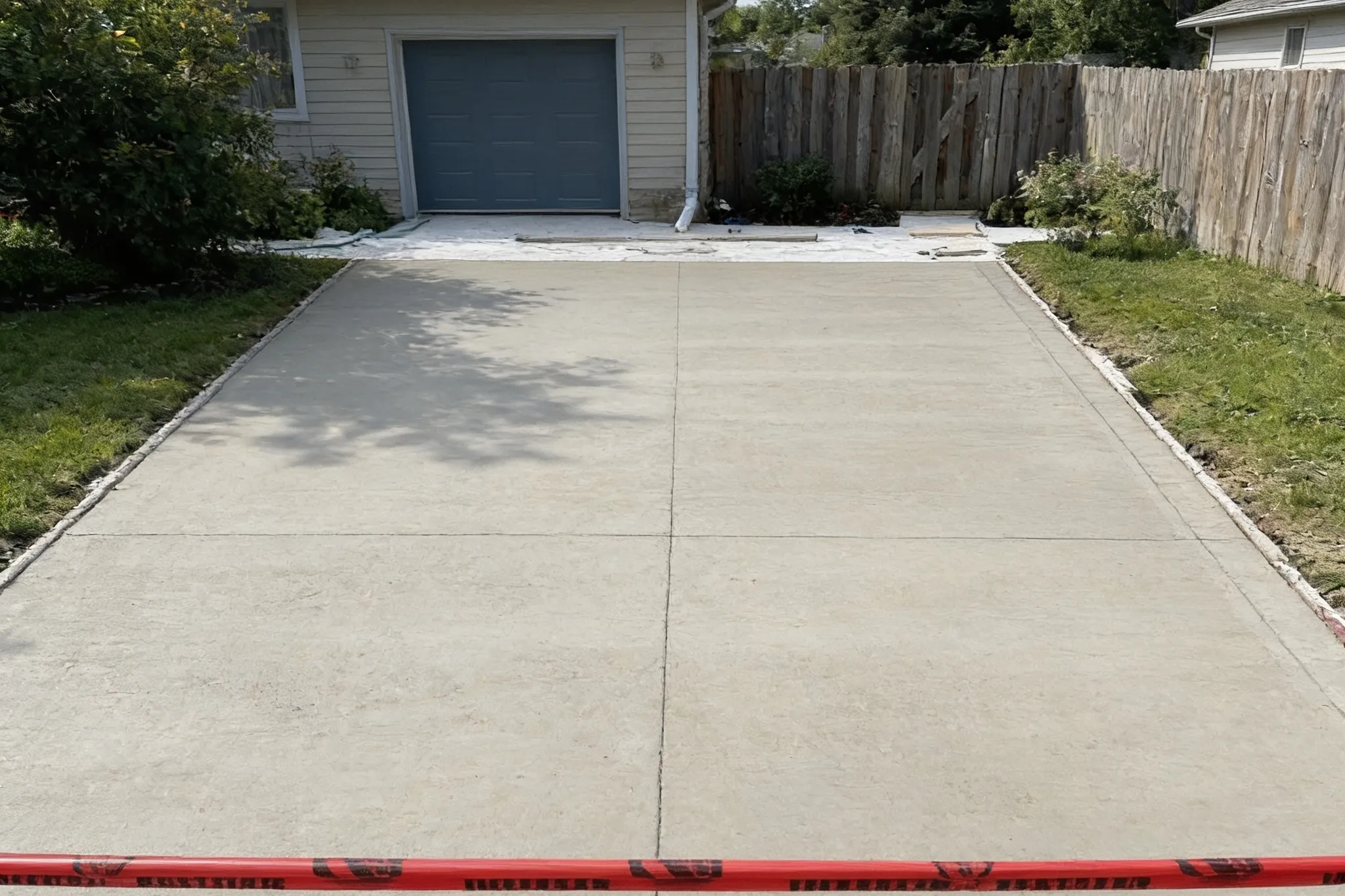
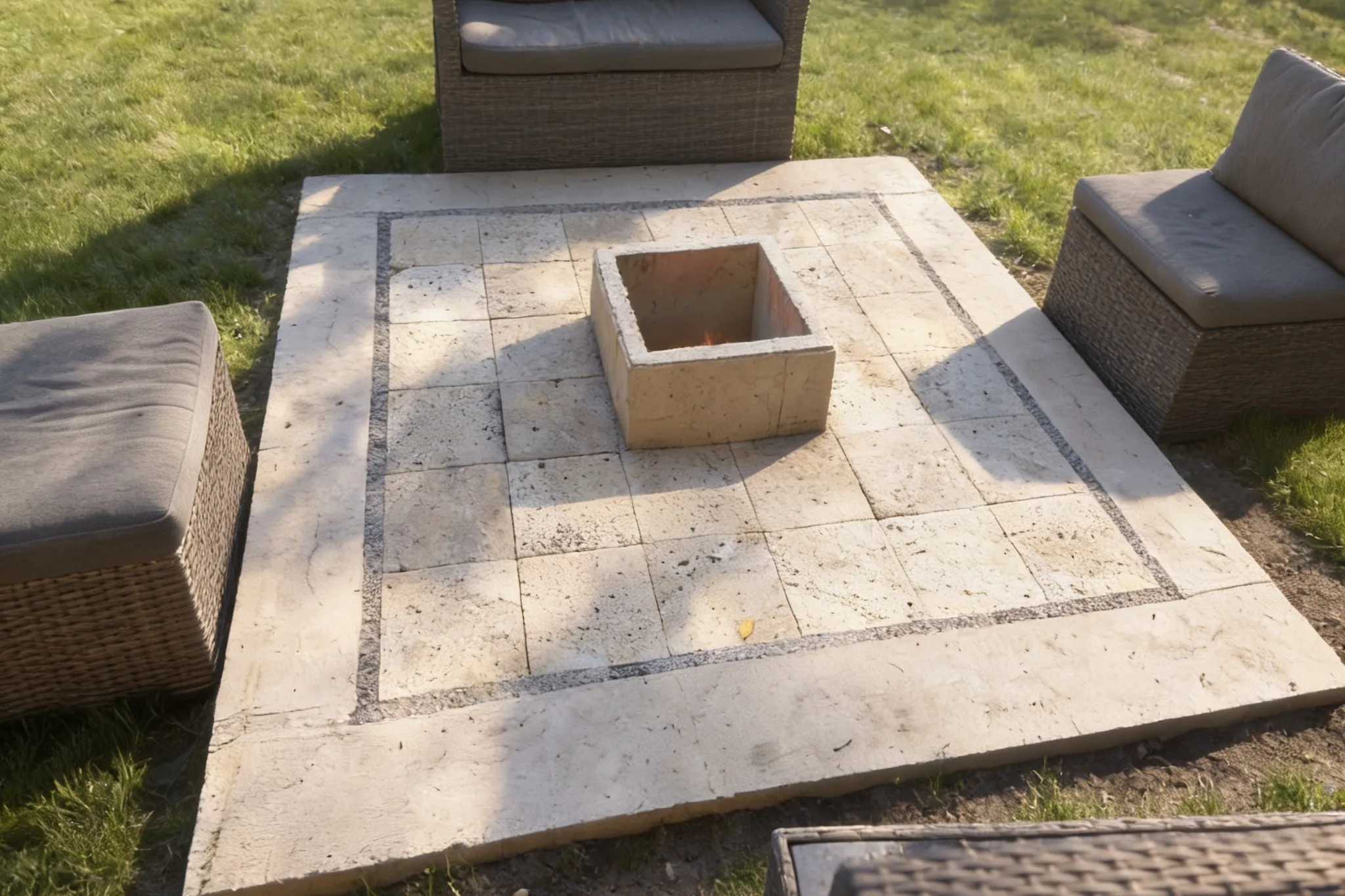
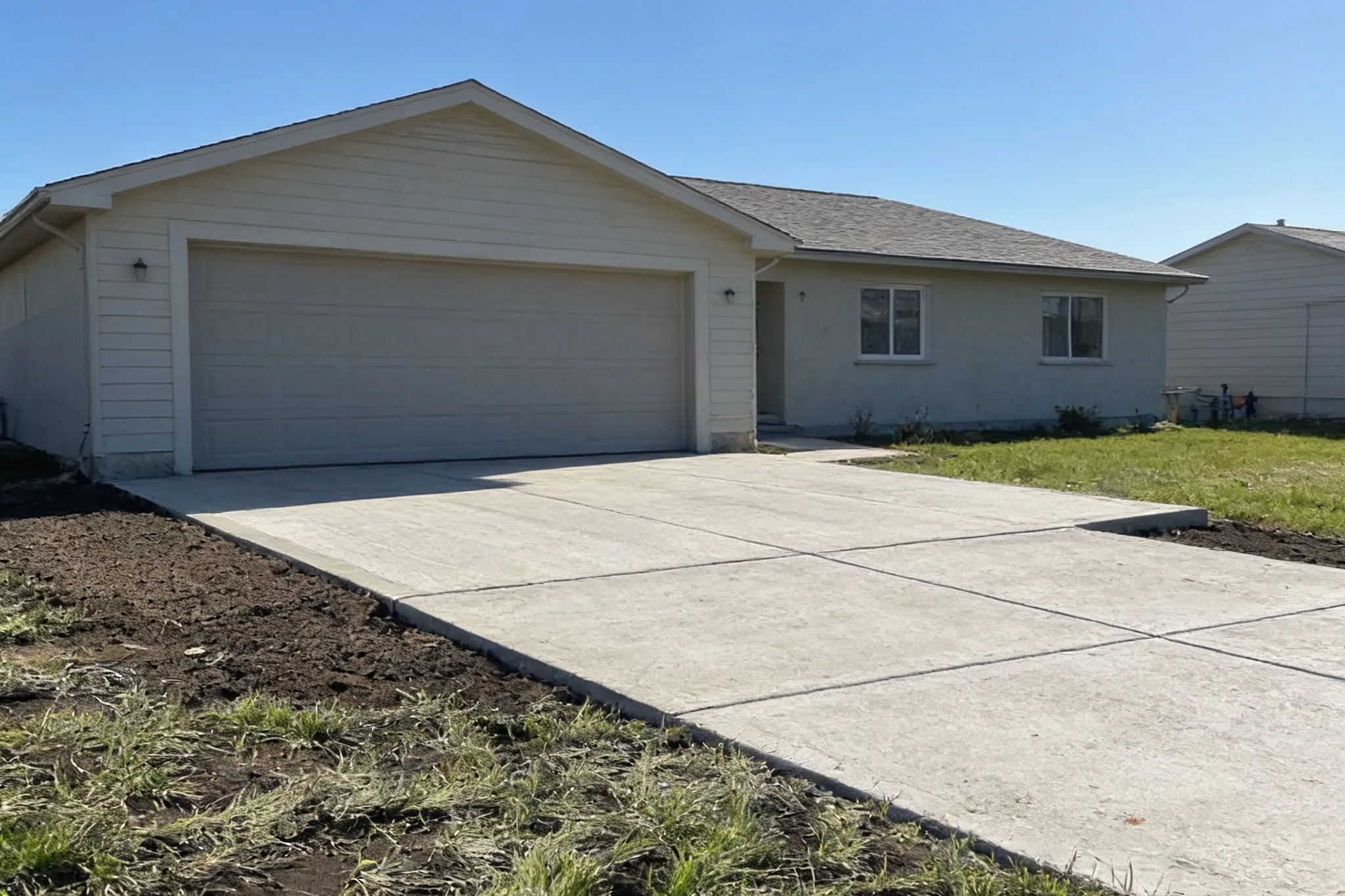
Stamped pattern · Southern Ontario 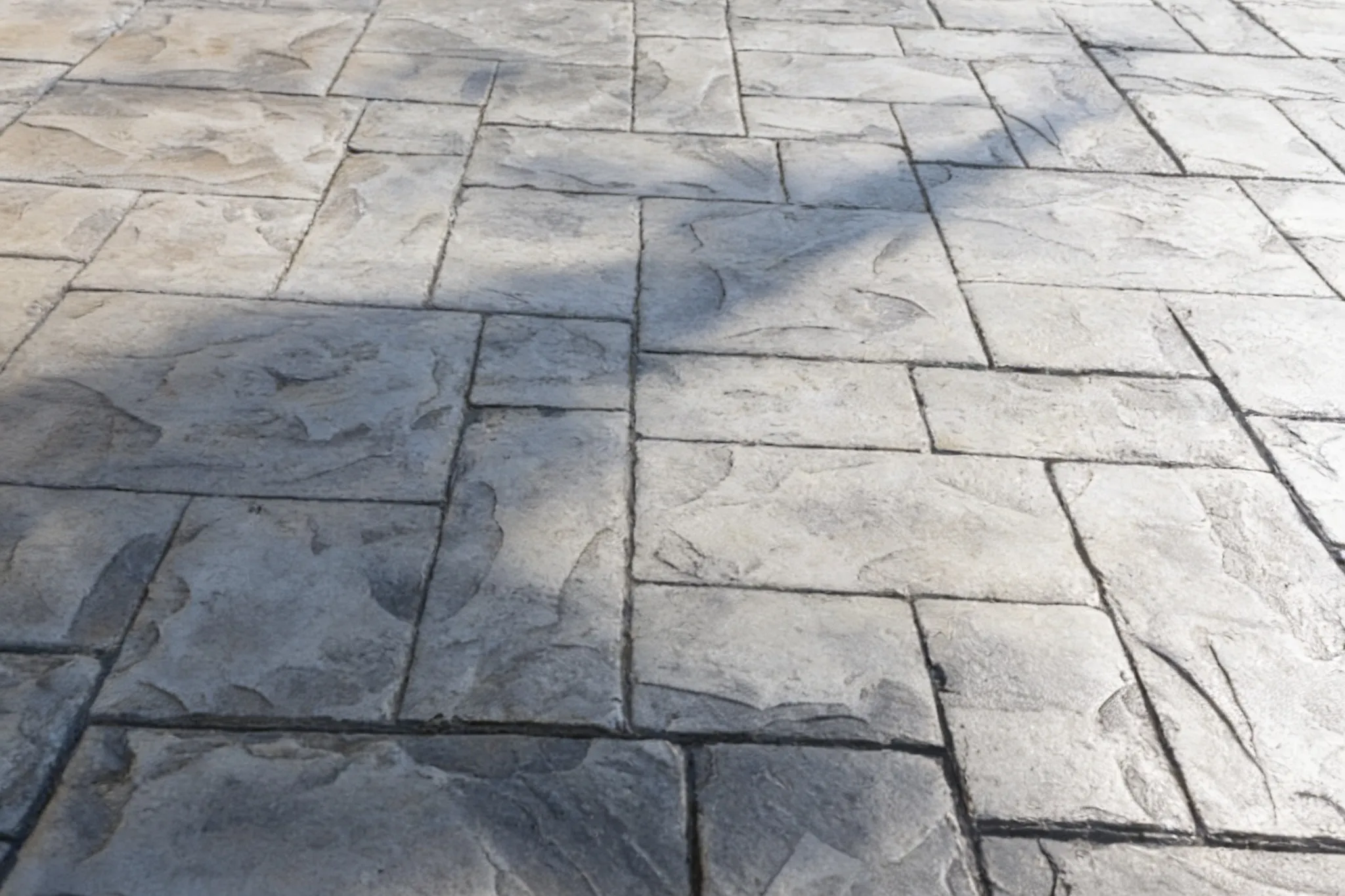
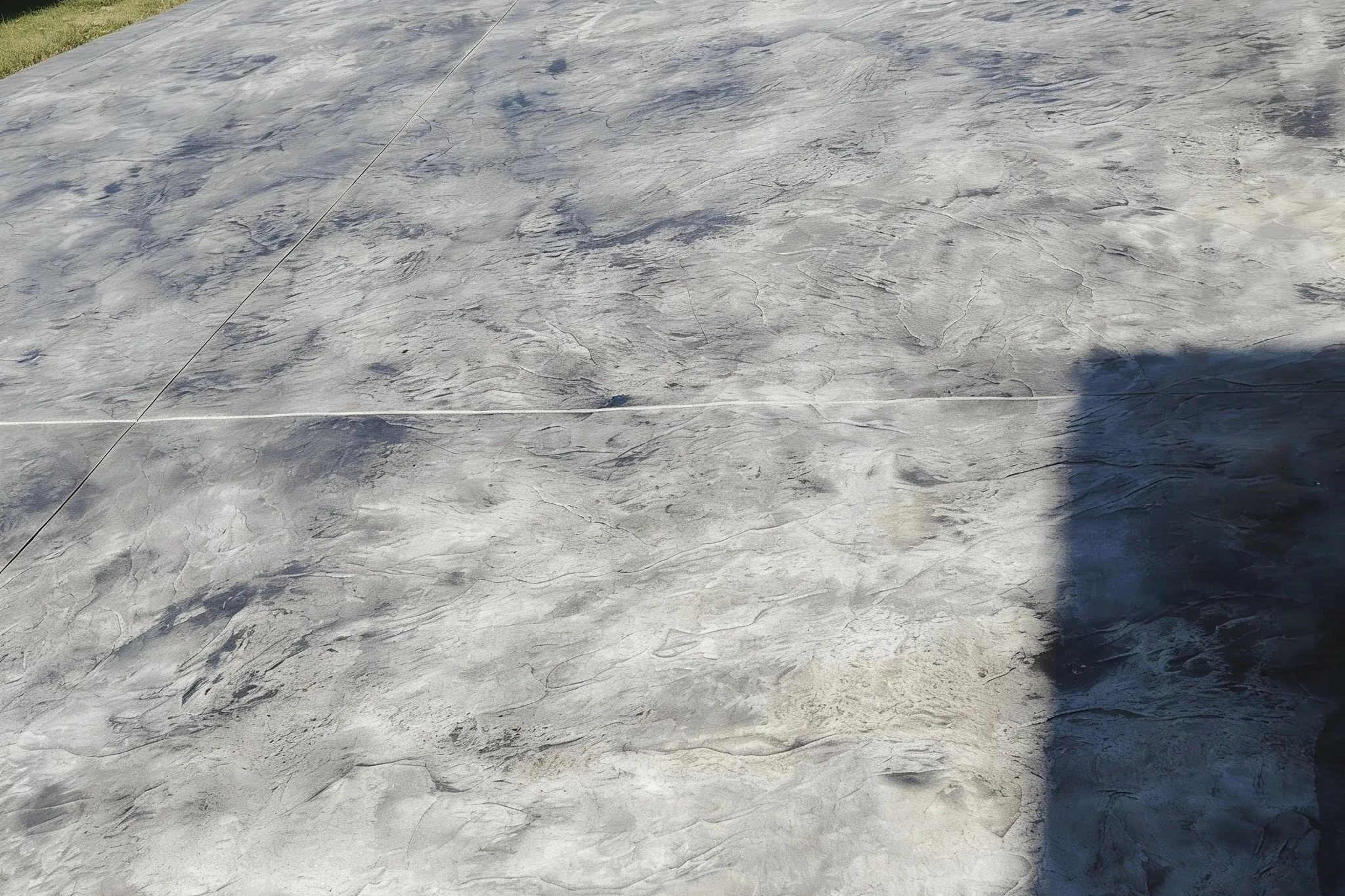
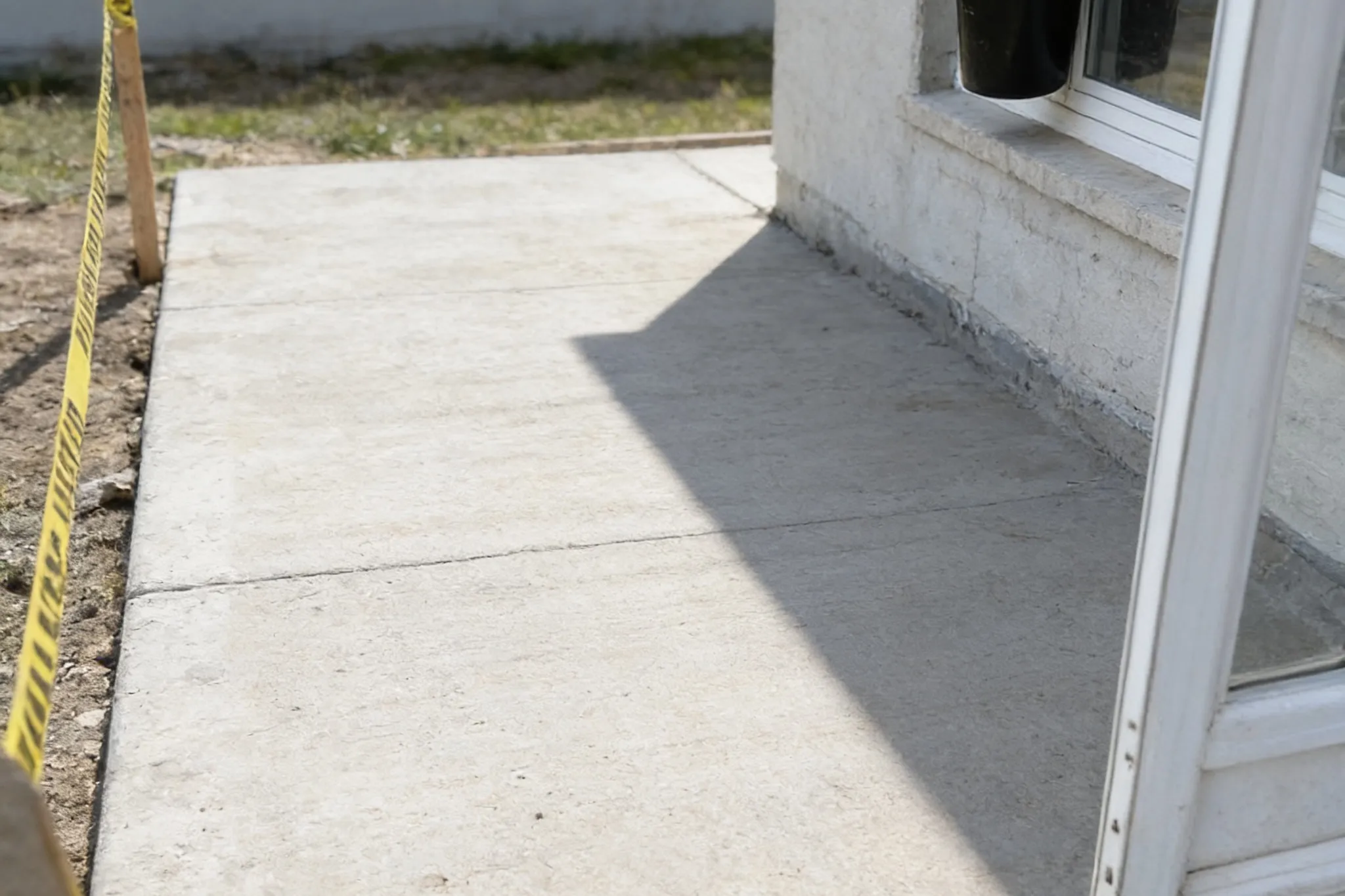
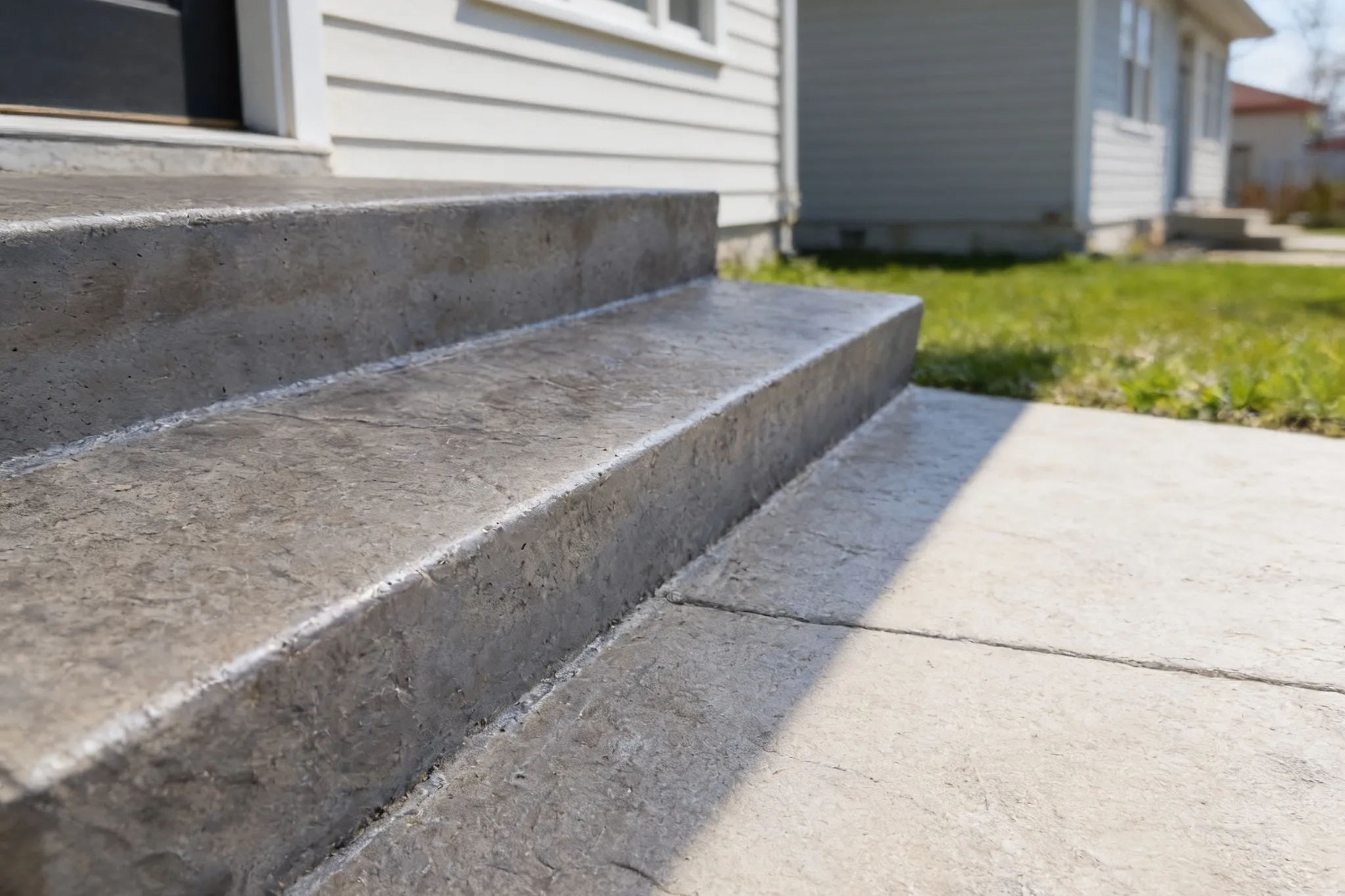
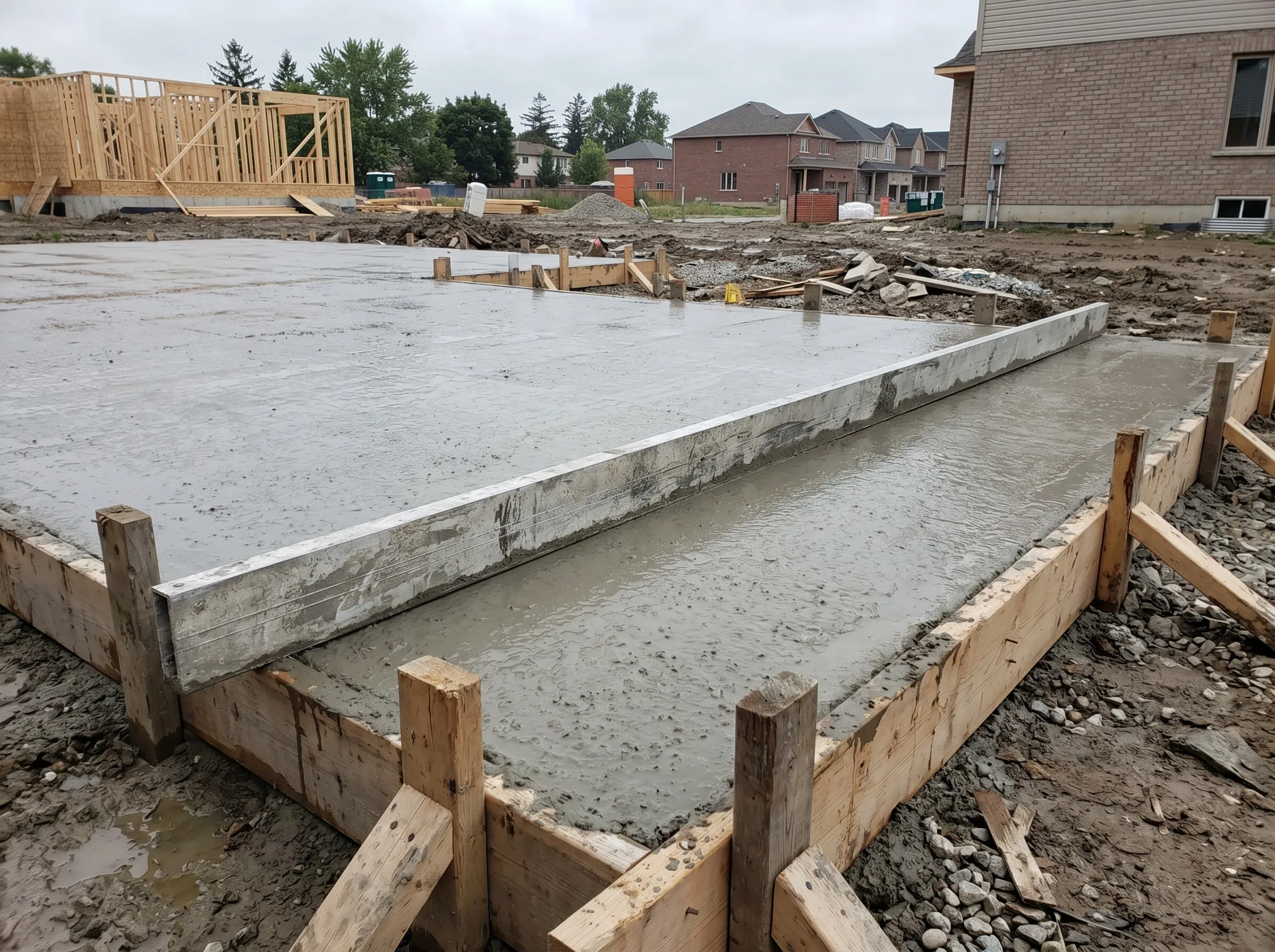
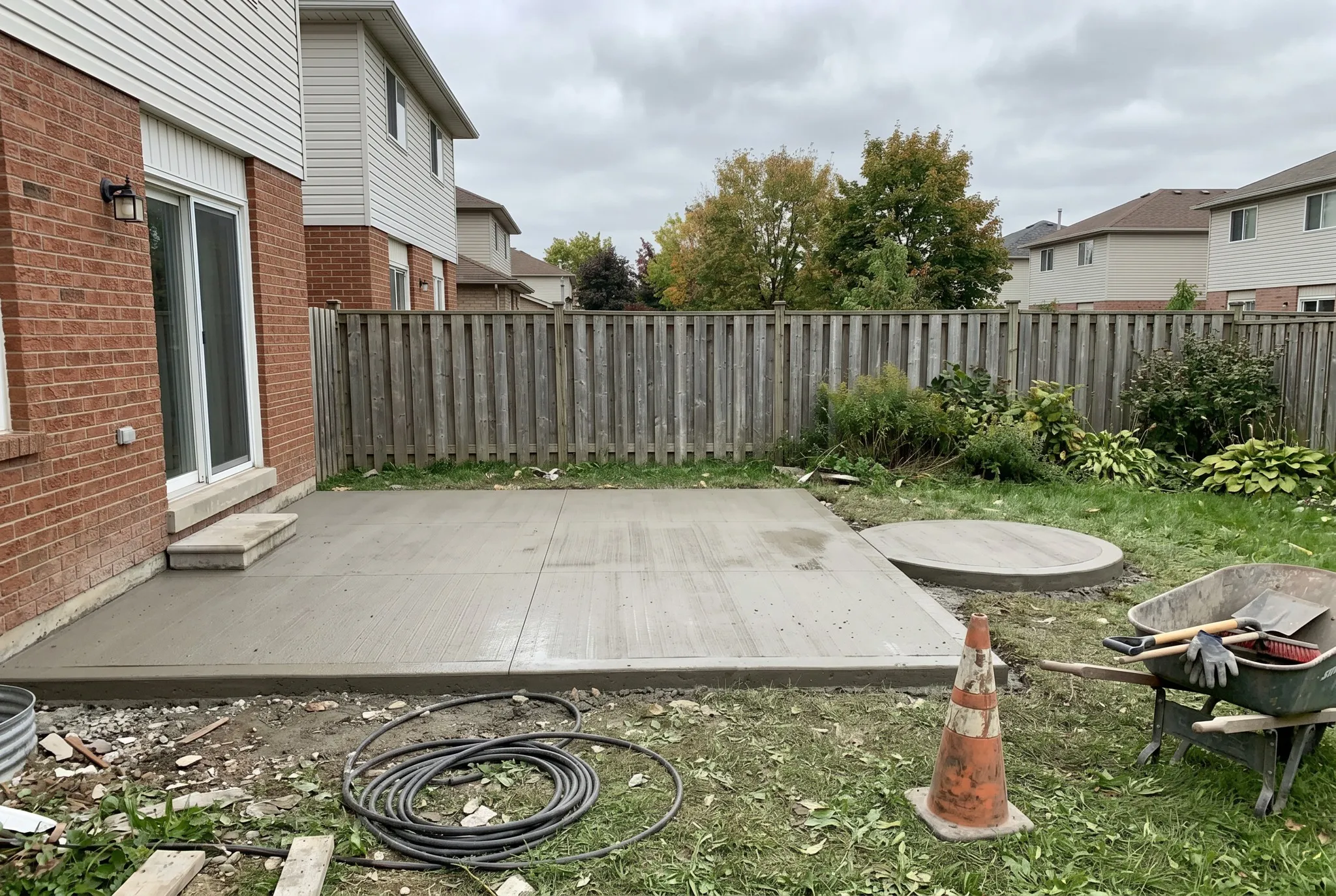
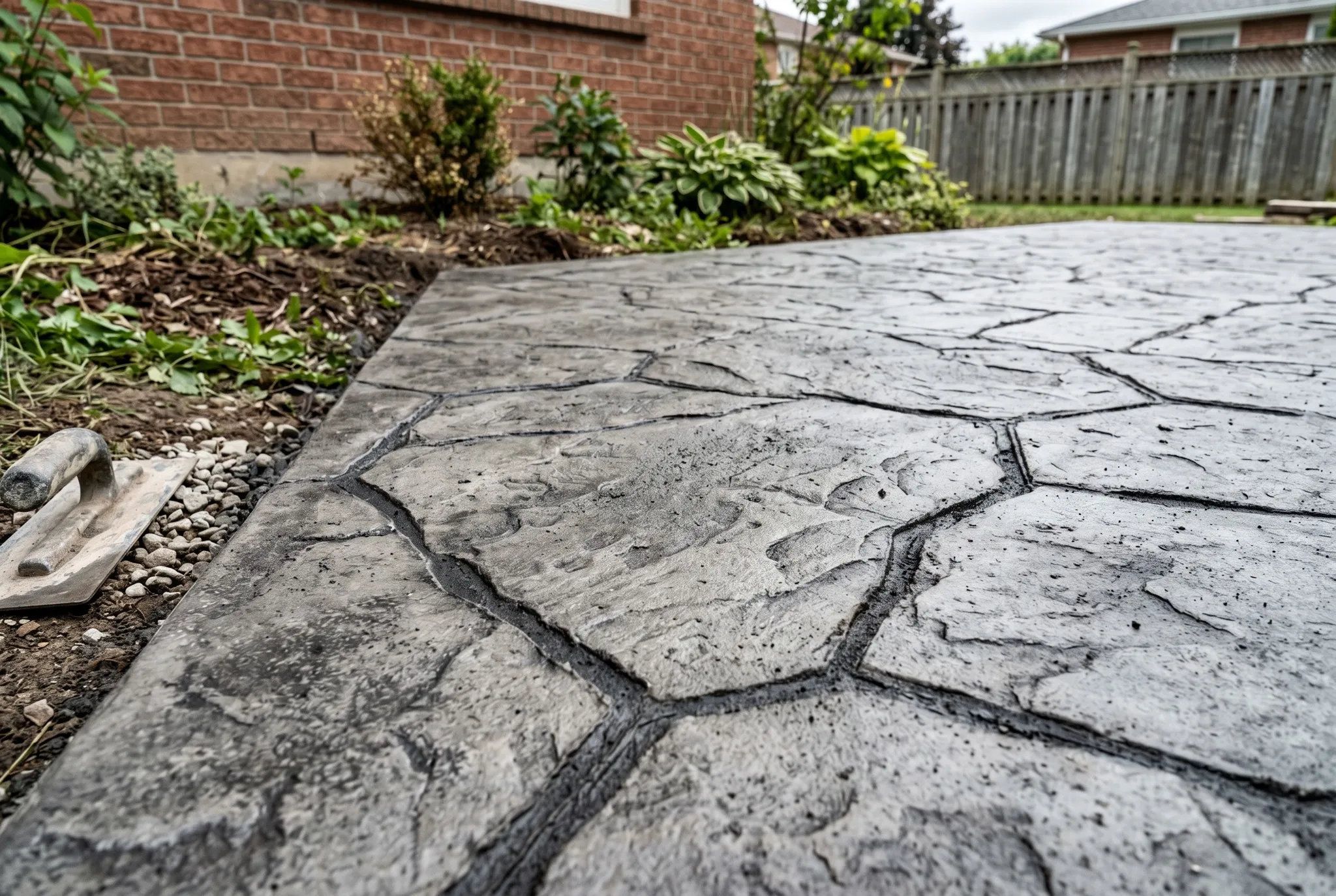
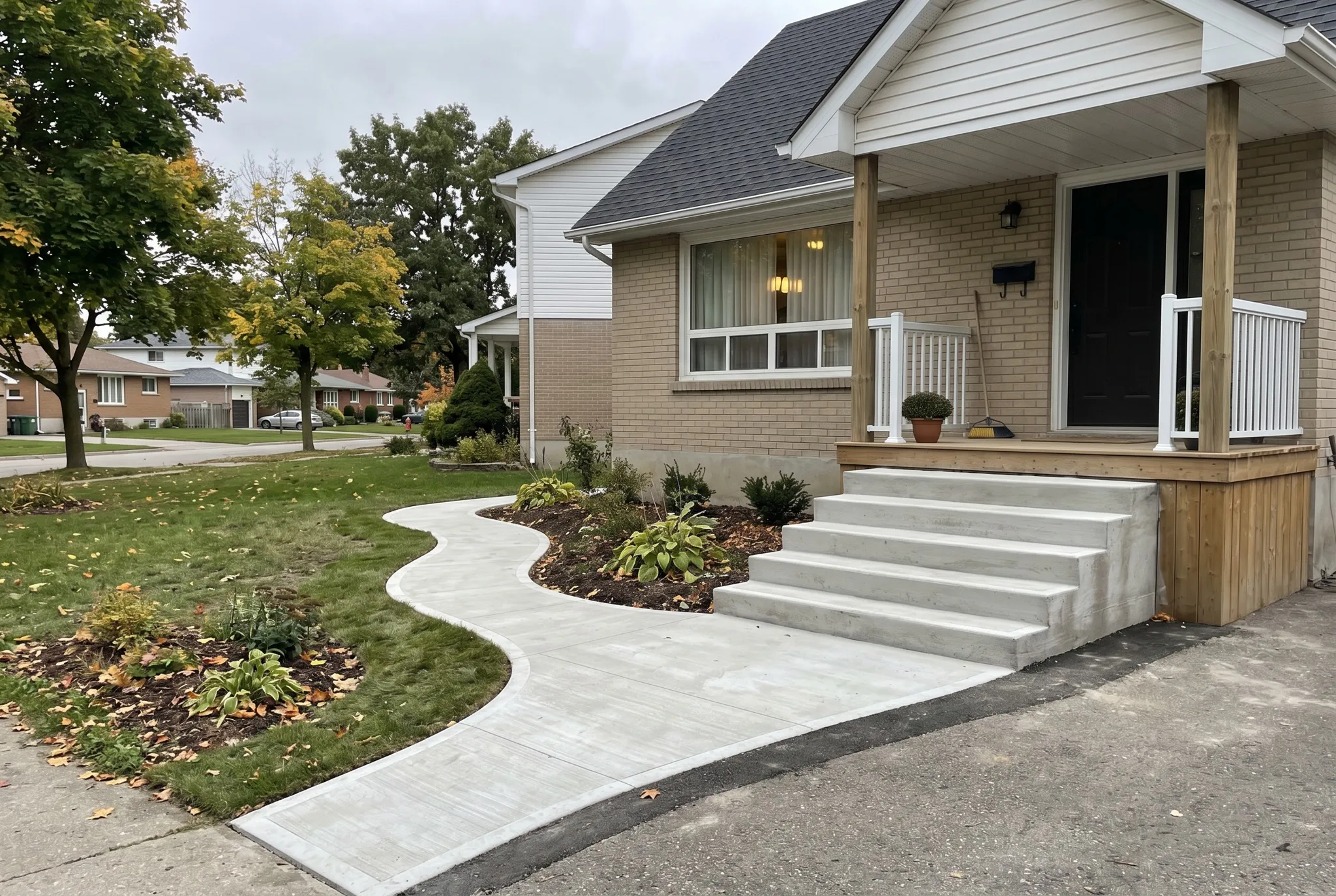
Stamped and coloured · Southern Ontario 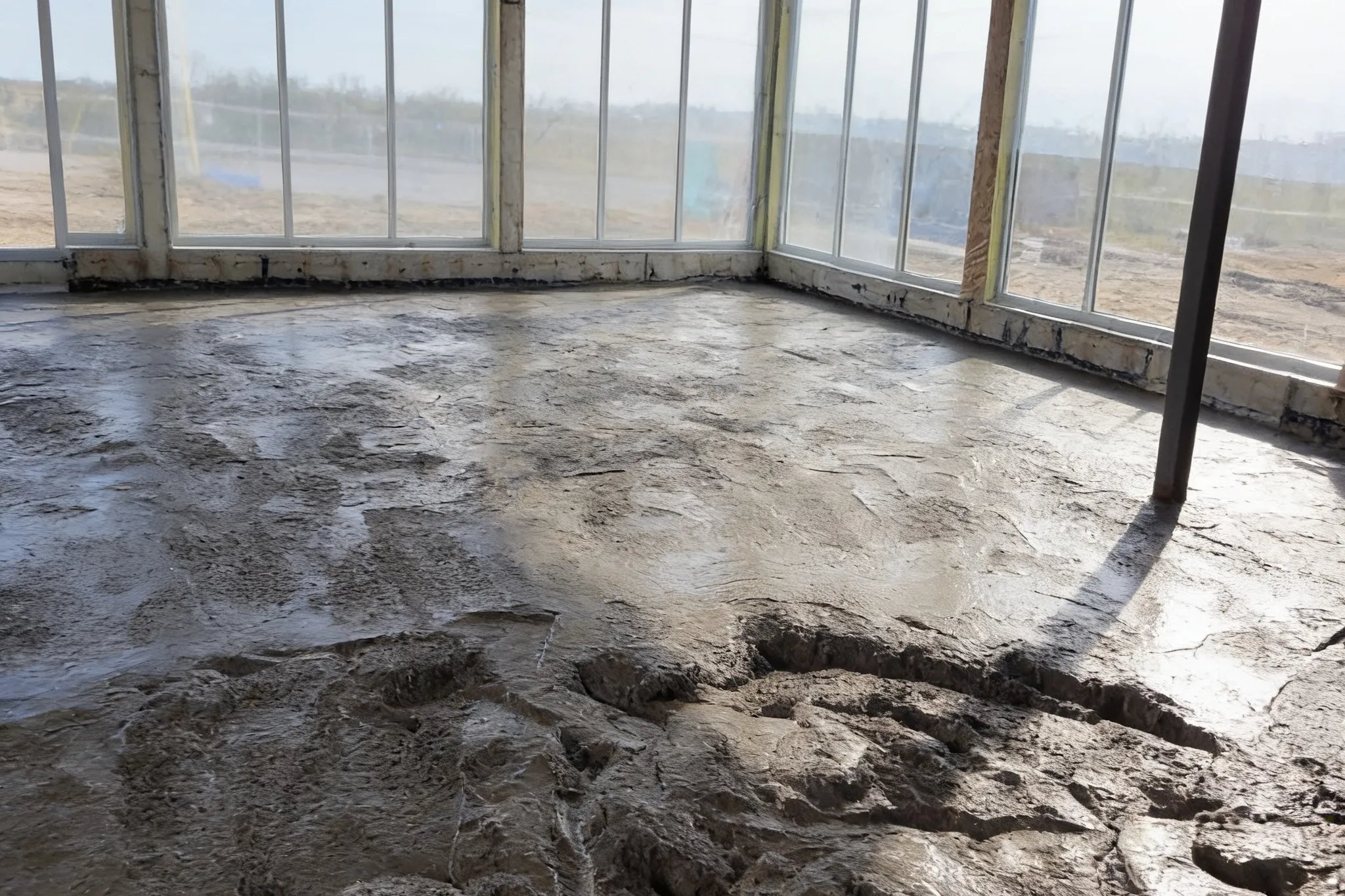
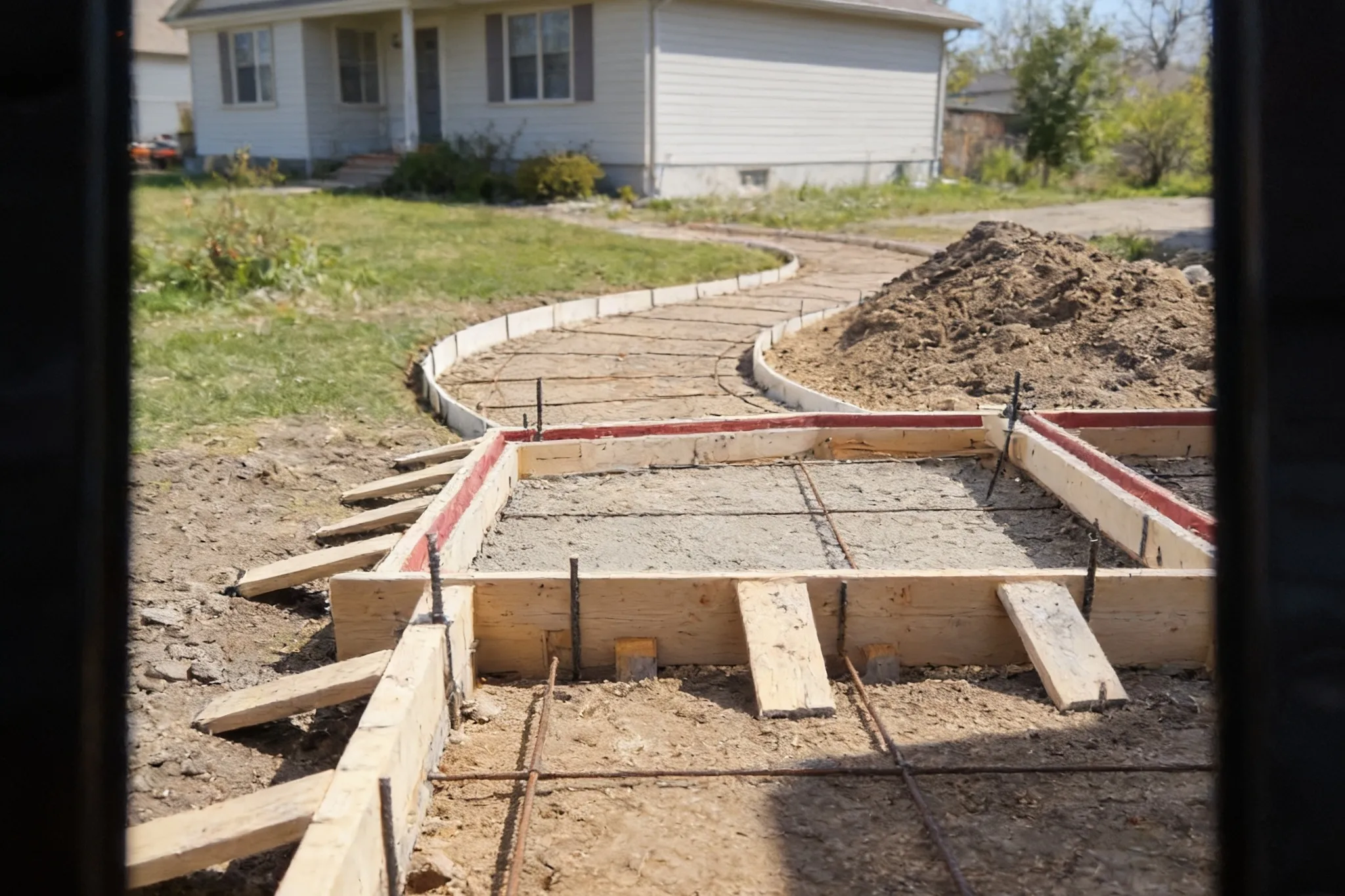
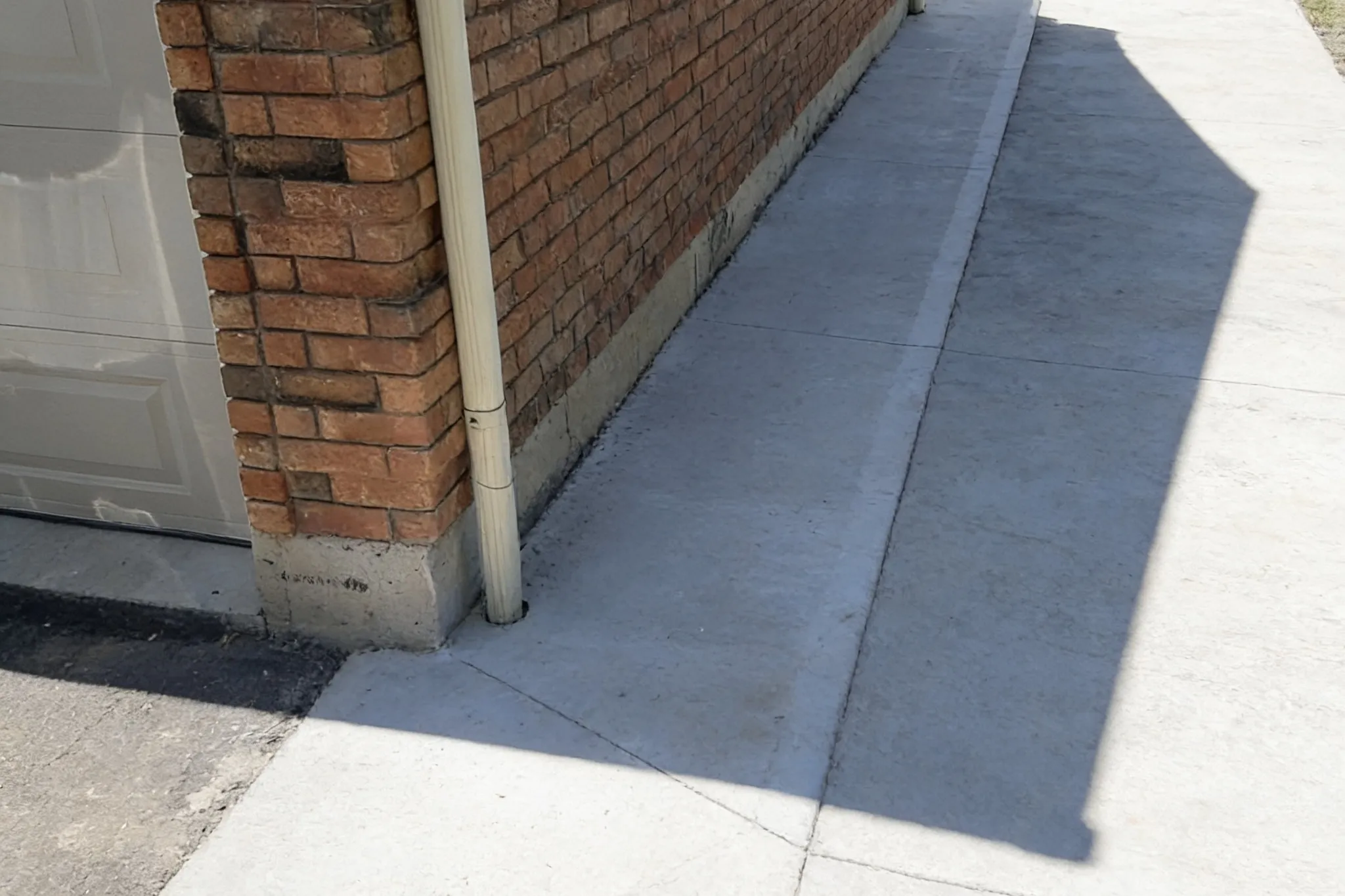
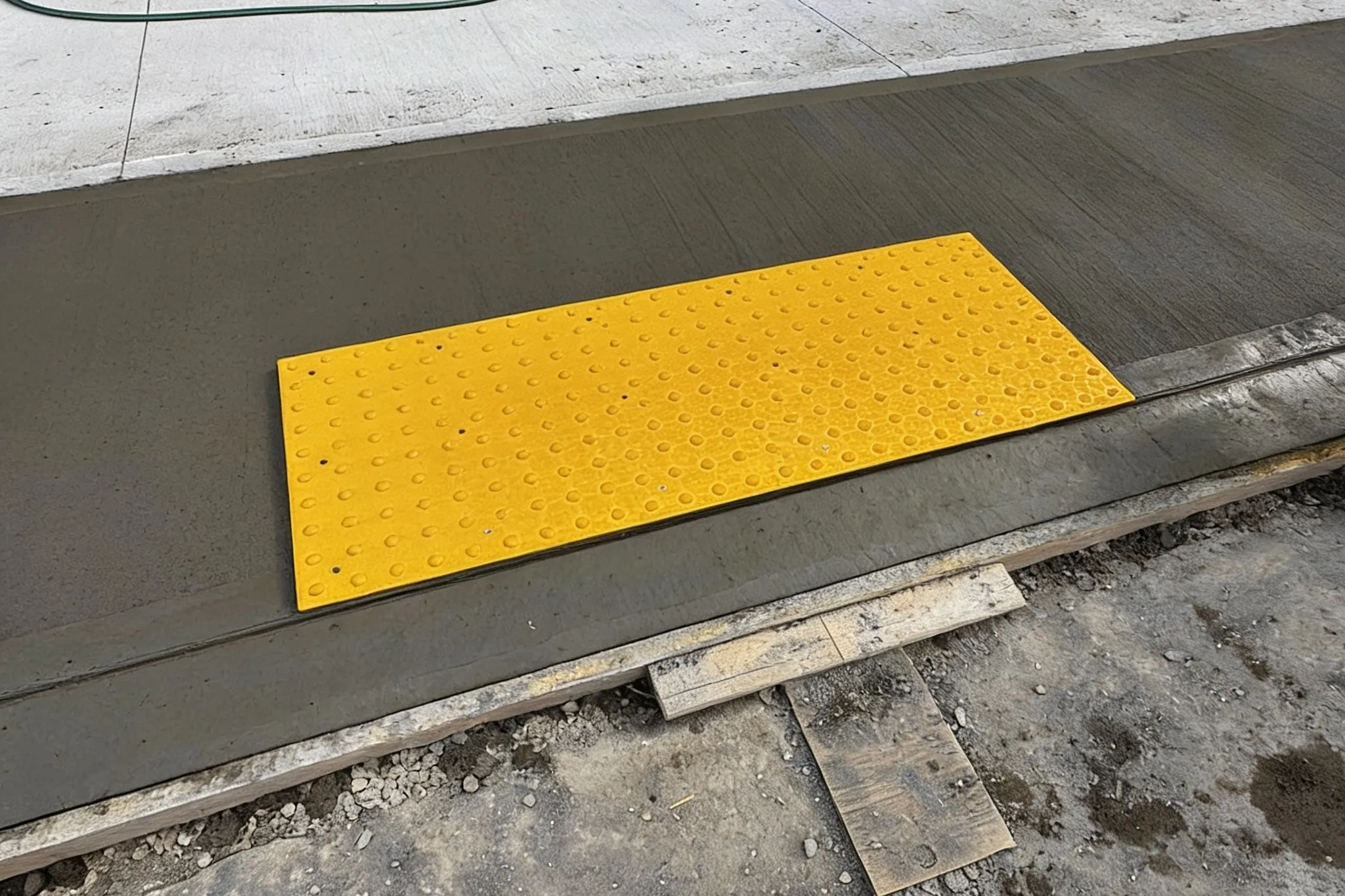
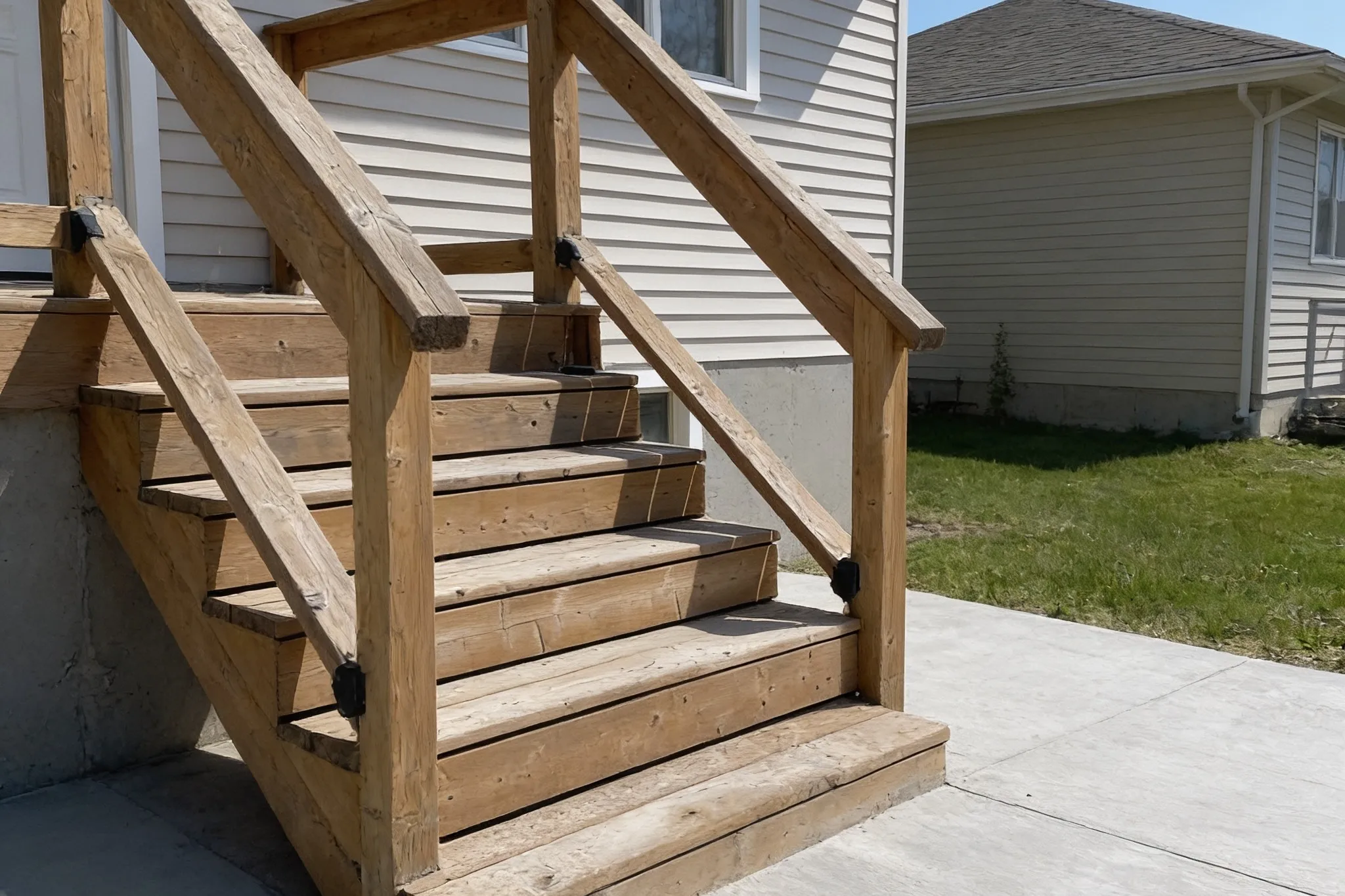
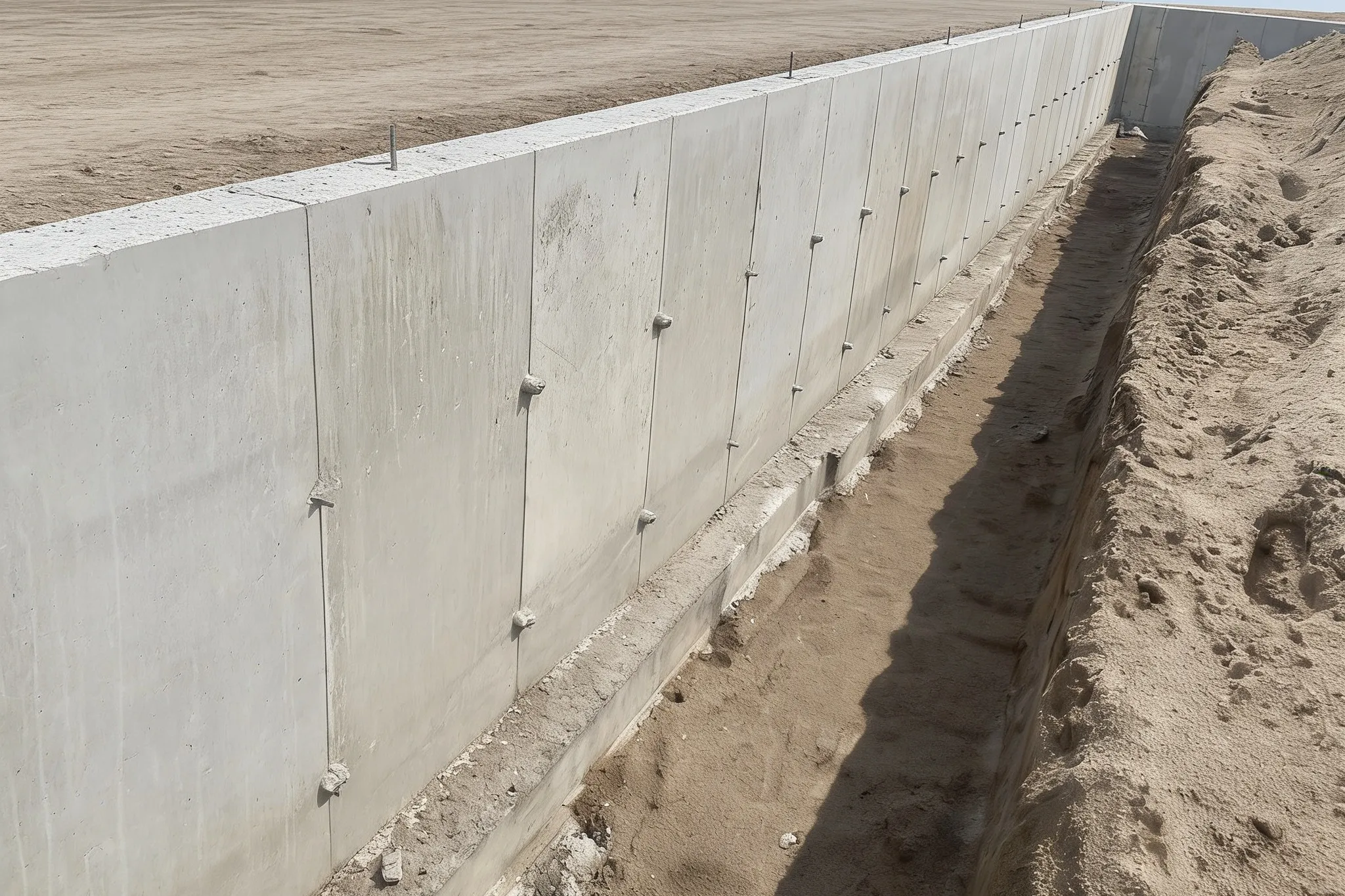
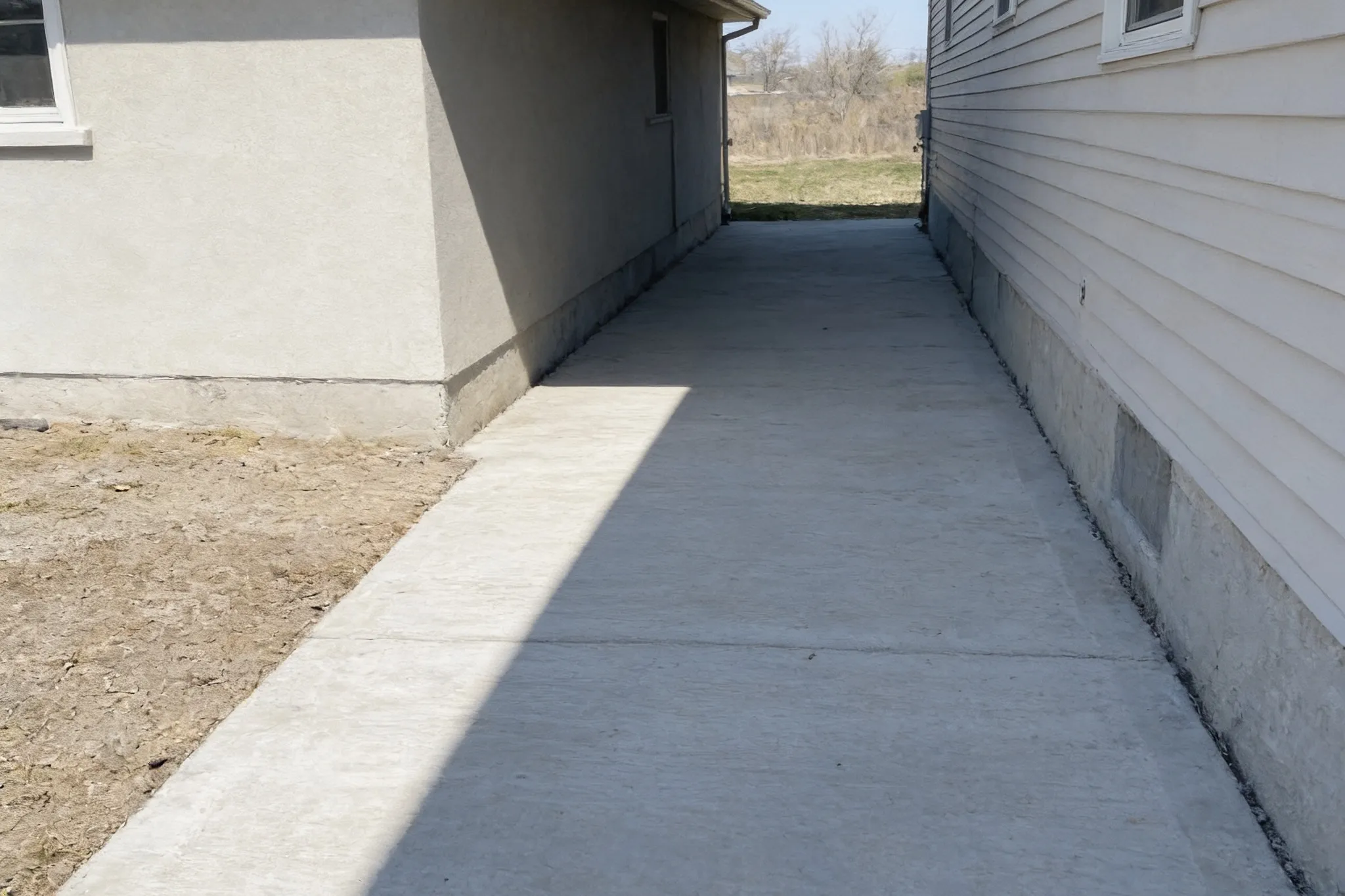
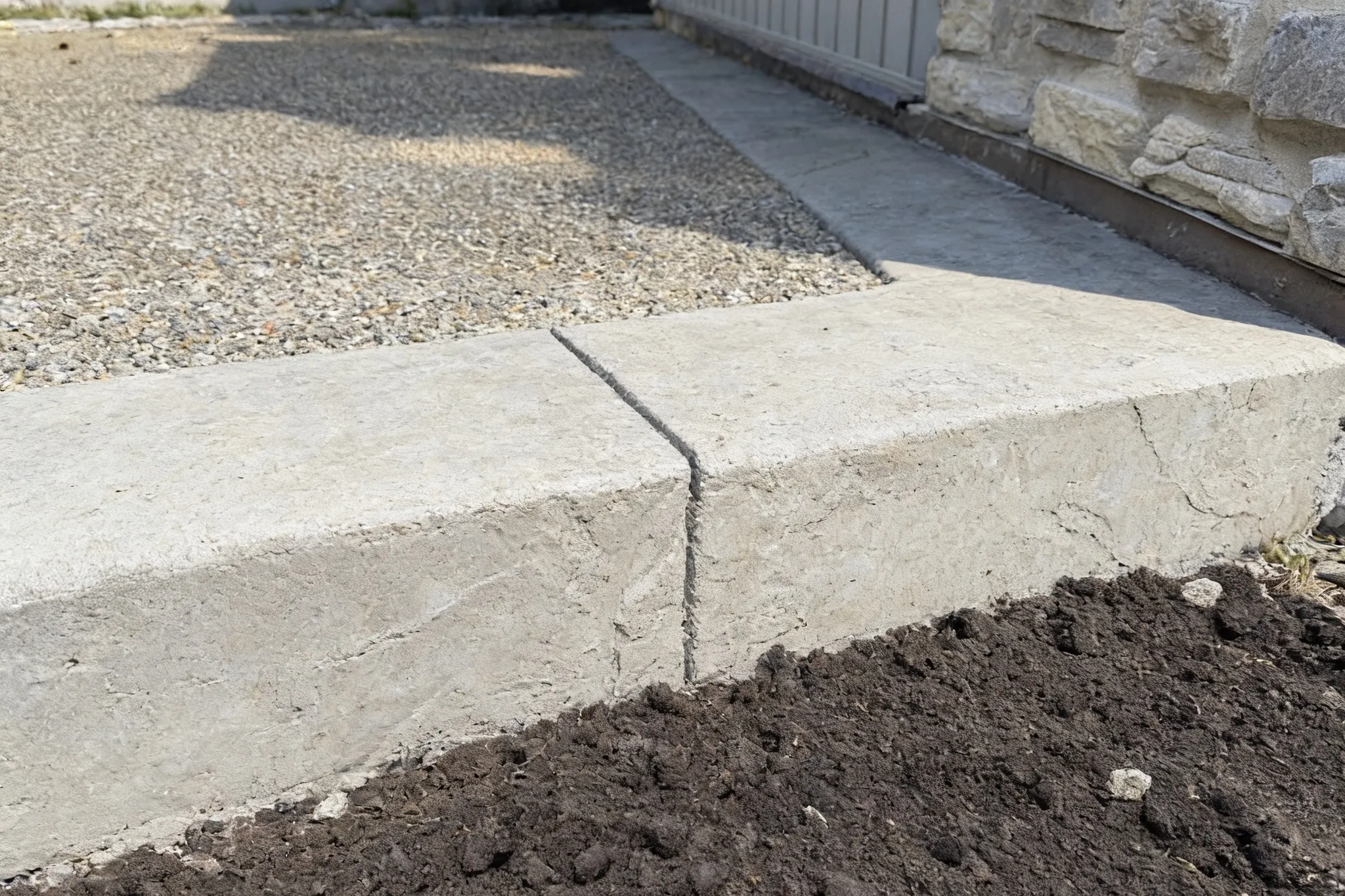
Stamped concrete · Southern Ontario
Straight answers
How much is stamped concrete in Ontario?
It's priced as an upgrade over a standard broom-finish slab, and how much it adds depends on the pattern, the number of colours, and how much hand-detailing the layout needs. Full-coverage stamping is a real step up from a plain pour; a stamped border around a plain field is far less. Because the variables are real, we don't post a per-foot rate, we write you a quote that itemizes the slab, colour, stamping, and sealing after a free site visit.
Stamped concrete quotes are all over the place. How do I tell a fair one?
Make each quote explain itself line by line. A fair stamped quote separates the base slab, the colour, the stamping labour, and the sealing, and it names the pattern and the resealing schedule. A quote that's just one big number, or that comes in far below the others, is hiding something: thin colour, skipped base prep, or a crew too small to finish the stamping before the concrete sets. Ours itemizes every part so you can compare it against anyone's, and it doesn't grow after you sign.
We paid a small fortune for our last decorative job. How will this one look after 10 years?
Like stone, if two things hold: the slab and the sealer. The slab is our job, a compacted base under 32 MPa air-entrained concrete, and the lifetime warranty on labour stands behind it in writing. The sealer is a shared job. We apply the first coat and hand you the schedule; reapplying it every two to three years is what keeps year ten looking like year one. Nearly every faded, chalky stamped surface you've seen is a sealing schedule somebody abandoned.
Stamped concrete or interlock pavers, which should we choose?
We do concrete, not pavers, so factor that in. Interlock can be repaired stone by stone, but it carries joint maintenance for life: weeds, ants, sand topping, edges that creep. Stamped concrete is one monolithic surface with nothing to weed, on a resealing schedule of every two to three years instead. If you like the idea of lifting and relaying sections yourself, interlock suits you. If you want flatness that stays put and a maintenance plan you can calendar, stamped wins.
Does stamped concrete crack?
All exterior concrete in Ontario wants to crack; the trade is deciding where. We cut control joints along the pattern's grout lines so shrinkage cracks land inside lines you can't see. What protects the field itself is the boring work: compacted base, correct thickness, air-entrained mix, joints cut on time. A wild crack is harder to hide in a stamped surface than a plain one, which is exactly why the prep matters more here, and if a workmanship failure ever shows up, the lifetime warranty on labour means we come back.
Do you do exposed aggregate and coloured concrete too?
Yes. Decorative concrete covers more than stamping. Exposed aggregate is a modest step up from broom finish and is the middle option we recommend most. Coloured broom finish keeps a plain surface from looking plain for the smallest upgrade. And a stamped border around a standard field dresses up a pour for far less than full coverage. The site visit is the right place to lay the samples side by side.
Related work
- Stamped Concrete in Southern OntarioPattern, colour, sealing, winter care, and where decorative concrete fits best around a home.
- Concrete PatiosPatios are where most stamped work lands. Sizes, drainage, and how the patio build comes together live here.
- Concrete DrivewaysThinking stamped for the driveway? Start with the base and thickness standards, then weigh a stamped border against full coverage.
- Concrete Walkways & StepsSmall square footage keeps the decorative upcharge small, which makes the front walkway the cheapest place to stamp.
Tell us about the job.
Send the details and we'll get back to you within one business day with next steps. If water is coming in right now, check the box and we flag it urgent.
Get a straight quote
Free · no pressure · 1 business day