HomeServicesConcrete PatiosDunnville
Concrete Patios in Dunnville
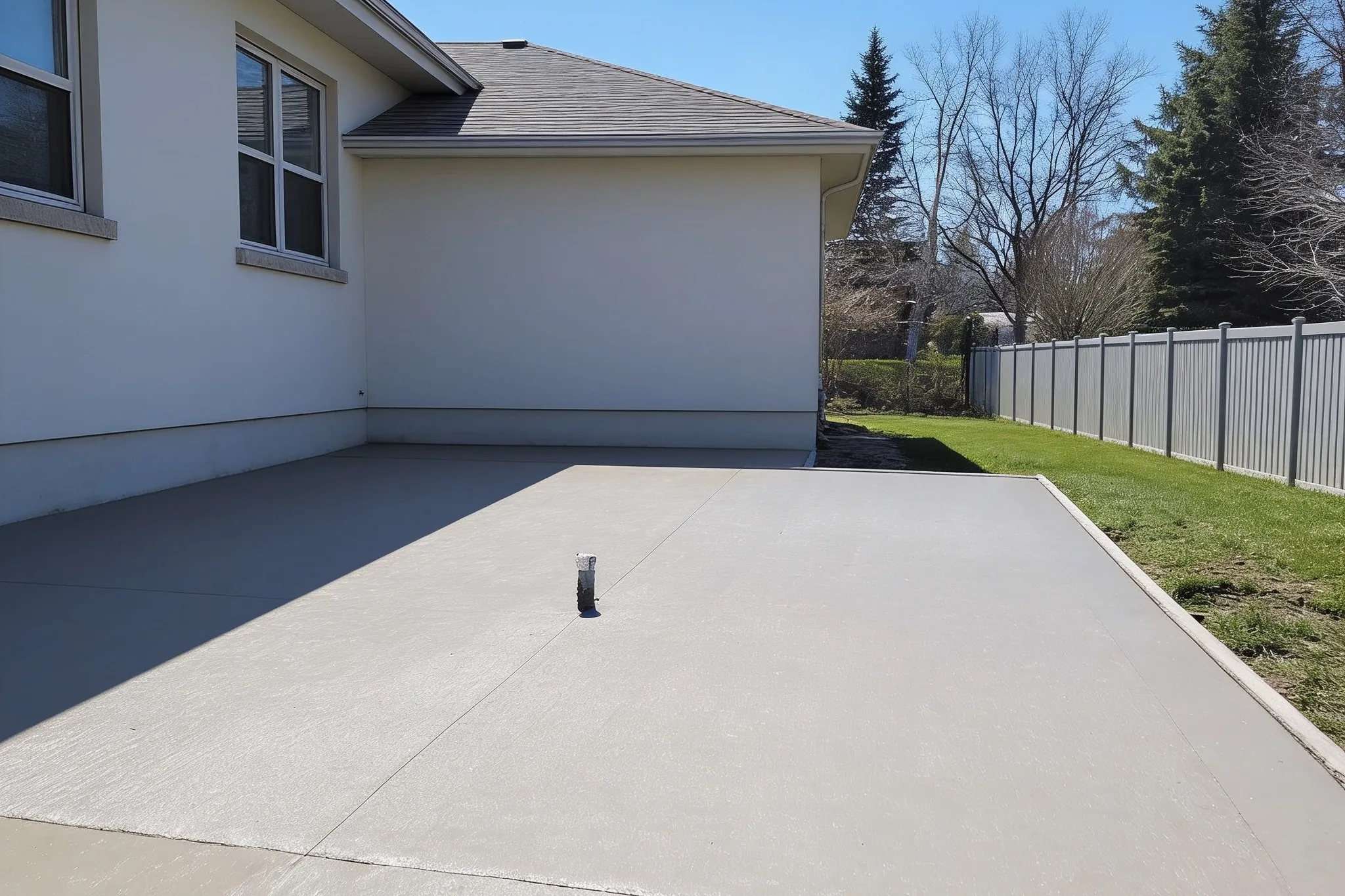
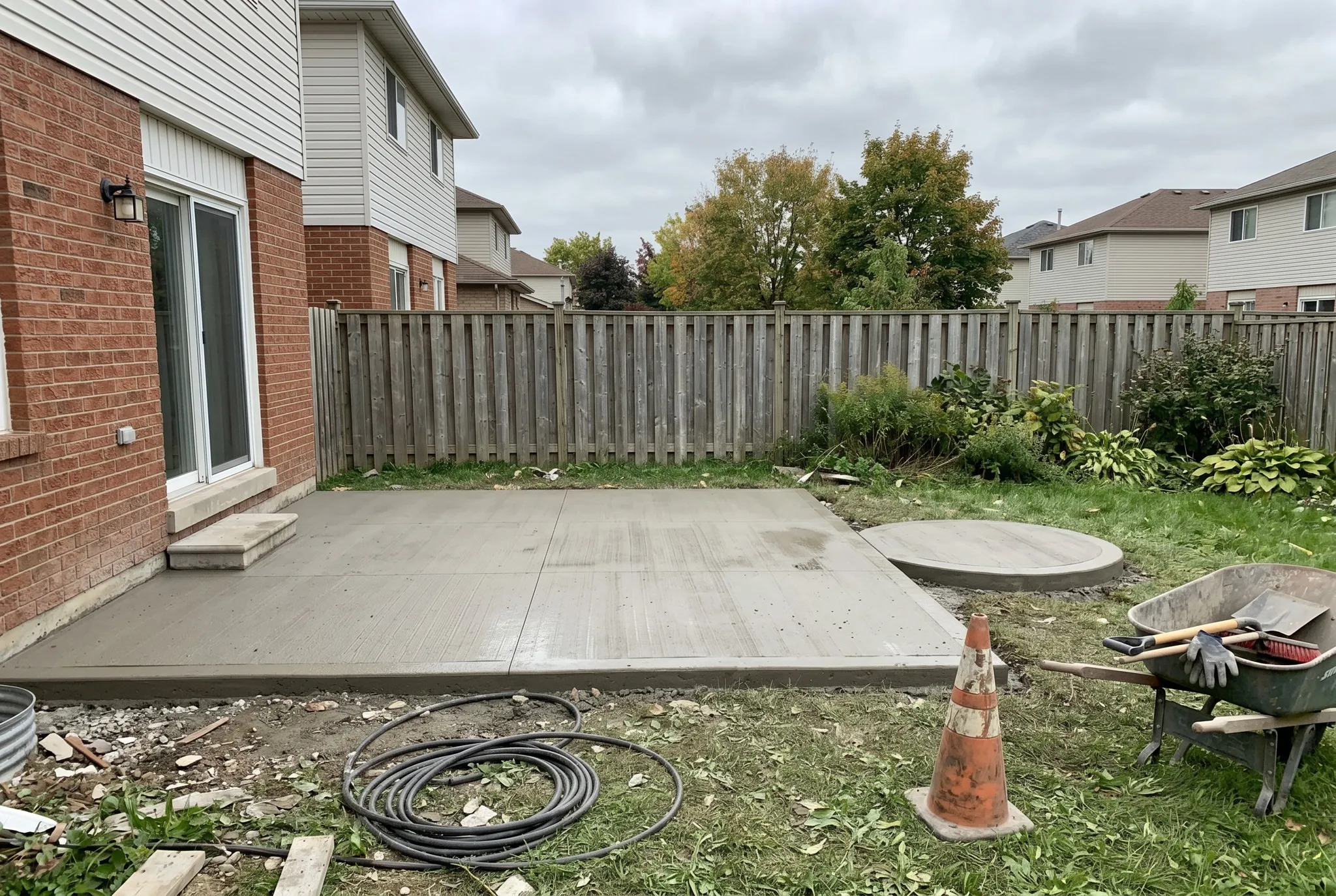
We pour concrete patios in Dunnville and at the lakeshore cottages from Port Maitland to Lowbanks. Dunnville sits at the low end of the Haldimand clay plain, where the water table near the river mouth runs high and the clay drains slowly. So we build each patio on a compacted granular base and slope it about 2 percent away from the house. Union-certified crews, a free written quote, and a lifetime warranty on labour.
Get a straight quote
Free · no pressure · 1 business day
Reviewed June 2026
Every job is priced individually, not off a price list. Tell us about yours and you get an accurate, no-pressure quote in writing.
Dunnville is where Haldimand County's water leaves. The town sits at the mouth of the Grand River, at the bottom of the county's clay plain. The clay drains slowly, and melt water stays in the ground for weeks each spring.
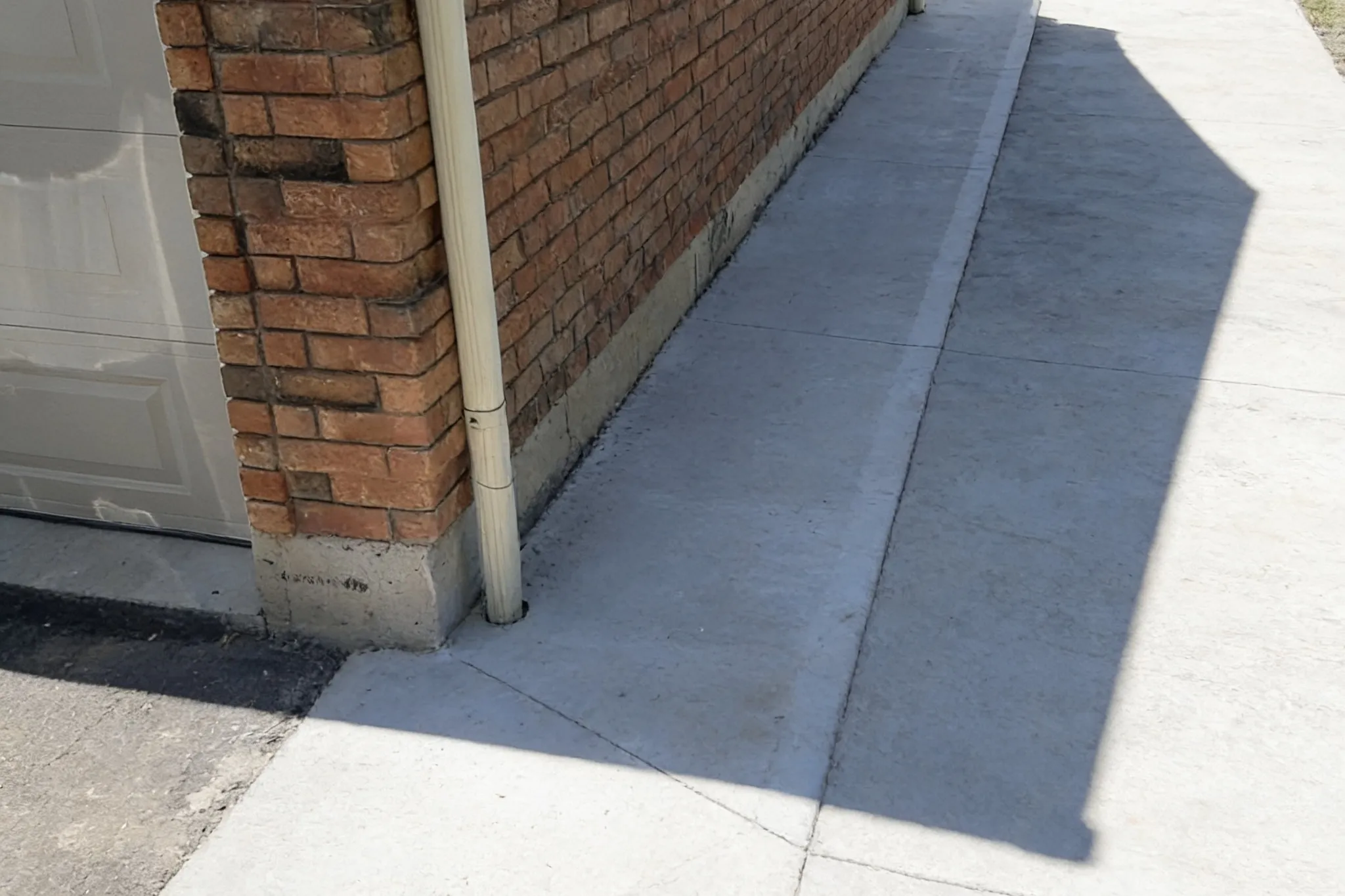
For a patio, that wet ground matters in two ways. Water that sits under a slab freezes and lifts it. And a patio that slopes the wrong way sends rain and melt at a foundation that is already in damp ground. So a Dunnville patio is a drainage job first and a place to sit second.
The full method, the 32 MPa air-entrained mix, the 100 mm slab, the compacted Granular A base and the control joints, is on our concrete patios page. This page is about what Dunnville's ground and homes change. The site visit and the written quote are free, and the number on the quote is the number you pay unless you change the job.
Wet clay near the river
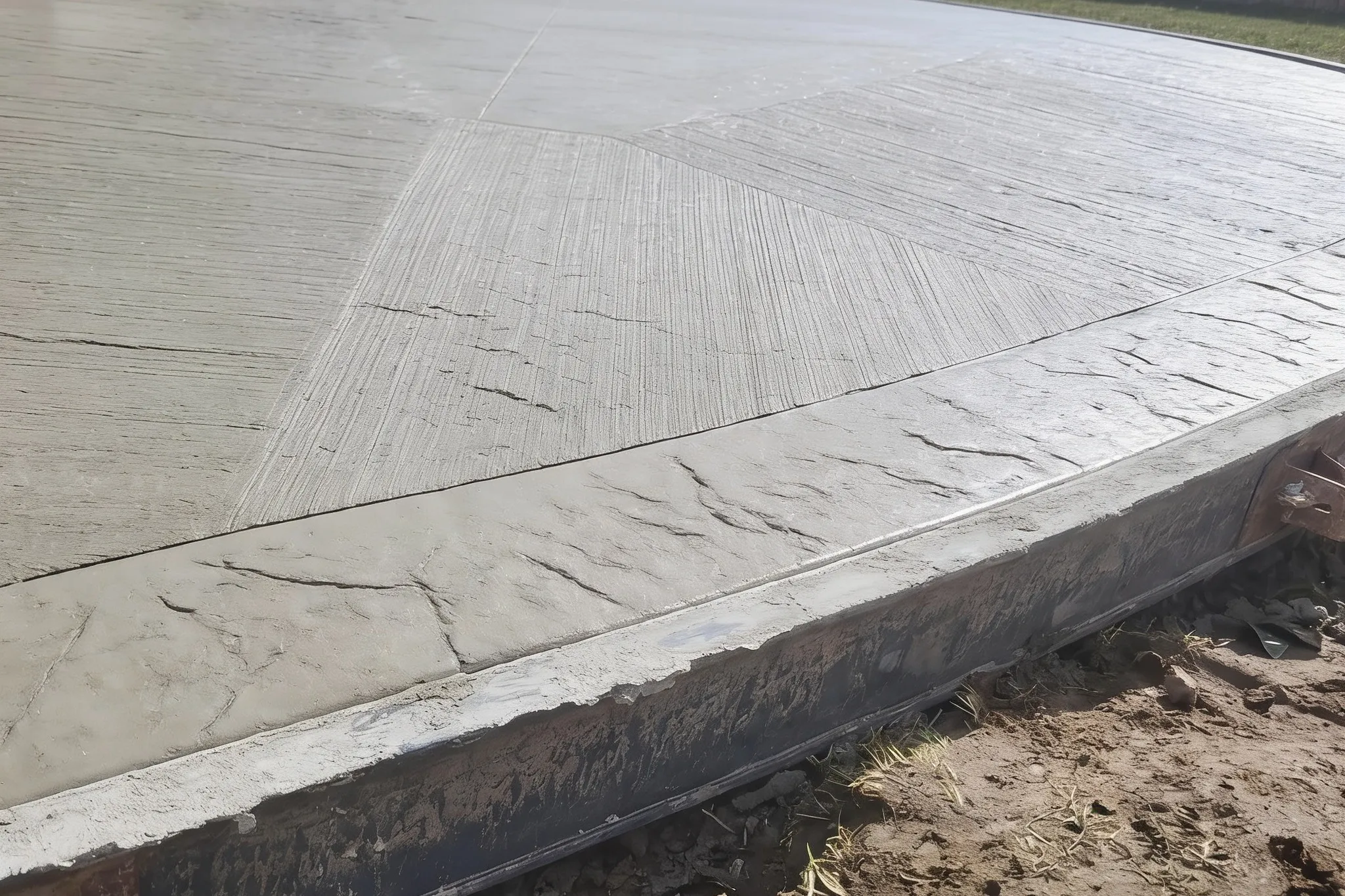
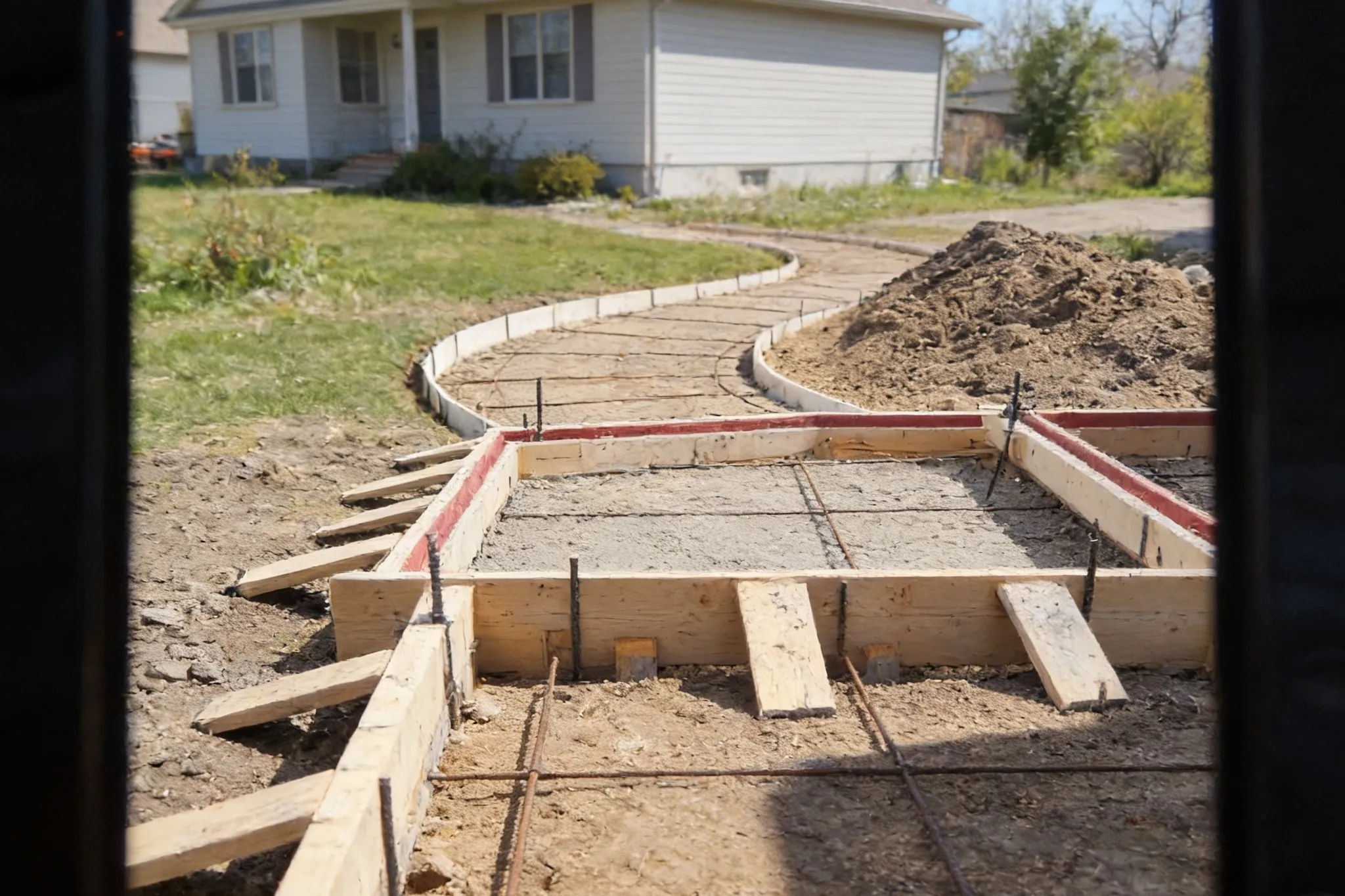
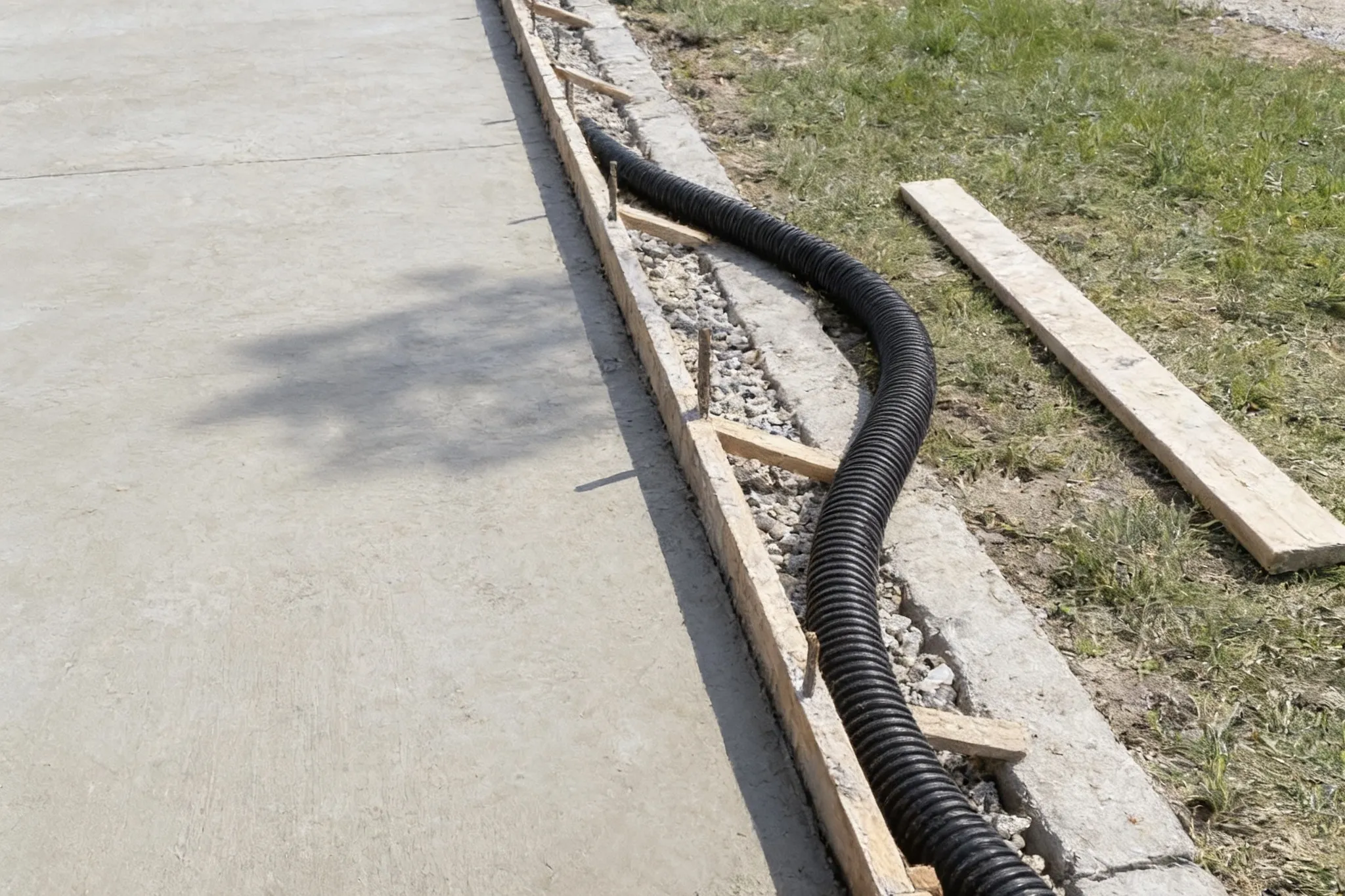
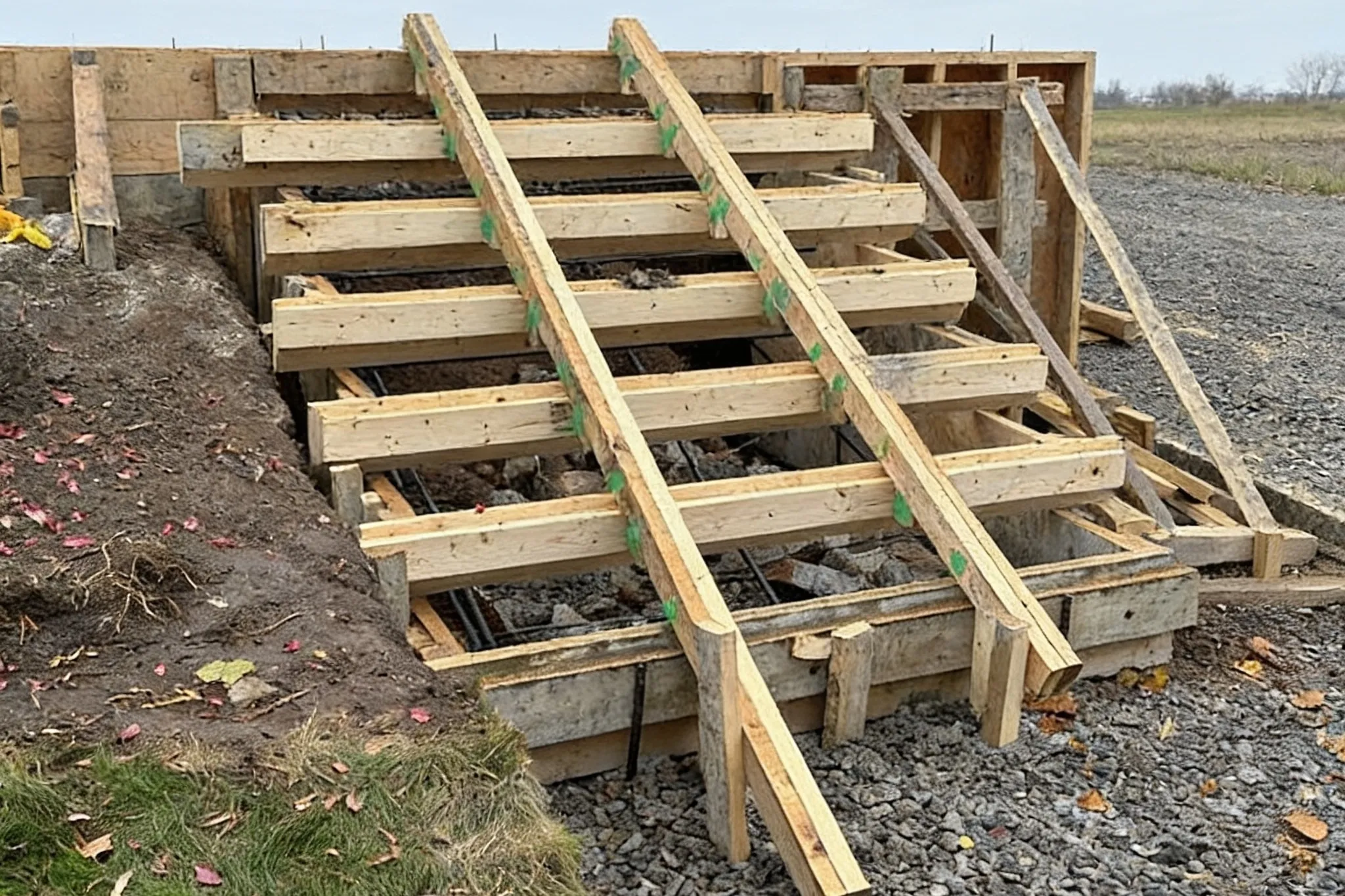
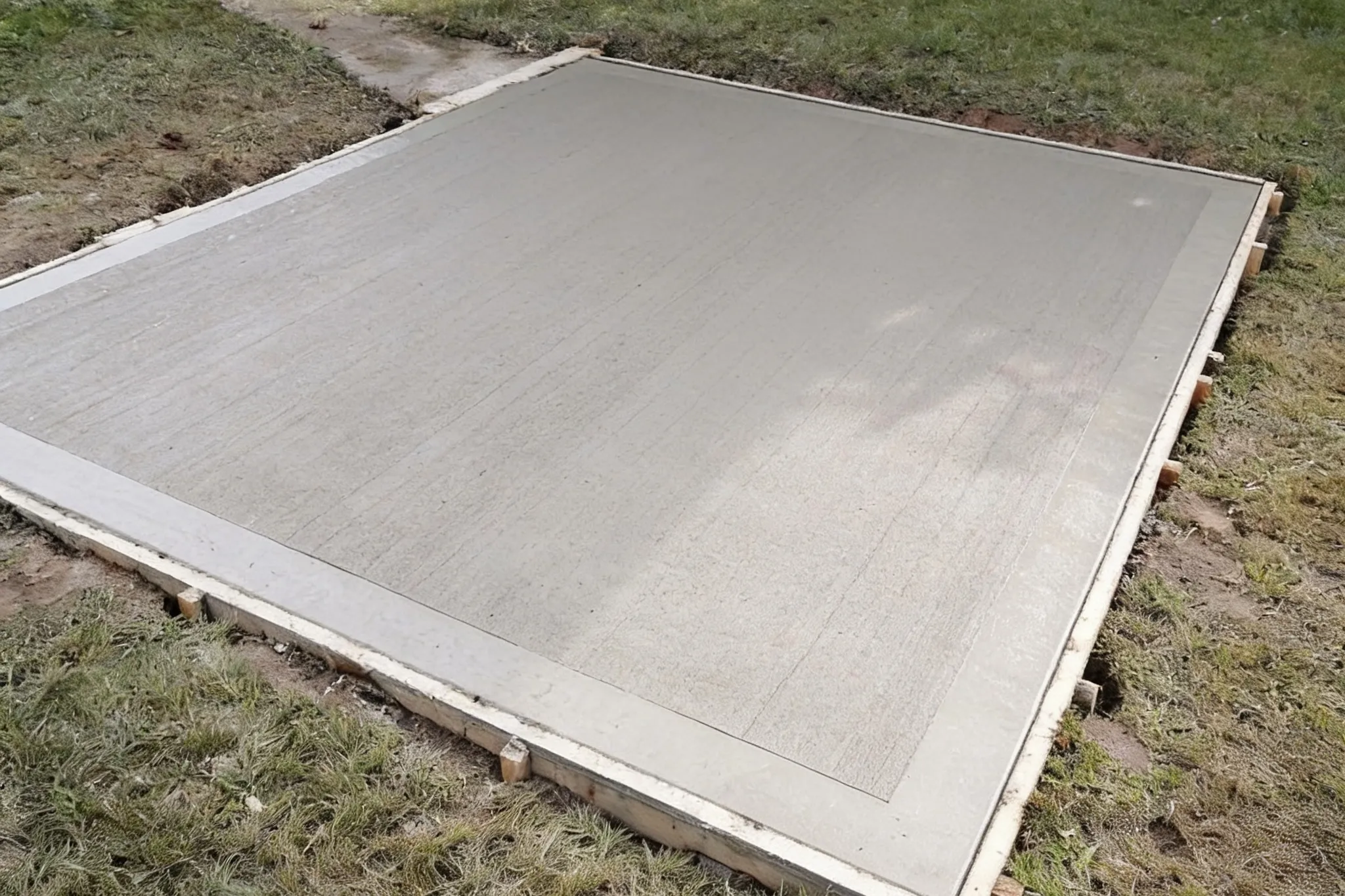
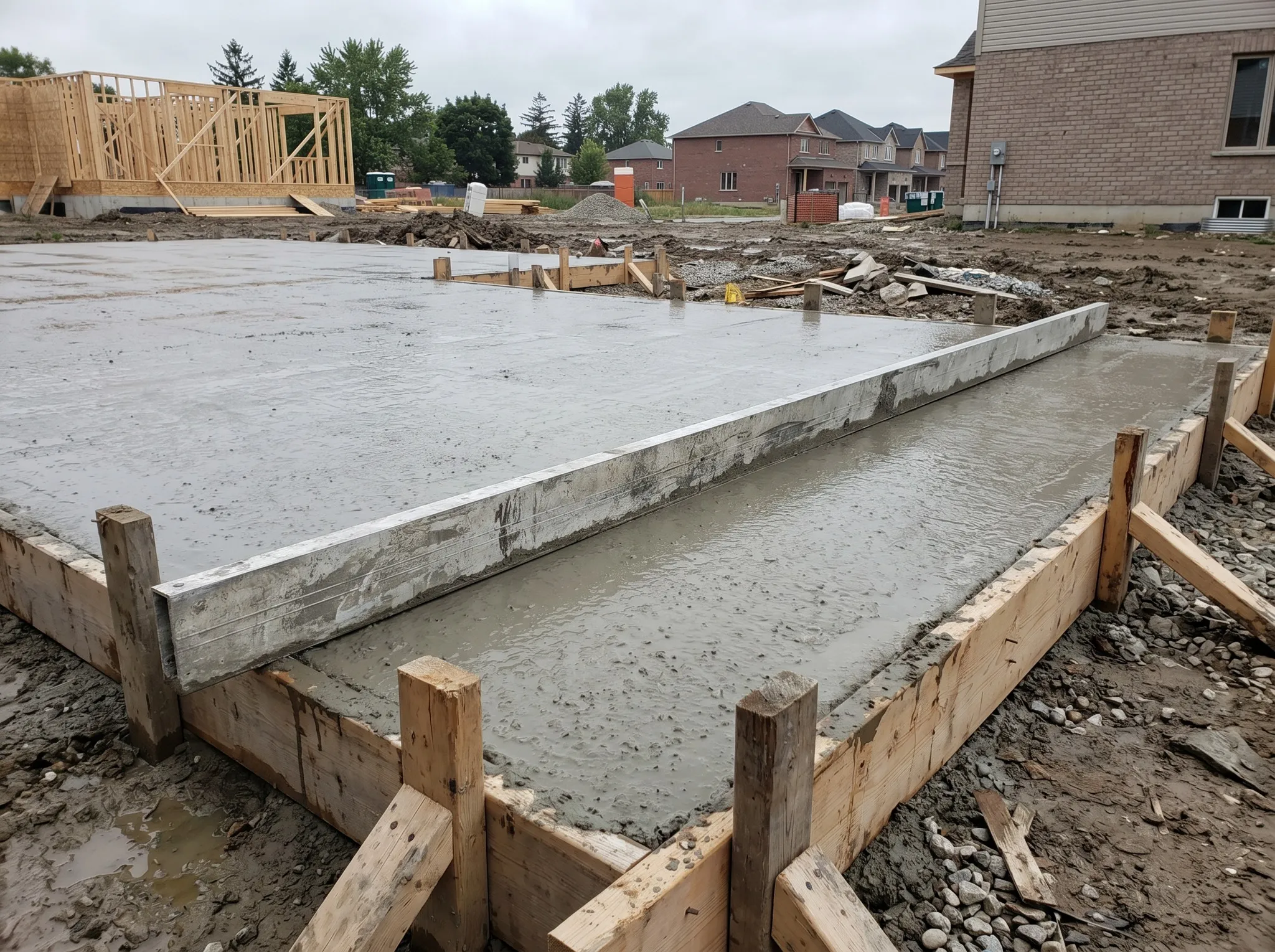
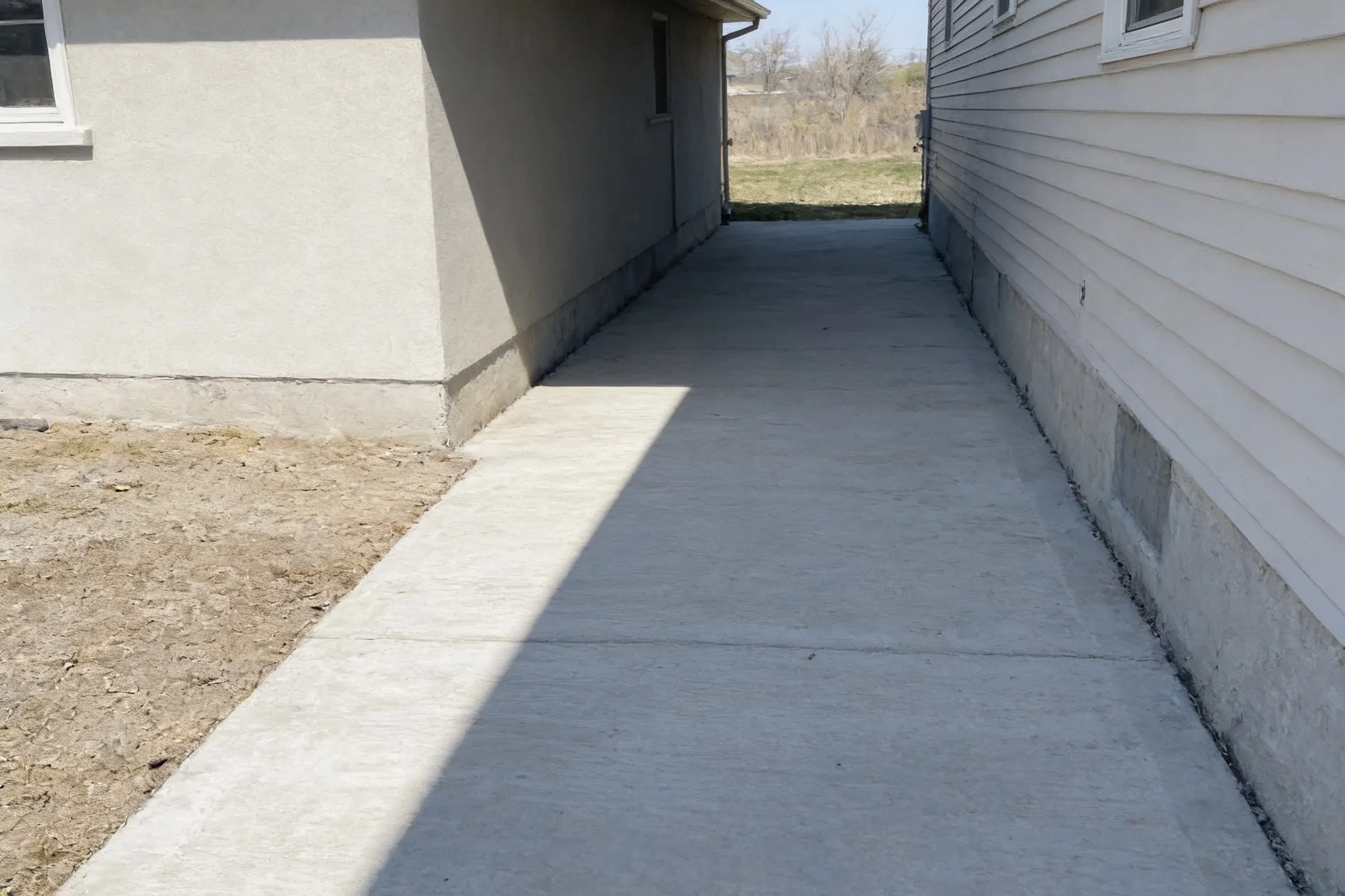
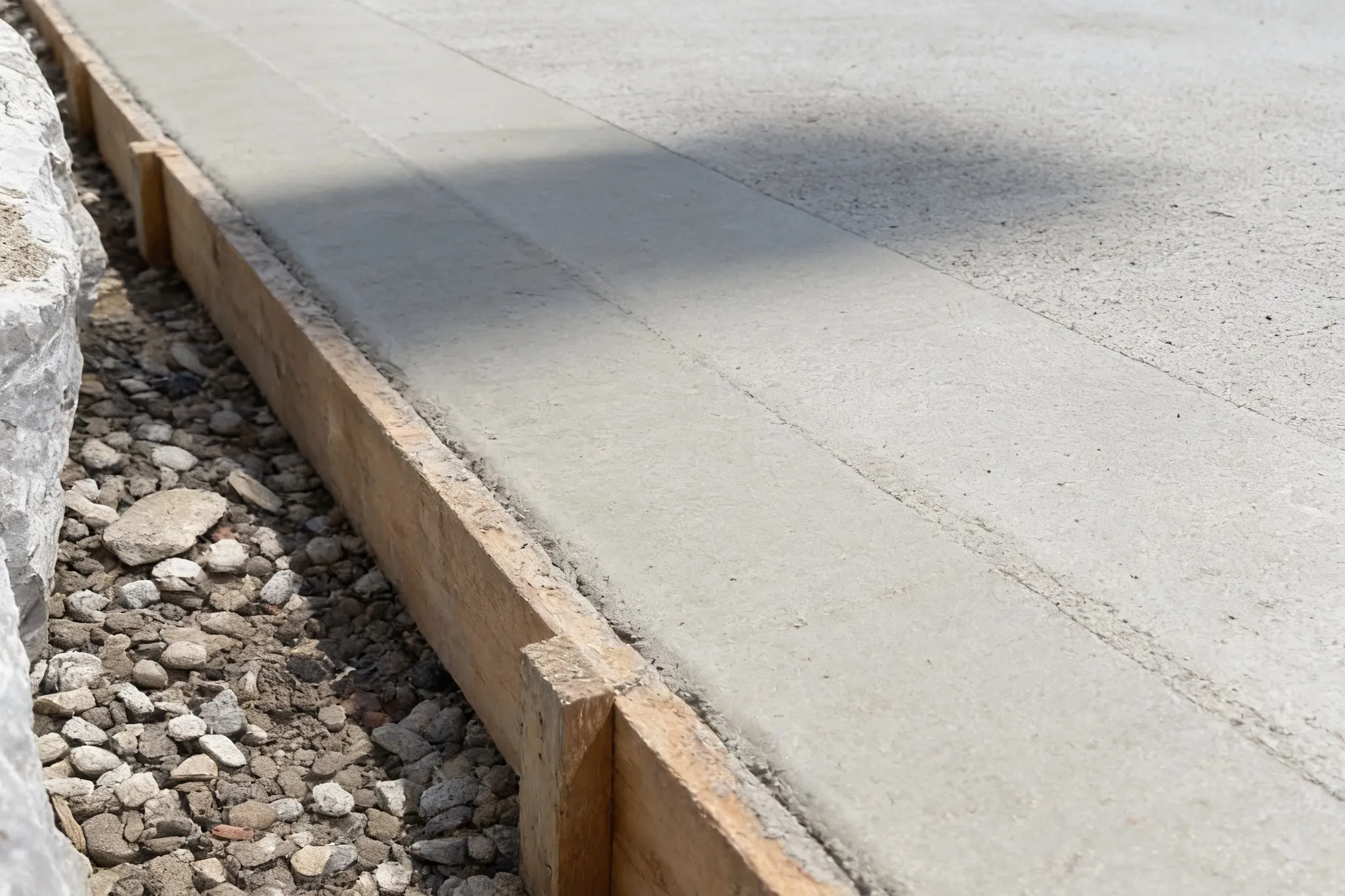
On the low lots near the river and the marshes along the lower Grand, we look at where the water goes before we set a form: downspouts that empty onto the patio area, a neighbour's grade that sheds onto yours, and how wet the ground stays in spring. We dig out soft ground, build the base in compacted lifts, and slope the slab about 2 percent away from the house.
That slope protects more than the patio. Foundations in Dunnville spend many weeks in damp ground, and a patio that drains toward the house adds to it. If your basement already gets damp in spring, tell us at the visit. We plan the patio so it moves water away from that wall, not toward it.
A worked example: a post-war bungalow near the dam
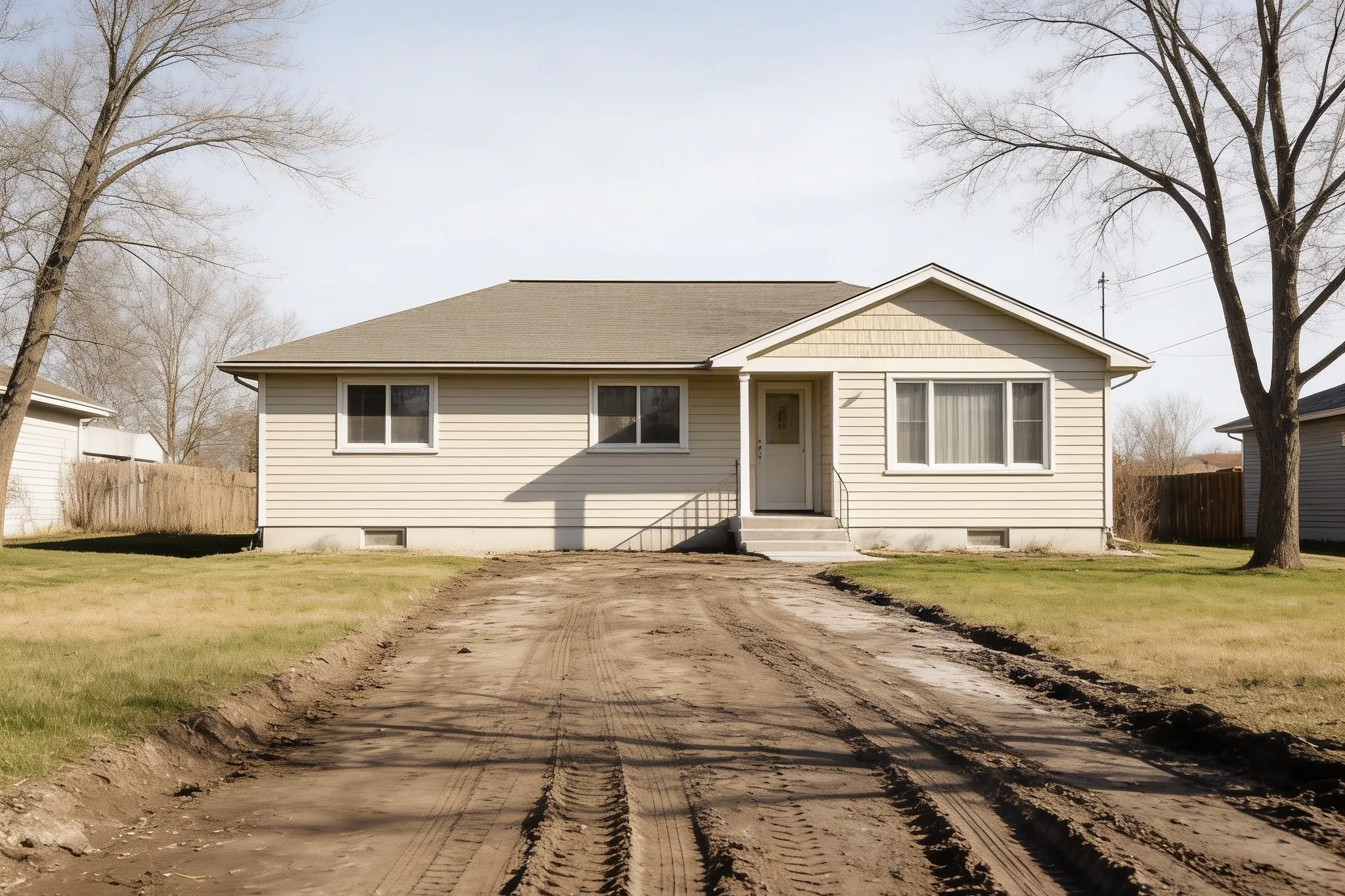
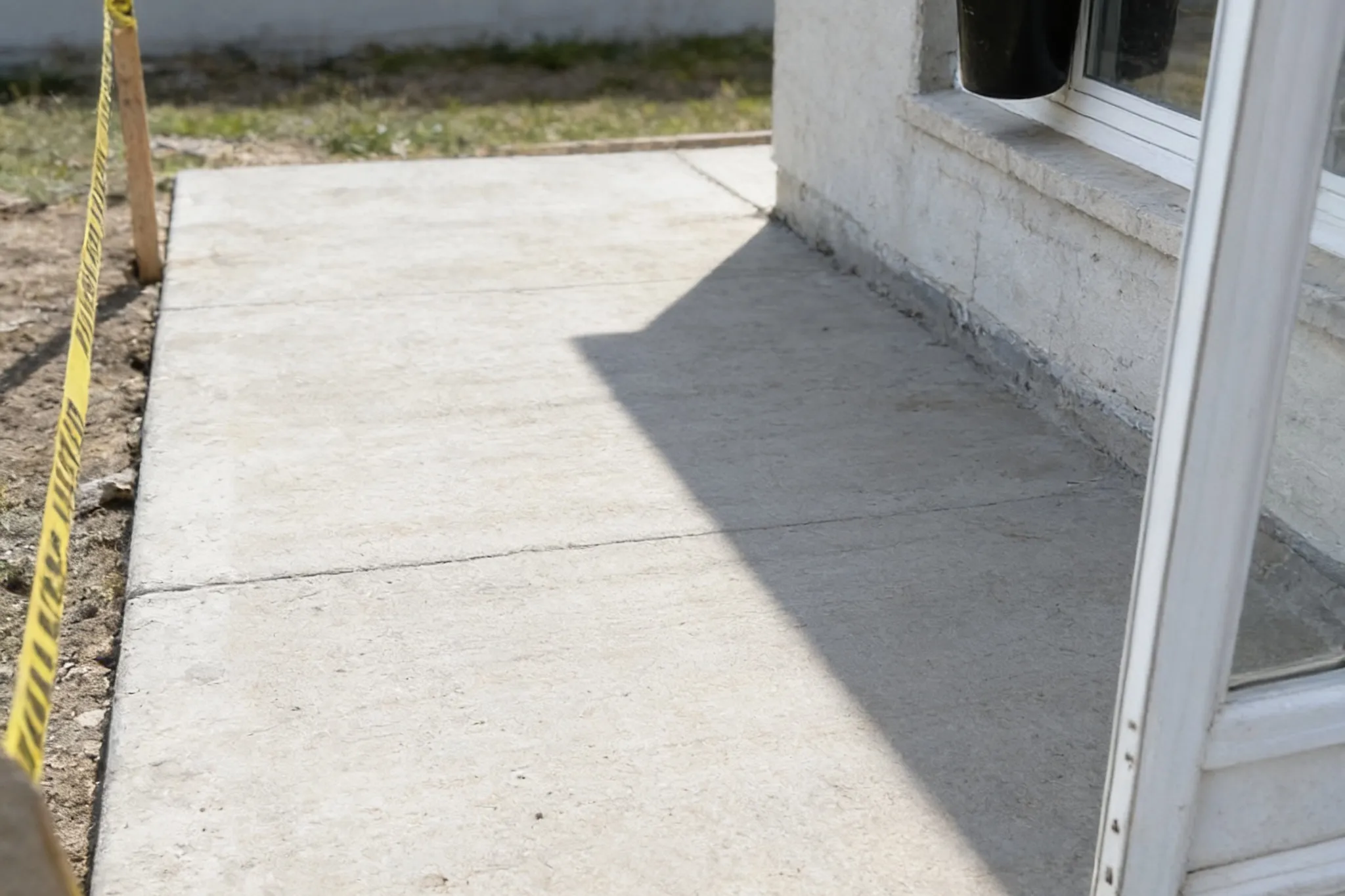
Picture a post-war bungalow on one of the streets out from the downtown. The back door opens onto a small, old slab that tilts toward the foundation, and every spring a damp patch shows on the basement wall below it. The owner wants a bigger patio for a table and a barbecue.
On a job like this, we start at the old slab. We measure it, see how far it has dropped, and check where the downspouts empty. Then we take the slab out, dig out any soft ground under it, and build the new base in compacted lifts. The new patio is poured about 2 percent lower at the far edge than at the house wall, so rain and melt run away from the foundation instead of toward it.
Older backyards in town
The streets around the dam and the downtown have Dunnville's oldest houses: pre-war frame houses and post-war bungalows. If an older yard already has a cracked or sunken slab where the patio will go, the new patio starts with taking out the old slab and finding what failed under it. Our concrete removal page says what tear-out involves.
Cottage patios by the lake
Outside town, the lakeshore from Port Maitland to Lowbanks and Stromness runs to cottage work, and a patio is a common job. Shore ground sits close to the water table, so a lakeshore patio gets extra base depth and a grade that sheds storm water fast.
A slab near the water stays wetter through more freeze-thaw cycles than the same pour inland. The air-entrained mix, a full cure and a seal at about 28 days are what let the surface last. If the cottage is closed for the season, we can quote from a site visit and book the pour for when access is easy.
Lake Erie winters and what they do to a slab
Winter comes off the lake in Dunnville. Erie is shallow and freezes early, and the ground around the river mouth goes through hard freeze-thaw swings with its feet wet. A patio here is cold, wet and frozen again many times in one winter.
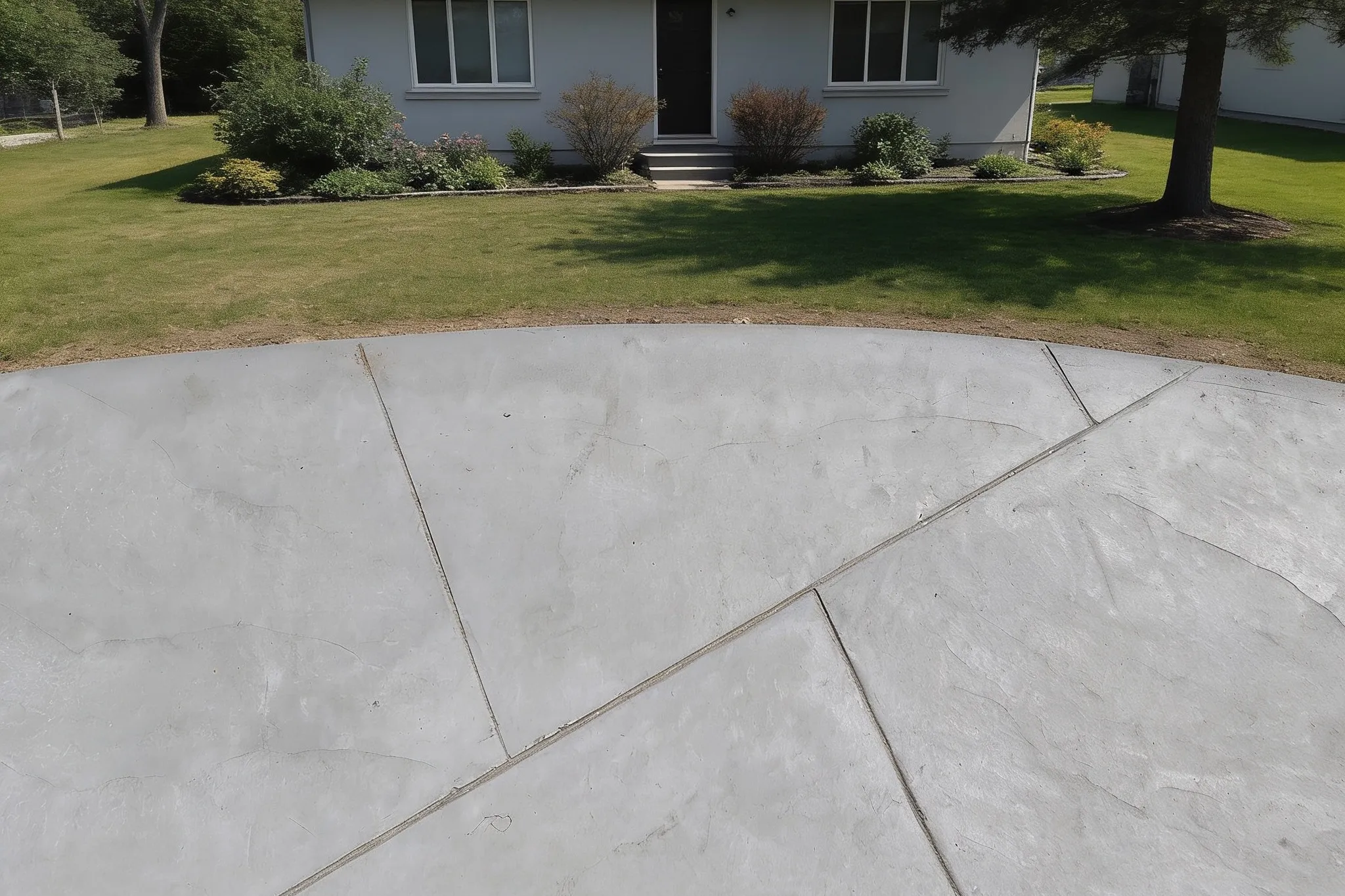
That is why the mix matters. We use 32 MPa air-entrained concrete, which is the exterior mix made for freeze-thaw. We also leave the control joints where we plan them, so any shrinkage crack follows a joint instead of wandering across the middle of the patio.
Planning the pour around the thaw
Pour season runs April to November, and spring books up fast once the ground thaws. In Dunnville the thaw has a second step: the ground can stay soft and wet for weeks after the frost is gone. If we pour on soft ground, the base can settle later, so we may wait for a drier window, even when the calendar says it is time.
A patio poured by early summer gets a full season of use the same year. If you want yours for a particular date, such as a family weekend, ask for the quote early in the winter. Weather can move a pour date. If it moves yours, we call before the scheduled day, and the job picks up the next dry window.
Getting concrete to the backyard
Access shapes every patio quote. If the concrete truck cannot get near the forms, the crew moves the mix by pump or wheelbarrow. That labour is real, and the written quote names it up front.
At the site visit, we walk the route from the street to the back of the house. We look at gates, fences, steps and the lawn along the way, and we protect the lawn, the gardens and the fence along the access route. When we leave, the site is clean.
Patios with a pool
A deck around a pool has extra jobs. It has to grip wet bare feet, so we finish pool decks in broom or exposed aggregate, not smooth trowel, and any sealer gets an anti-slip additive. It also has to drain away from the pool and the house. On Dunnville's high water table, that drainage is the part we plan most carefully.
Finish and cure
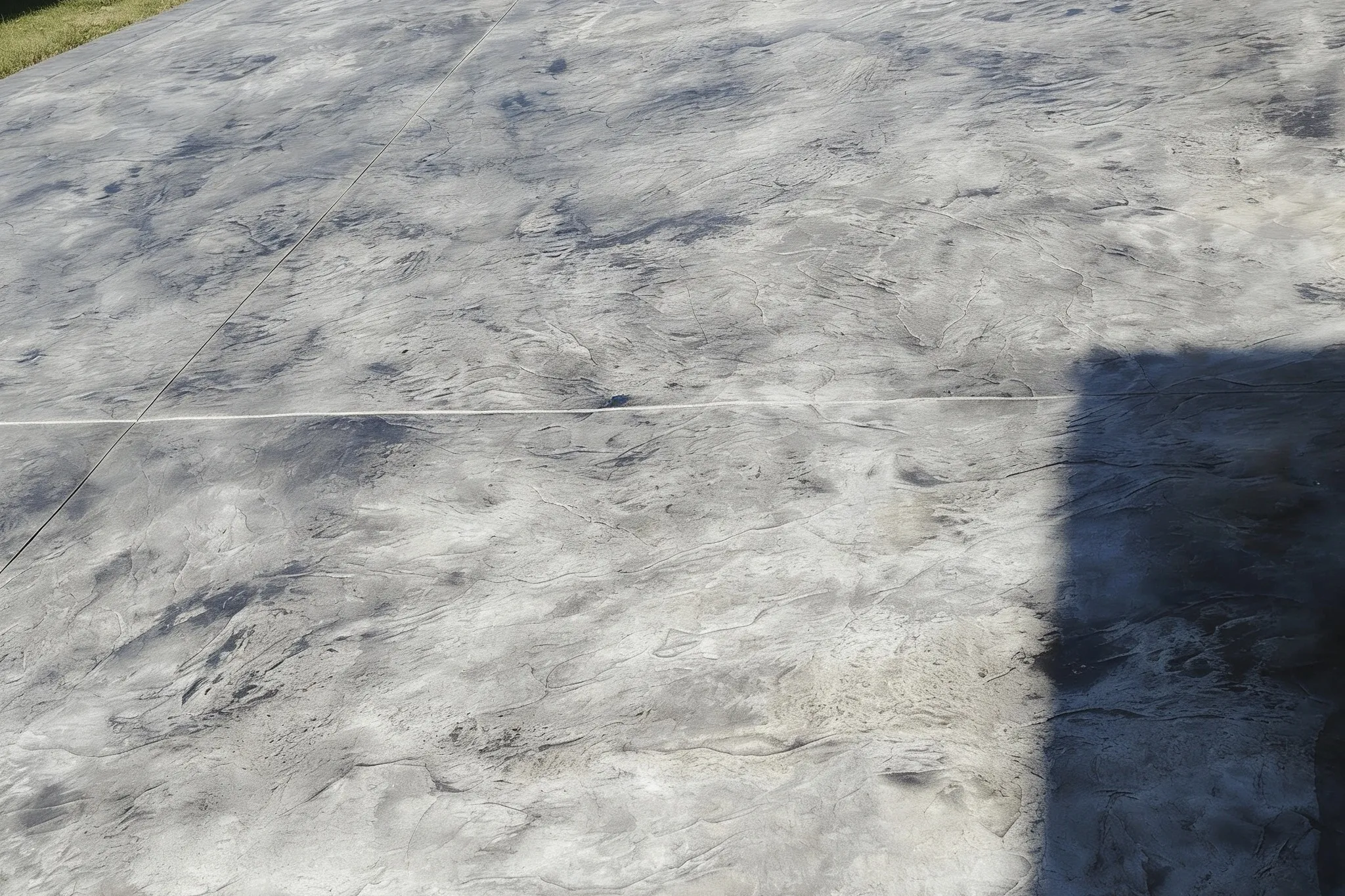
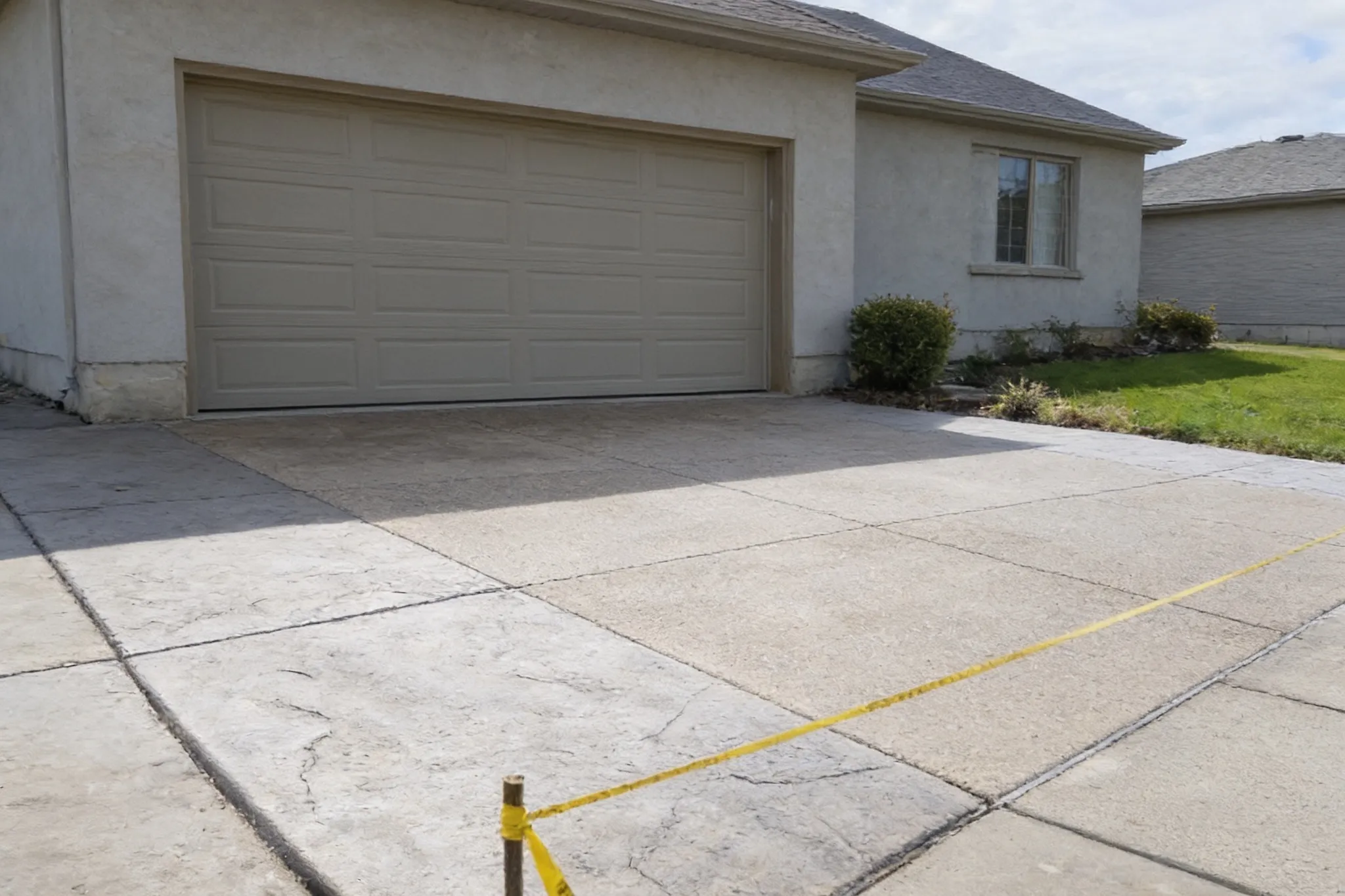
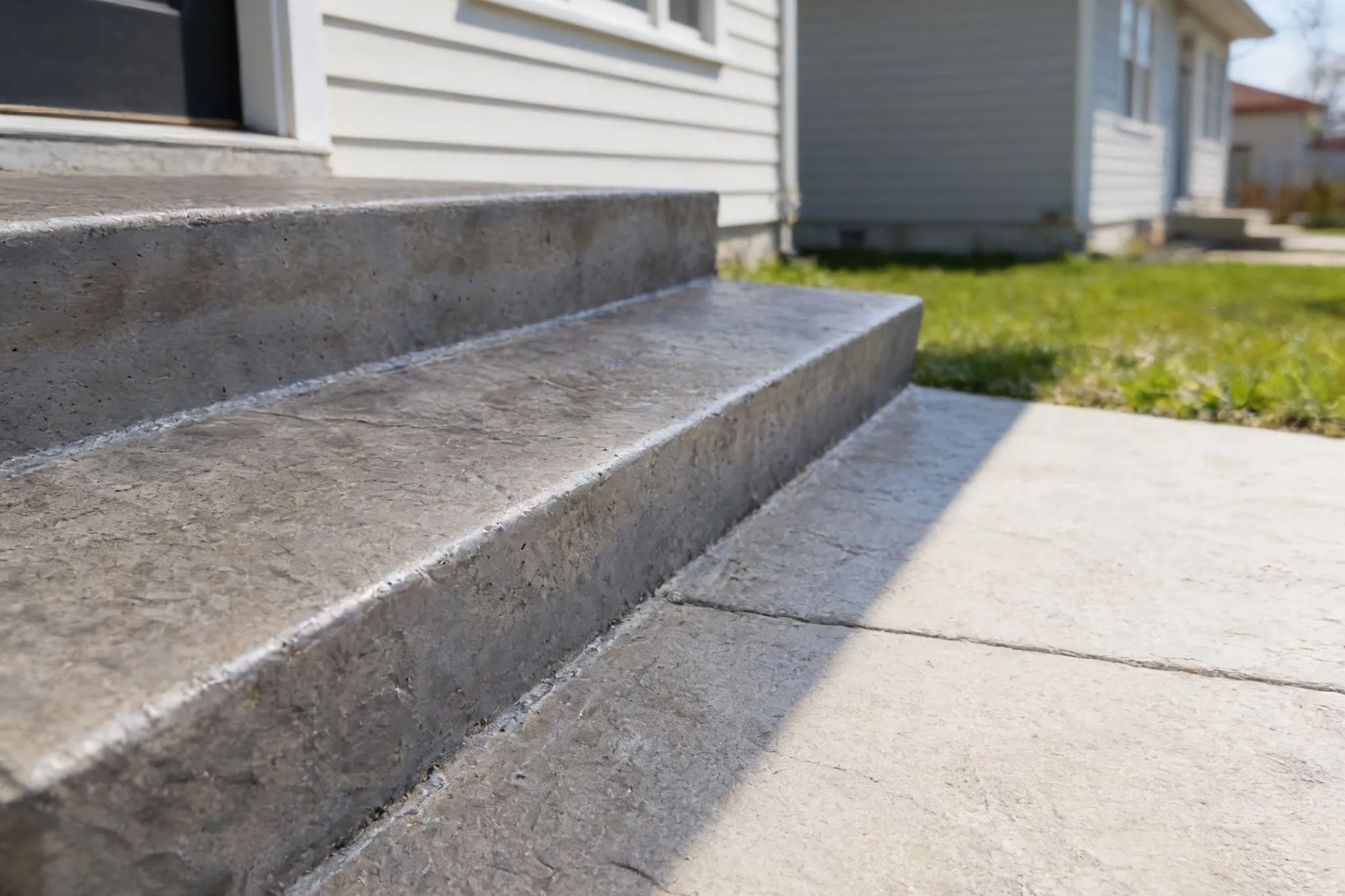
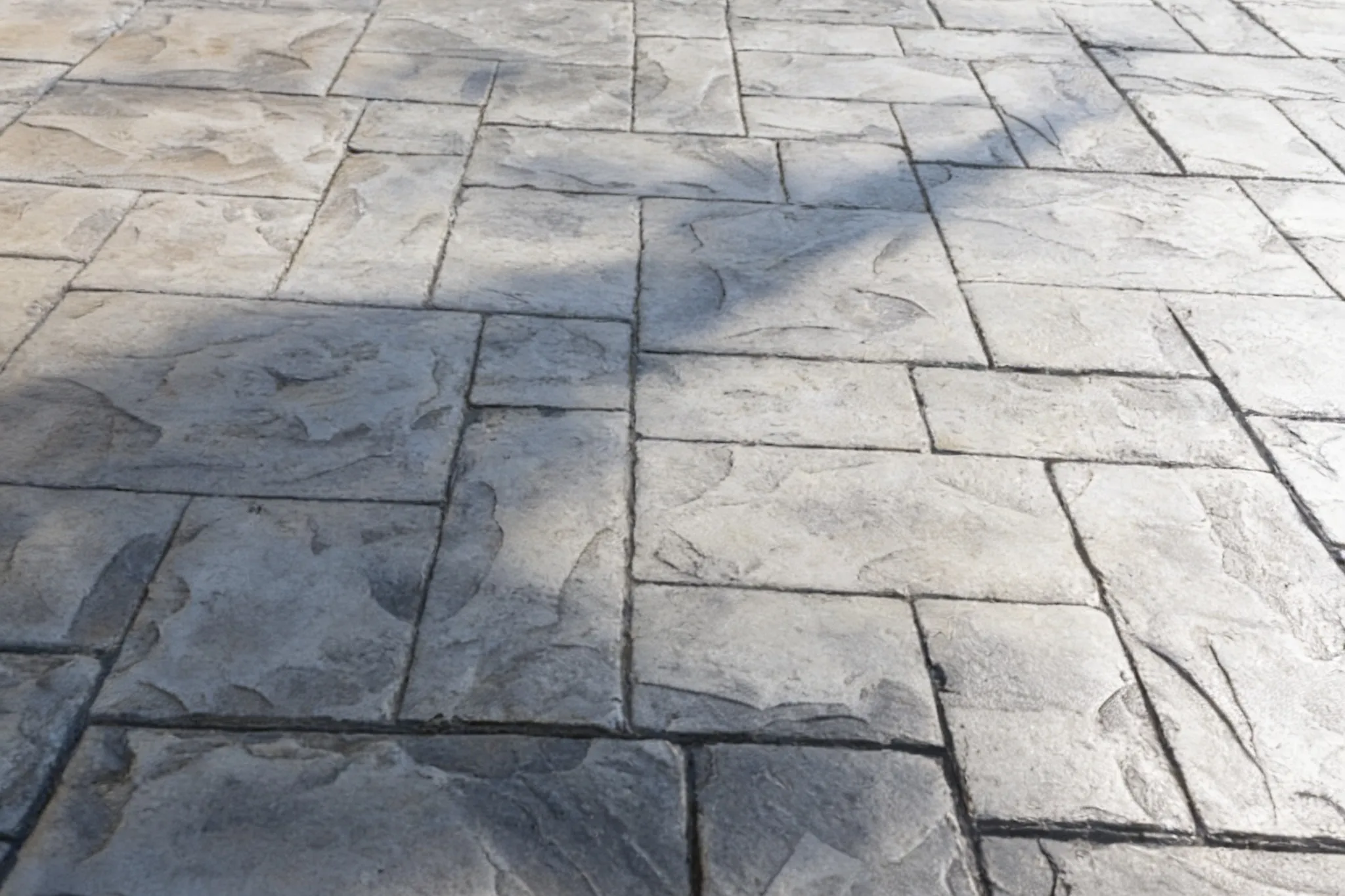
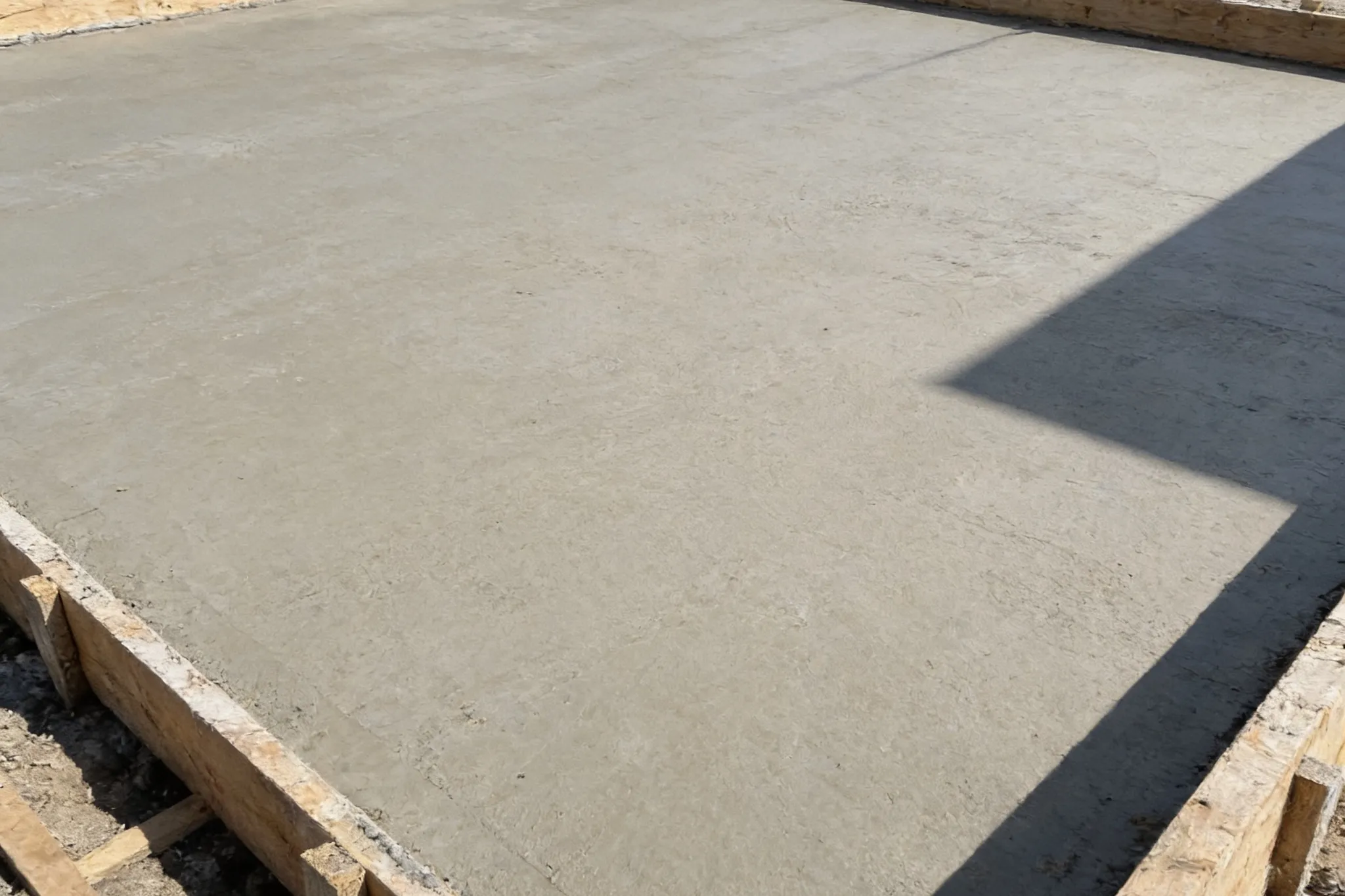
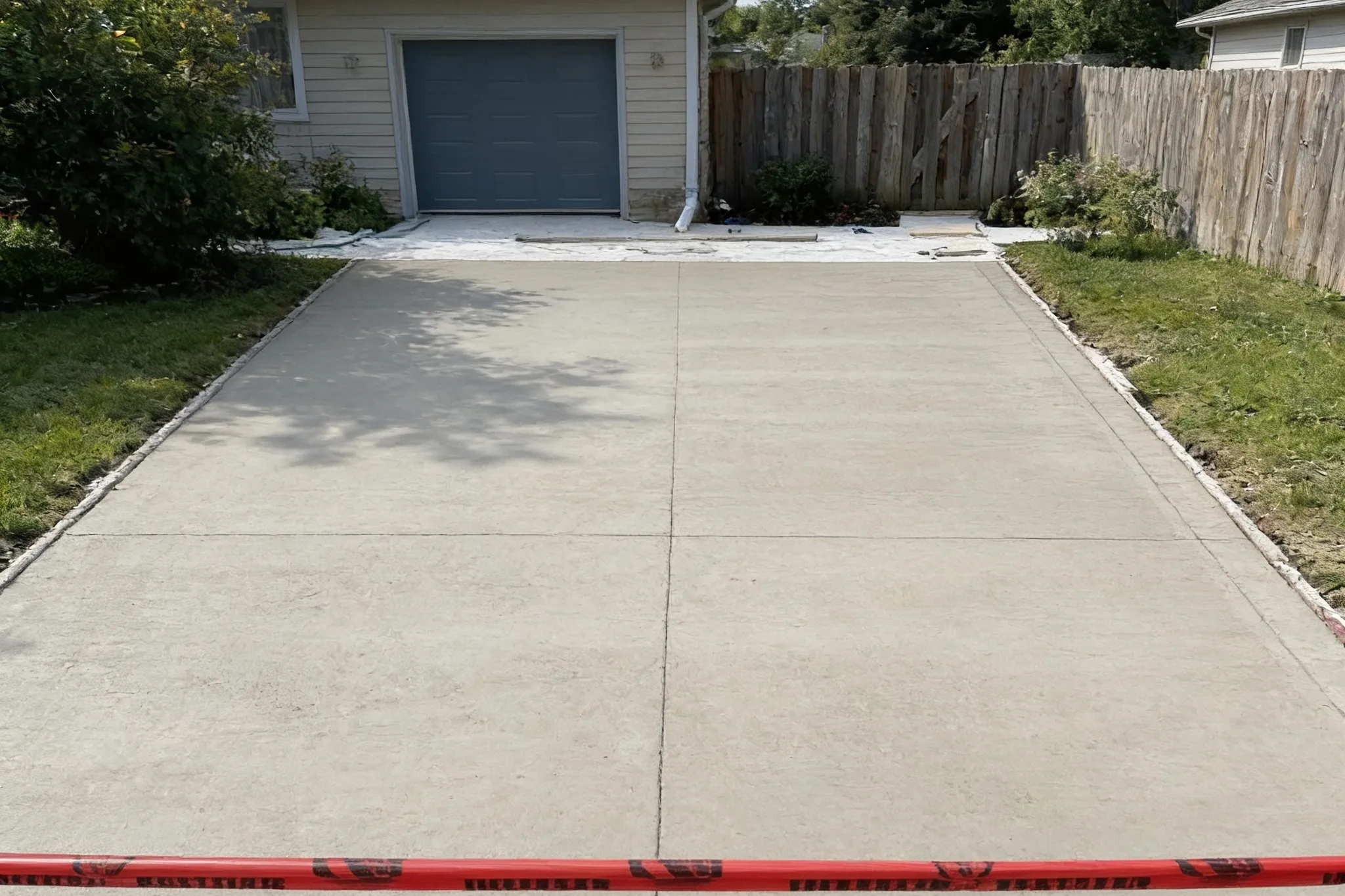
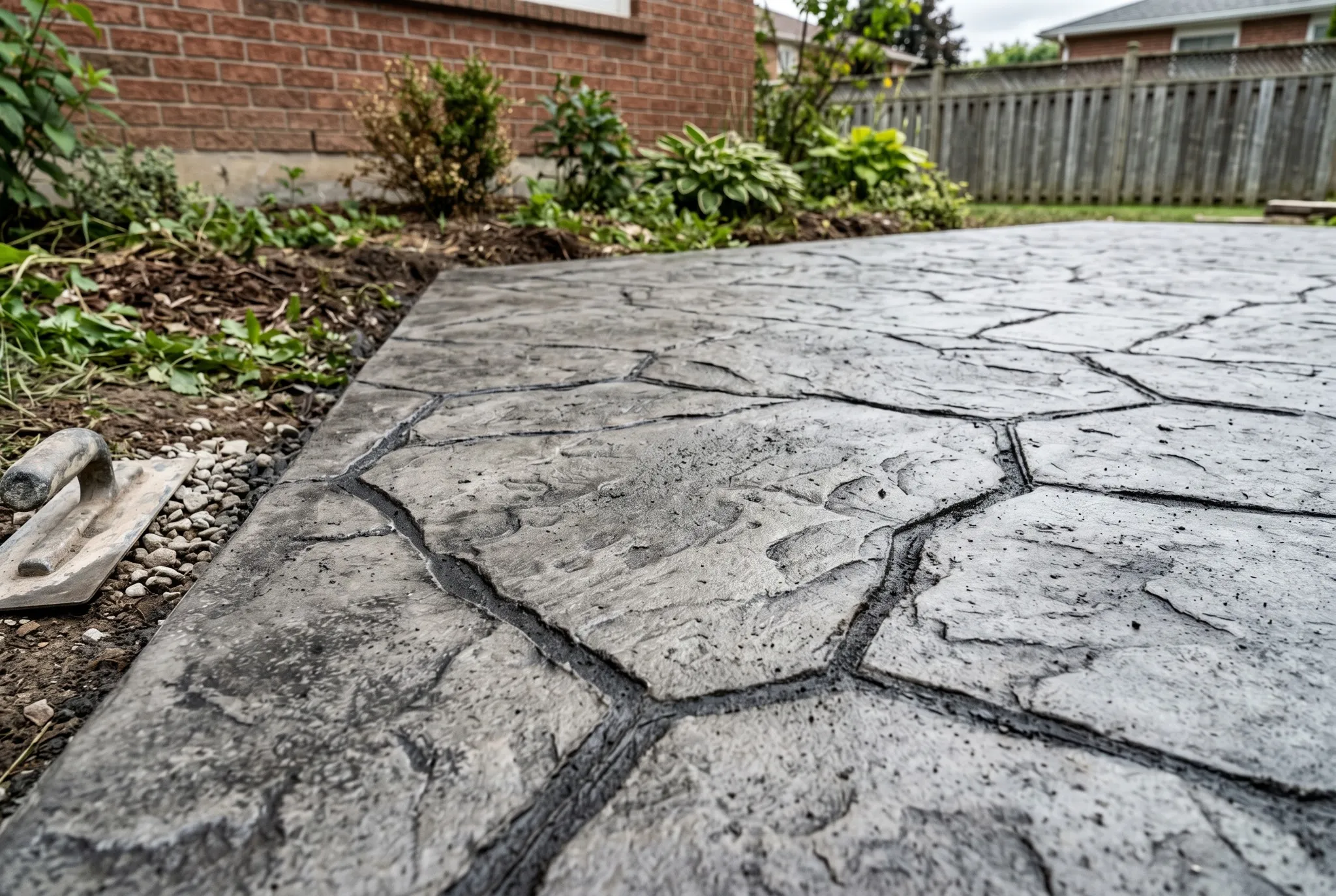
Broom finish gives grip and is the most affordable. Exposed aggregate adds texture. Stamped concrete adds pattern and colour; see our stamped and decorative concrete page if you are weighing it. Foot traffic can go on a new patio after 24 to 48 hours, furniture after 7 days, and the patio can be sealed at about 28 days. Dunnville jobs book onto our scheduled Haldimand route days through the pouring season.
Straight answers
Our backyard stays wet every spring. Can it still have a concrete patio?
Yes, but the base and the slope do the work. We dig out soft ground, build a granular base in compacted lifts, and slope the slab about 2 percent away from the house. We also look at downspouts and the grade around the patio, because water that keeps reaching the base is what lifts a slab.
Can you pour a patio at a cottage near Port Maitland or Lowbanks?
Yes. The lakeshore cottages are regular stops on our Dunnville route days. Shore ground sits close to the water table, so we give the patio extra base depth and a grade that sheds storm water fast. If the cottage is closed, we quote from a site visit and book the pour for an easy time.
Our old patio slopes toward the house. Can you fix that?
Yes. We take out the old slab, fix what failed under it, and pour a new patio sloped about 2 percent away from the house. On Dunnville's damp ground, that slope helps keep water away from your foundation as well as off the patio.
How much does a concrete patio cost in Dunnville?
Size, the finish you choose, access to the backyard, and the base the ground needs all move the number. Wet ground near the river can need more base and drainage work than a dry lot. If the concrete truck cannot reach the forms, the crew moves the mix by pump or wheelbarrow, and the quote names that. The visit and the written quote are free, and the number we quote is the number you pay unless you change the job.
How long does a patio take once you start?
Most patios are one to two days on site: layout and base work, then forming, pouring and finishing. Stamped work adds time for colour and pattern. You can walk on the new slab in 24 to 48 hours, set furniture on it after about a week, and seal it at about 28 days.
When is the best time to book a patio in Dunnville?
Ask for the quote early, ideally over the winter. Pour season runs April to November, and spring books up fast once the ground thaws. On the wet clay near the river, we may also wait for the ground to dry before we pour.
Do you build patio decks around pools?
Yes. We pour new decks around new and existing pools, and we replace heaved or settled decks. We finish them in broom or exposed aggregate for grip, add an anti-slip additive to any sealer, and slope the deck away from the pool and the house.
Keep reading
- Concrete Patios across Southern OntarioThe full method: mix, base, slope, joints, finishes and cure times.
- Concrete Contractors in DunnvilleEverything else we pour and repair in Dunnville, from the old streets by the dam to the lakeshore cottages.
- Concrete Driveways in DunnvilleThe same wet clay and lakeshore ground, for a slab that carries cars.
- Basement Waterproofing in DunnvilleWhen the damp ground reaches the foundation, how we keep the water out.
- Concrete Walkways & Steps in DunnvilleEntrance steps and walks on the same wet clay, built on footings and a compacted base.
- Stamped Concrete in DunnvilleWant the patio coloured and patterned like stone? Here is what stamping asks of a Dunnville job.
Tell us about the job.
Send the details and we'll get back to you within one business day with next steps. If water is coming in right now, check the box and we flag it urgent.
Get a straight quote
Free · no pressure · 1 business day