HomeServicesConcrete Repair & ResurfacingElmira
Concrete Repair and Resurfacing in Elmira
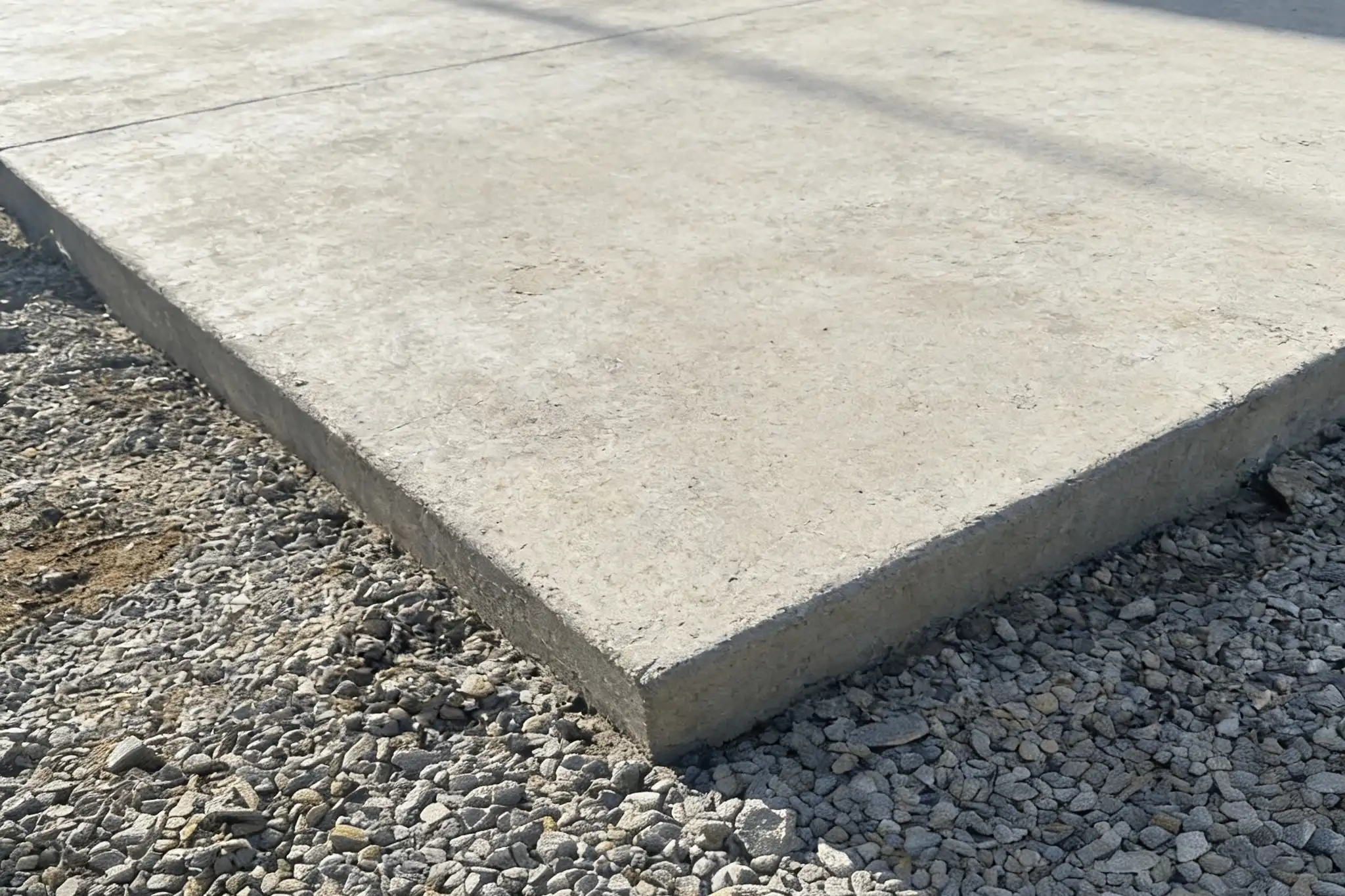
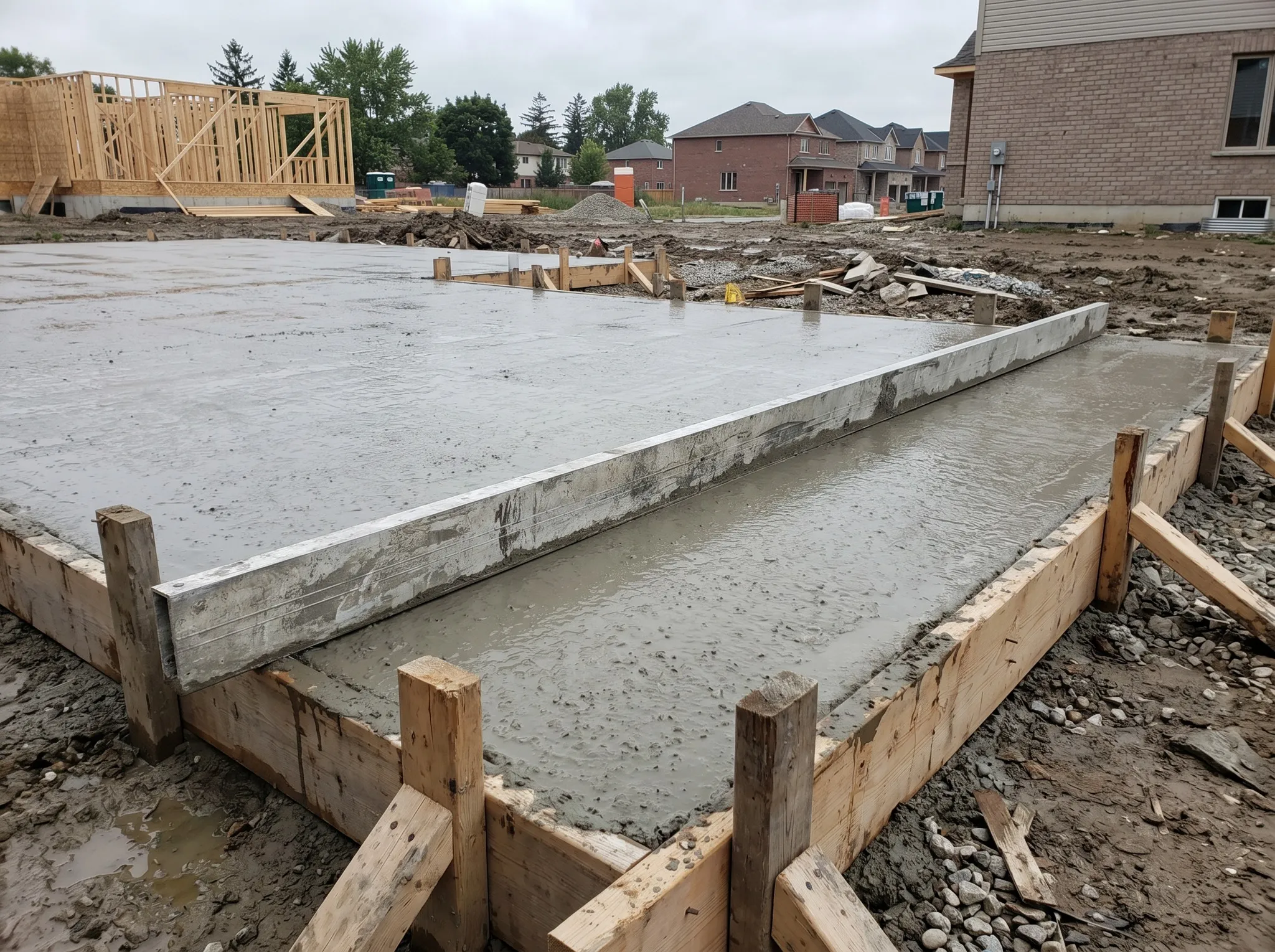
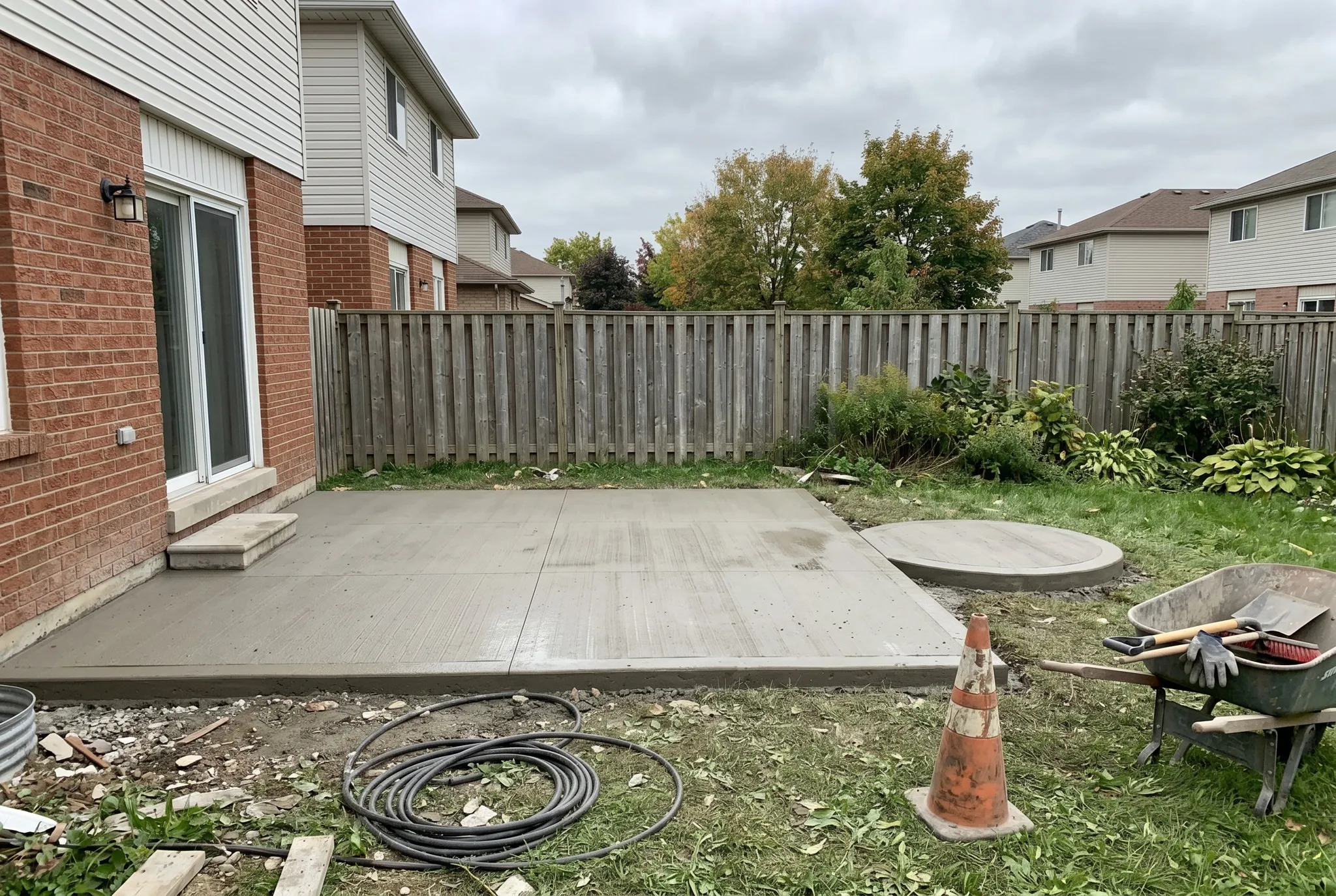
We repair cracked, sunken and worn concrete in Elmira and the Woolwich farm country around it: crack injection, slab lifting, resurfacing, step rebuilds and sealing. The older homes of the town core bring repair work, since their steps and slabs have been through many Ontario winters. Elmira lots run from loam to clay, so we find why the concrete moved before we quote the fix. The quote is free and written, you get a reply within one business day, and the labour carries our lifetime warranty.
Get a straight quote
Free · no pressure · 1 business day
Reviewed June 2026
Every job is priced individually, not off a price list. Tell us about yours and you get an accurate, no-pressure quote in writing.
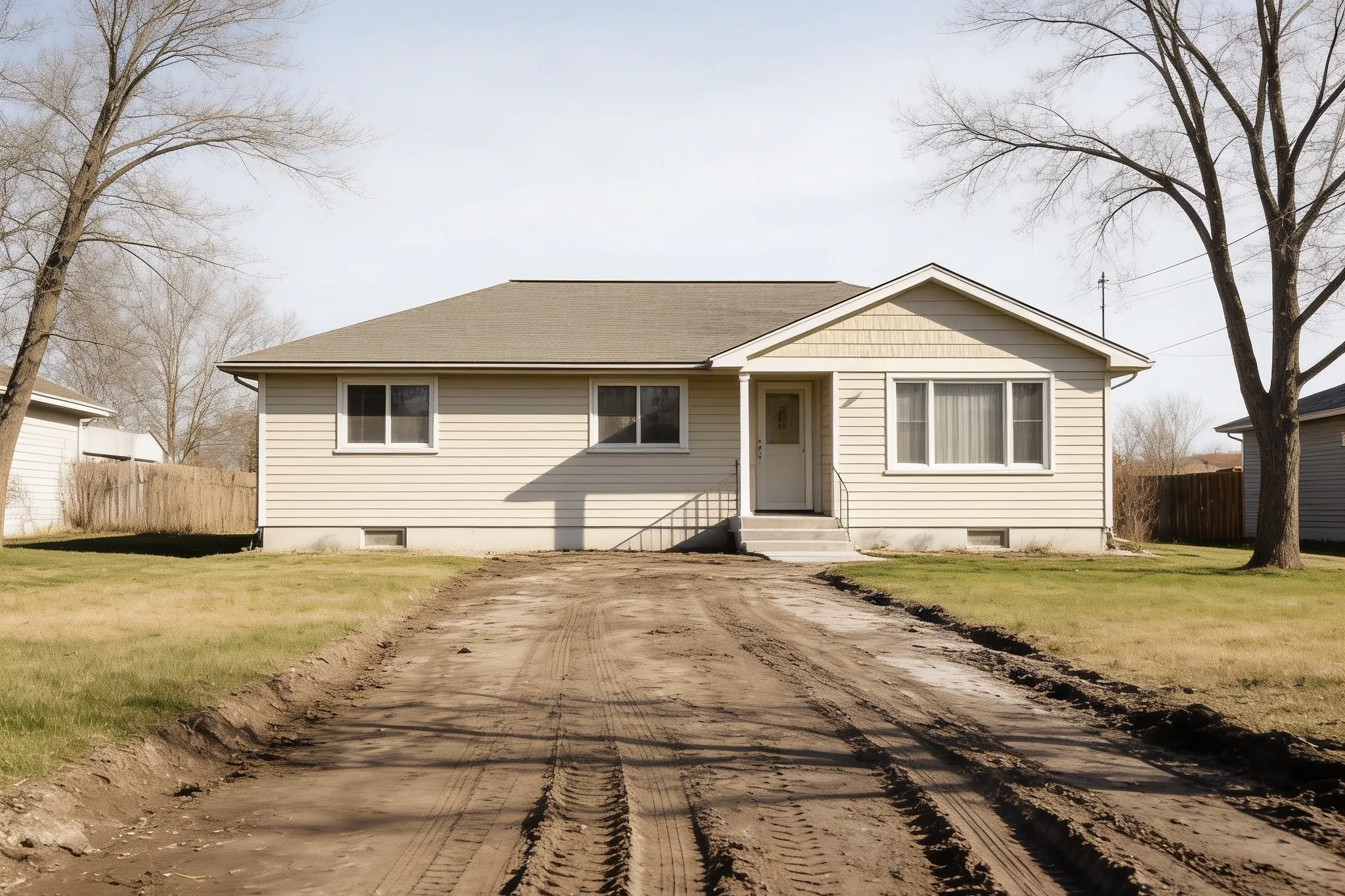
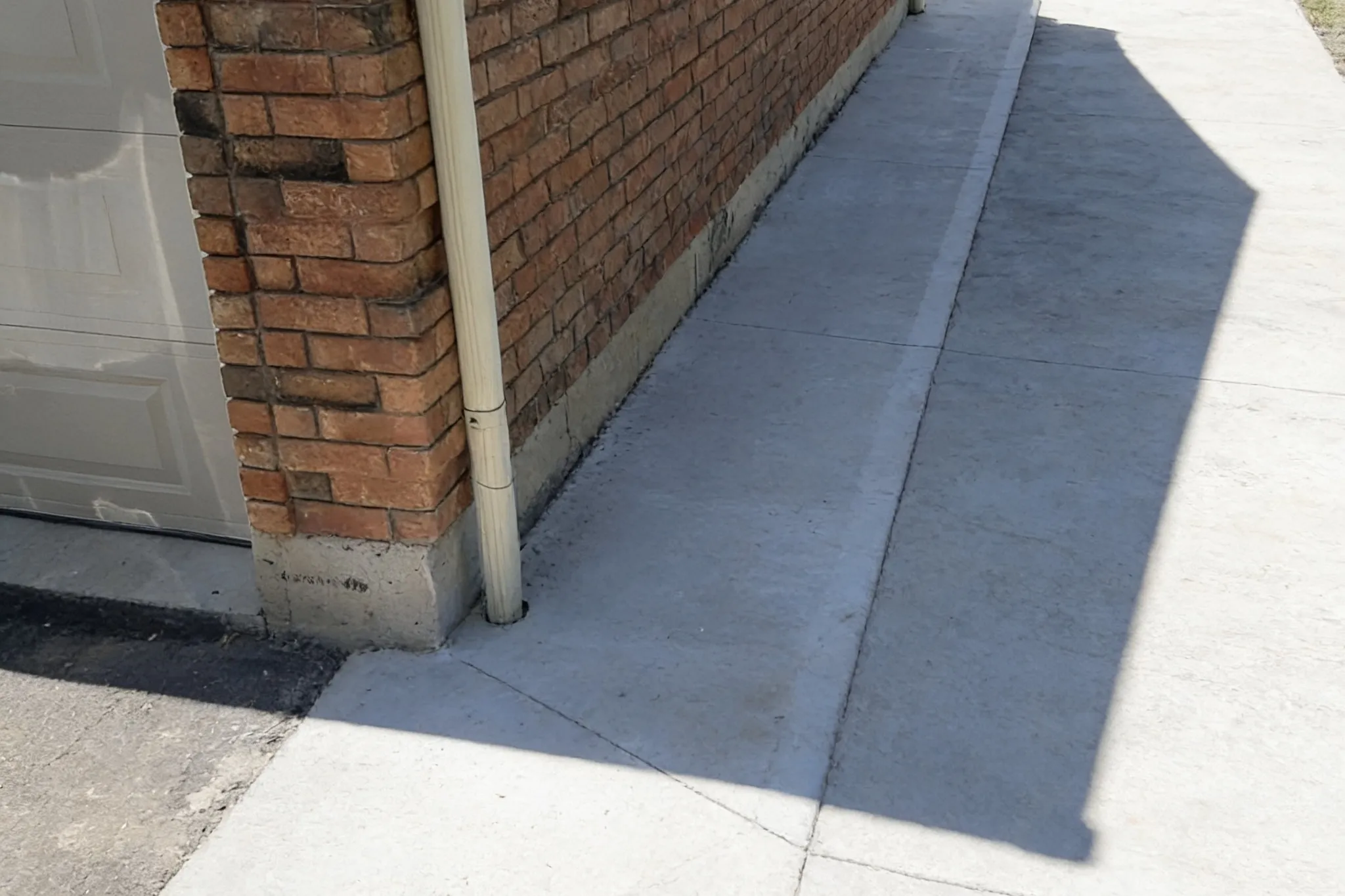
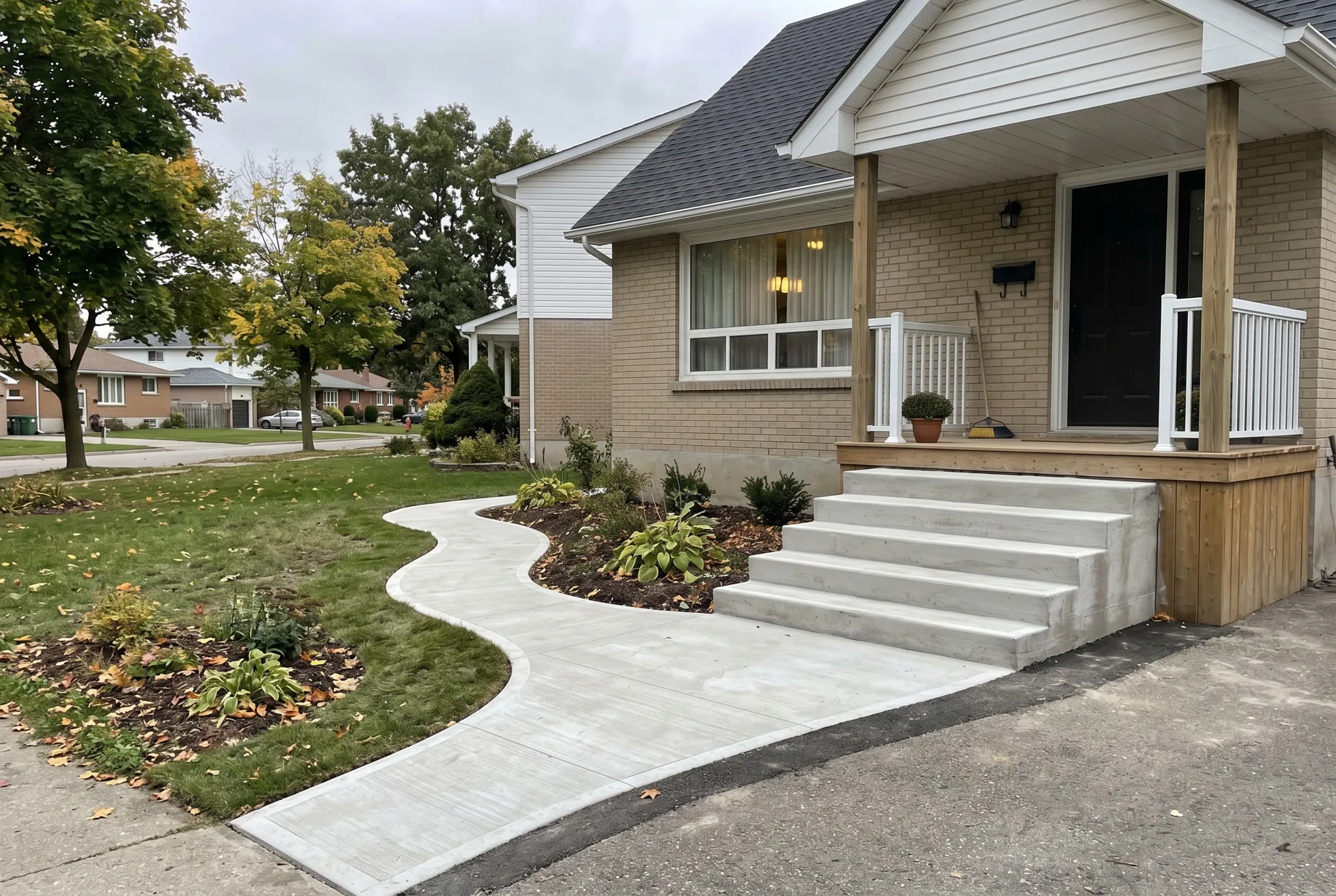
Elmira is an old town wrapped in farm country. The streets near the centre carry homes that have stood a long time, and their front steps, walks and slabs show it: settled treads, spalled edges, cracks that open a little wider each spring.
Most of that concrete does not need to come out. A crack can be injected, a sunken slab lifted back to grade, a worn surface ground and resurfaced, and a broken step formed and re-poured. The full method for each is on our concrete repair and resurfacing page. This page is about what Elmira's ground and older homes change about the job.
Why the ground under an Elmira slab decides the repair
Elmira sits off the edge of the sandy moraine the cities to the south are built on, so lots here run a mix of well-drained loam and clay. Where the ground runs to clay, it heaves when frost reaches under the concrete and holds water against a foundation. Where it runs sandier, it drains faster but can wash out from under a slab edge or a step.
So a repair starts underneath. We check the base, the grade and where the downspouts send their water before we quote. A crack filled over a slab that is still moving opens again by spring, and a slab lifted while a downspout keeps washing out its base sinks again.
Steps, walks and slabs on older town-core homes
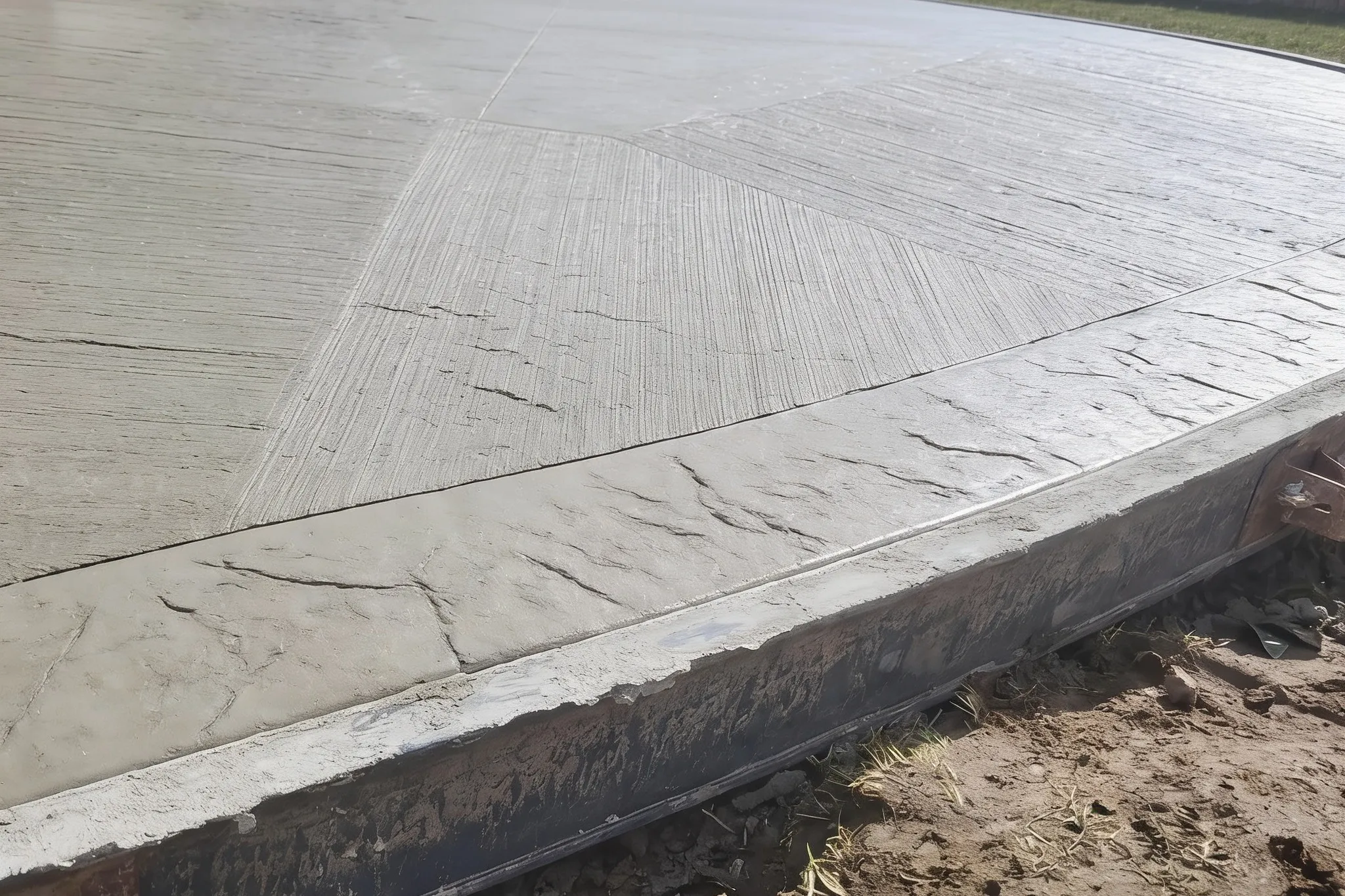
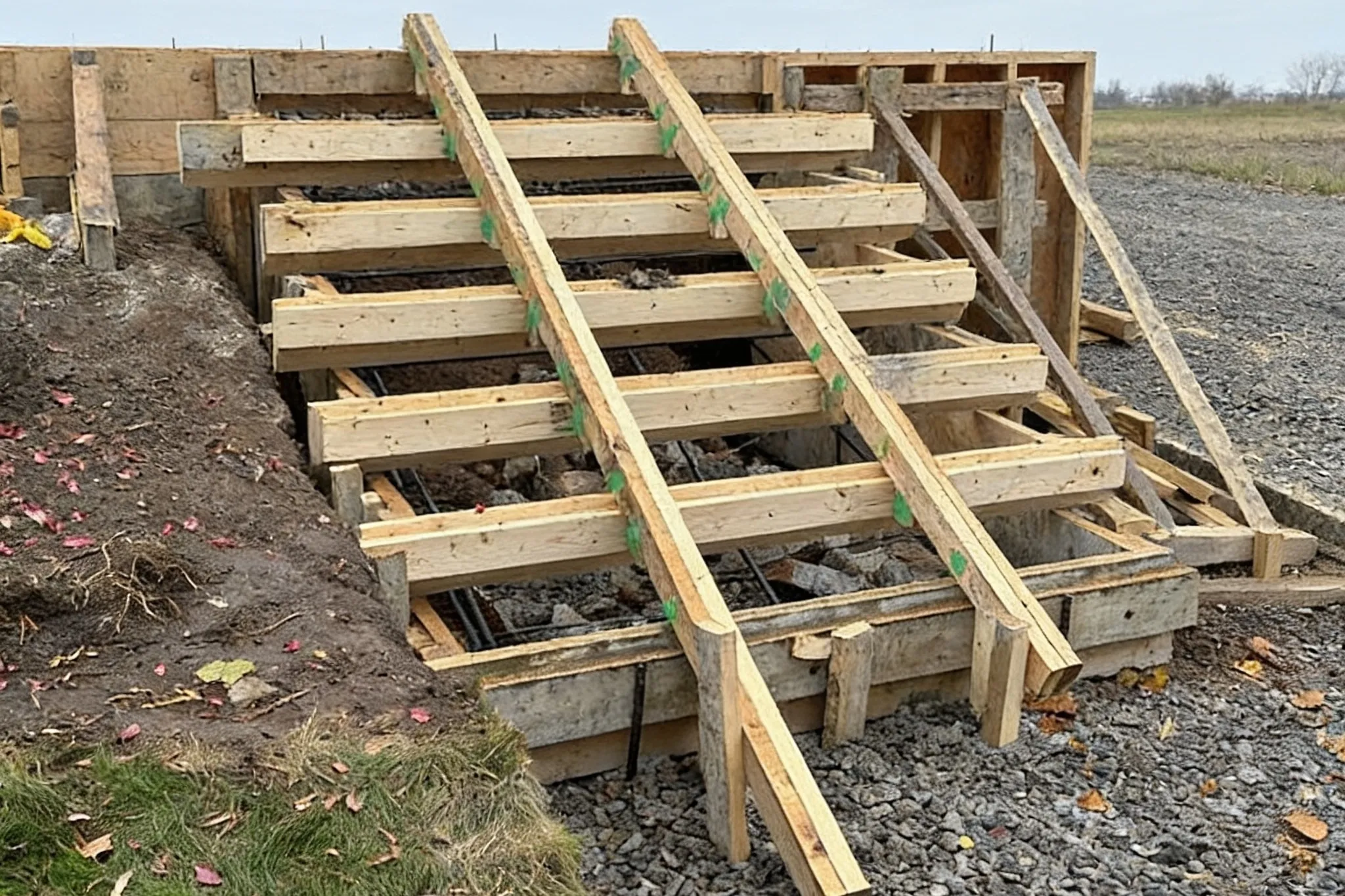
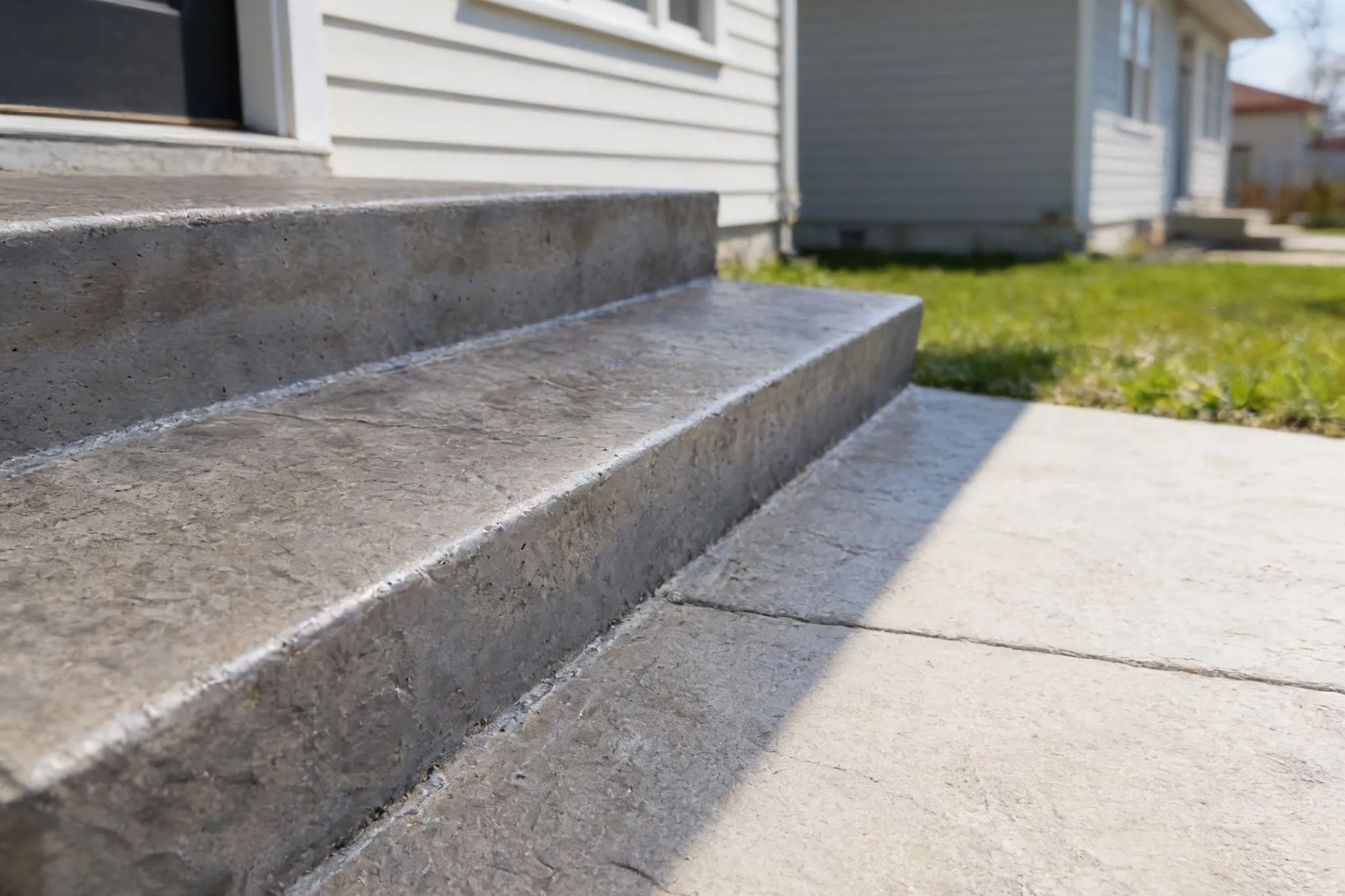
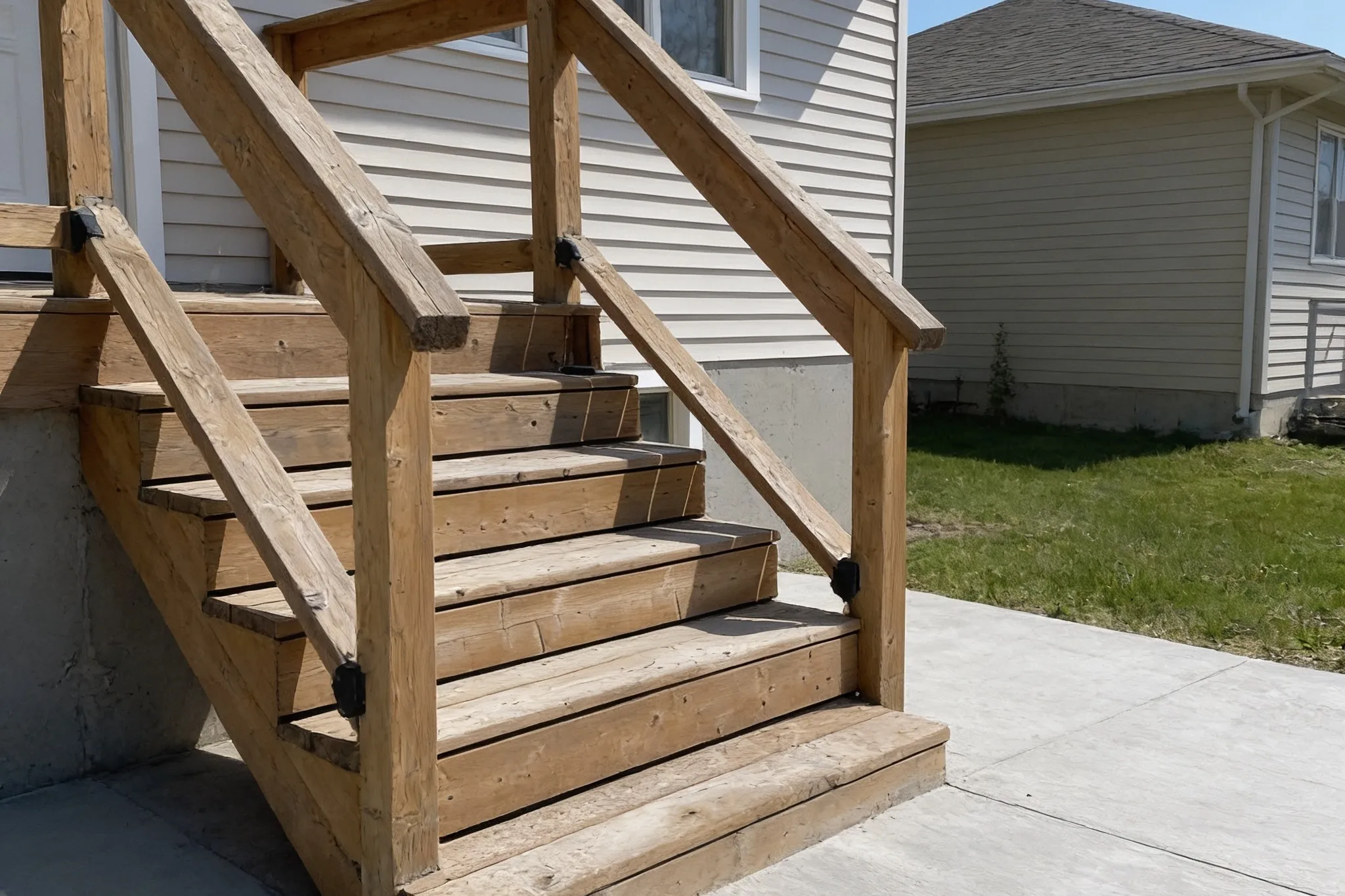
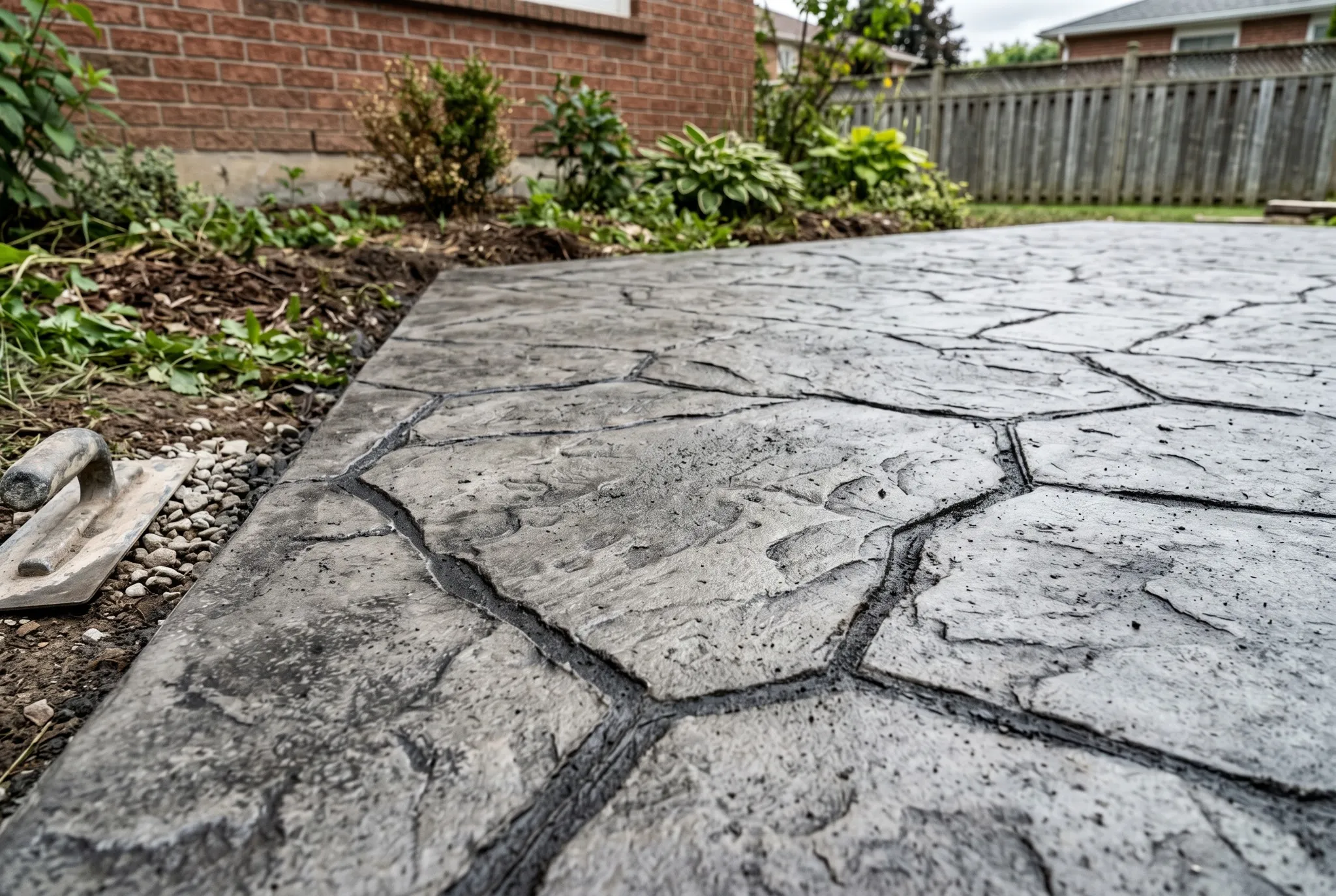
The older houses near the town core bring repair work. Front steps that have settled, walks that have heaved and slabs that have cracked have usually had many freeze-thaw winters and a lot of road salt. Spalled treads and broken edges are formed and re-poured with air-entrained 32 MPa mix. A worn surface on a sound step or walk can be ground back and given a bonded overlay instead of a tear-out.
An overlay only works on a slab that is sound and stable underneath. If the base is still moving, we say so and quote the fix that lasts.
Farm and acreage concrete that has worn out
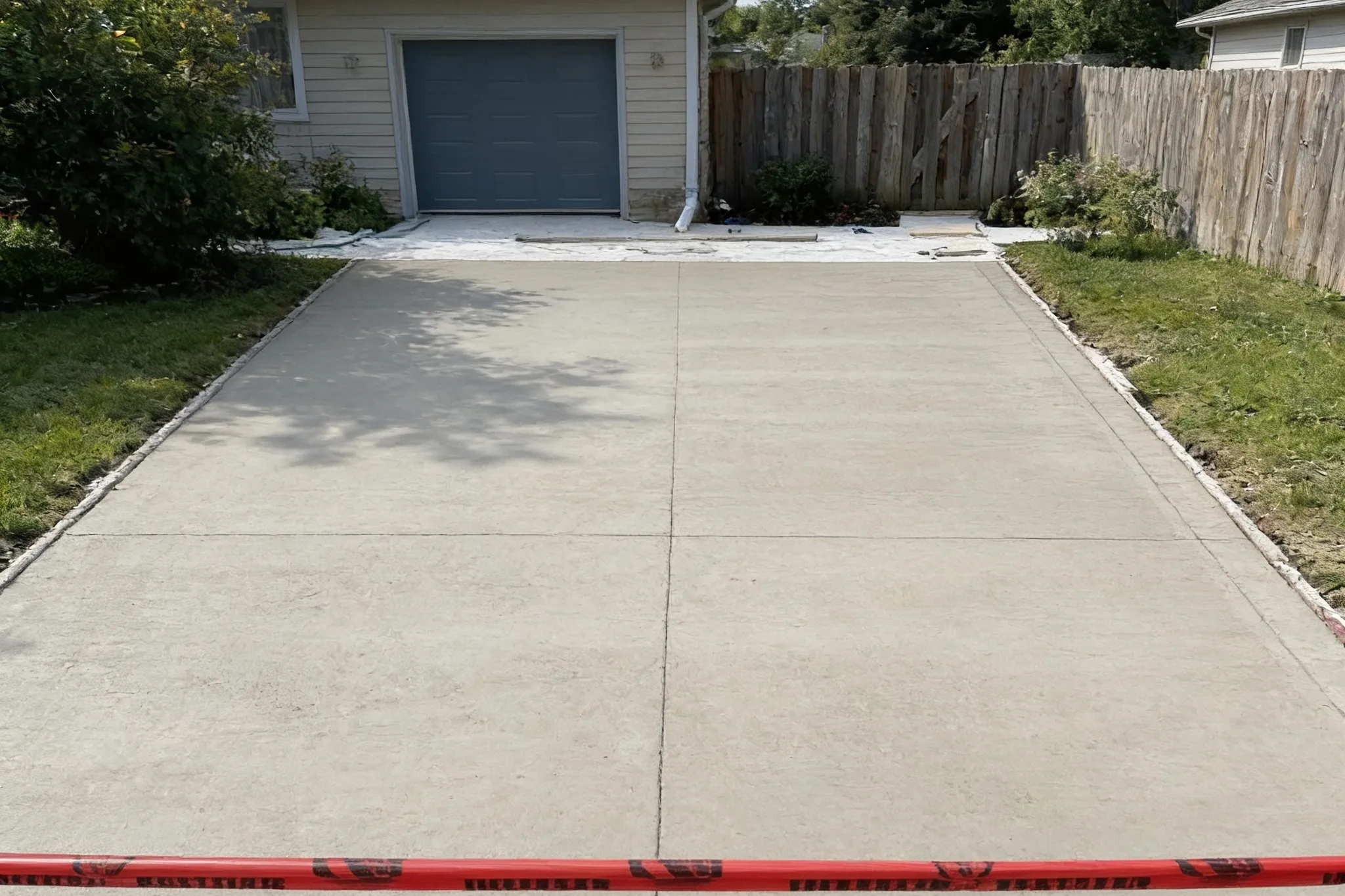
Out past the town limits, farm lots put concrete through harder use than a town lot: shop floors that take a truck, equipment pads and long approach driveways. Surface wear and cracking on those can often be repaired, and the written quote says plainly where repair is the better spend and where the slab needs replacing. Because Elmira is a rural drive north of the region for us, we book Woolwich jobs onto set days and pair them with other work nearby.
Salt, freeze-thaw and why Elmira surfaces fail from the top down
Elmira winters put the same stress on concrete as the rest of Waterloo Region: water gets into the surface, freezes, expands and lifts a thin layer off. Road salt and de-icer tracked onto steps and walks speed that up. The result is pitting and flaking that starts at the top of the slab while the concrete underneath is still sound.
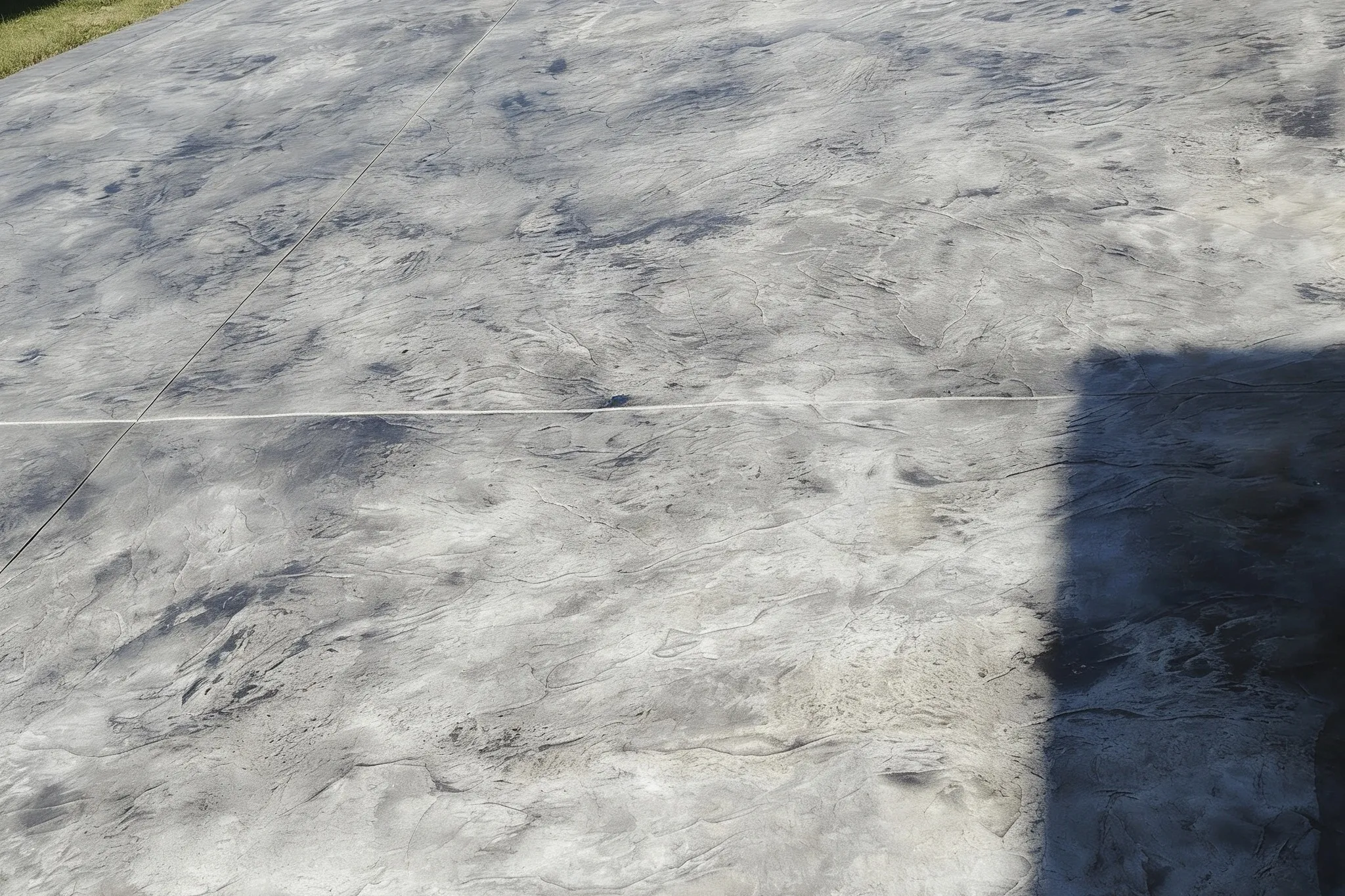
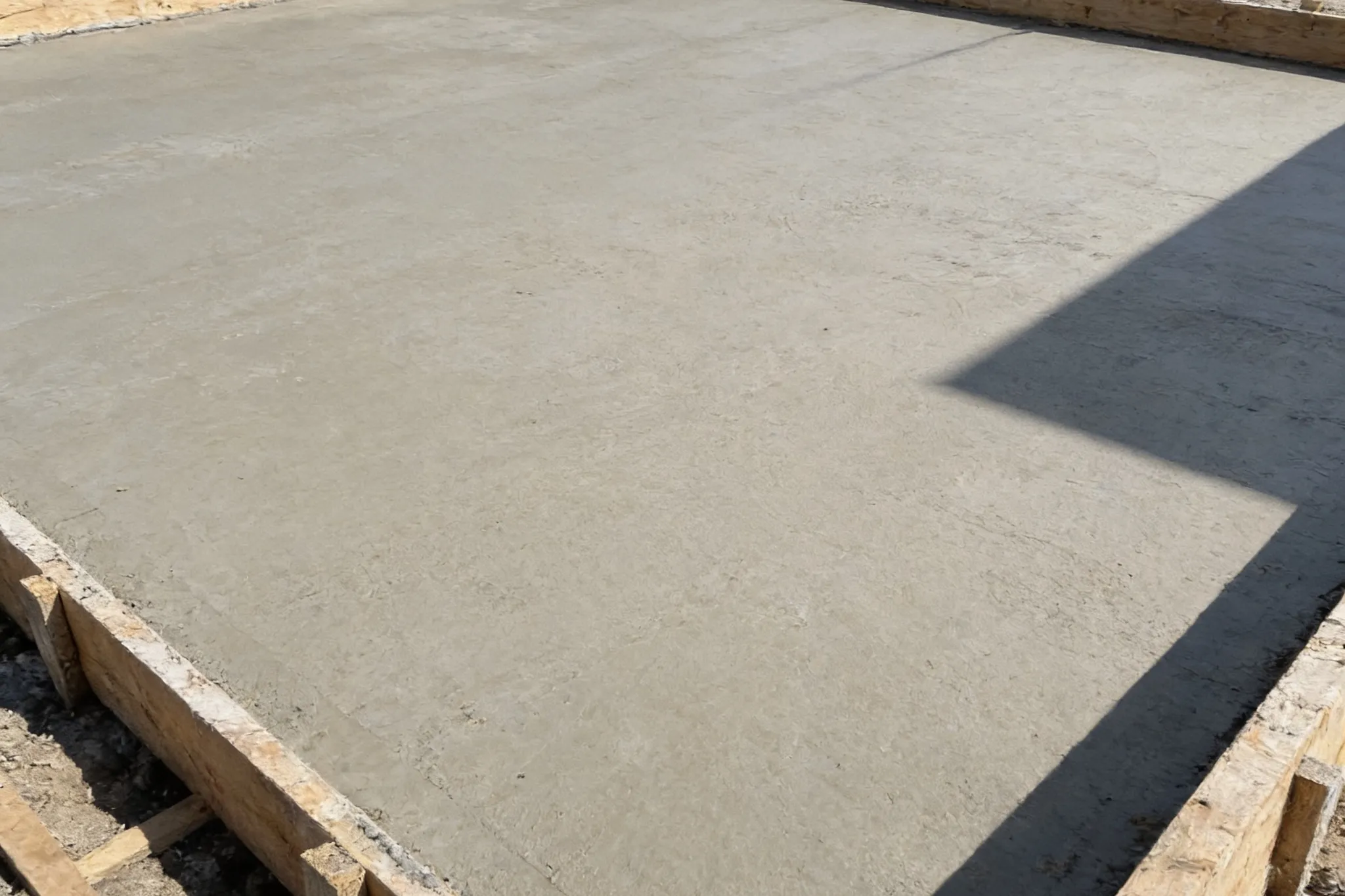
When the slab below is sound, we grind off the weak layer and apply a bonded polymer overlay. That gives back a clean, even surface without a tear-out. Once it is done, sealing every 2 to 3 years on exposed surfaces slows the next round of damage, and new concrete waits about a month before its first sealer.
What a repair visit looks like on an Elmira lot
The free visit is where the repair-or-replace call gets made. We look at the cracks and the surface, but also at what is around them: the base, the grade and where the downspouts and field runoff send their water. On a town-core lot that often means a downspout emptying beside a step. On a farm lot it can mean runoff coming off a roof or a yard toward a shop floor.
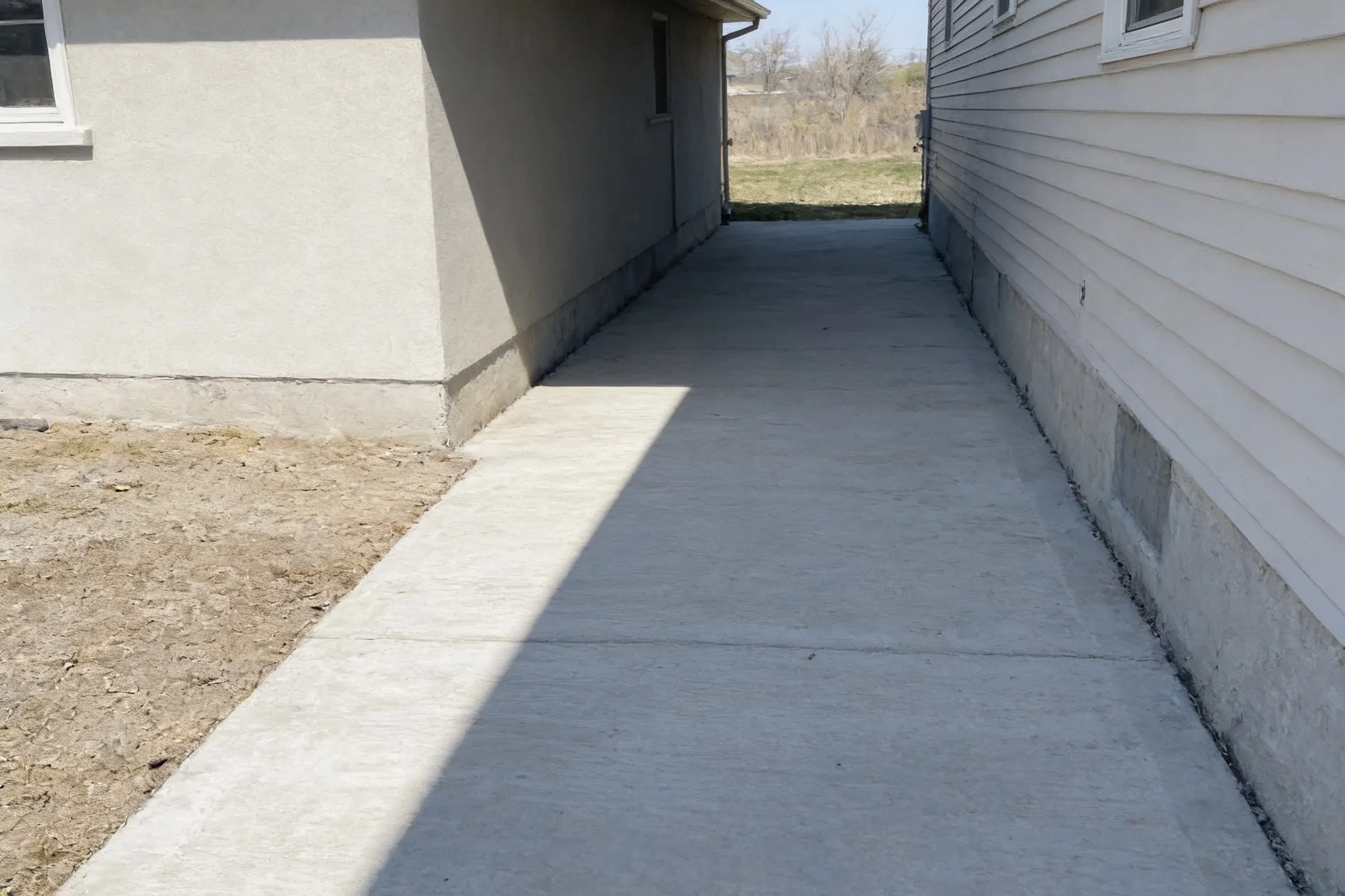
You then get a written quote that names the method for each problem: injection for cracks, lifting for sunken slabs, an overlay for worn surfaces, formed and re-poured edges for broken steps. Where a repair will not hold, the quote says so and prices the replacement straight. Because Elmira is a rural drive for us, we book Woolwich visits and jobs onto set days, and we will tell you which day when we book.
A worked example: the settled front step
Take a typical case on an older street near the town core. The top tread of a front step has dropped a little toward the walk, one edge has spalled, and a crack runs across the landing. There are three questions to answer. Is the base under the step still moving? Is water being sent to it by a downspout or a low grade? And is the surface past saving?
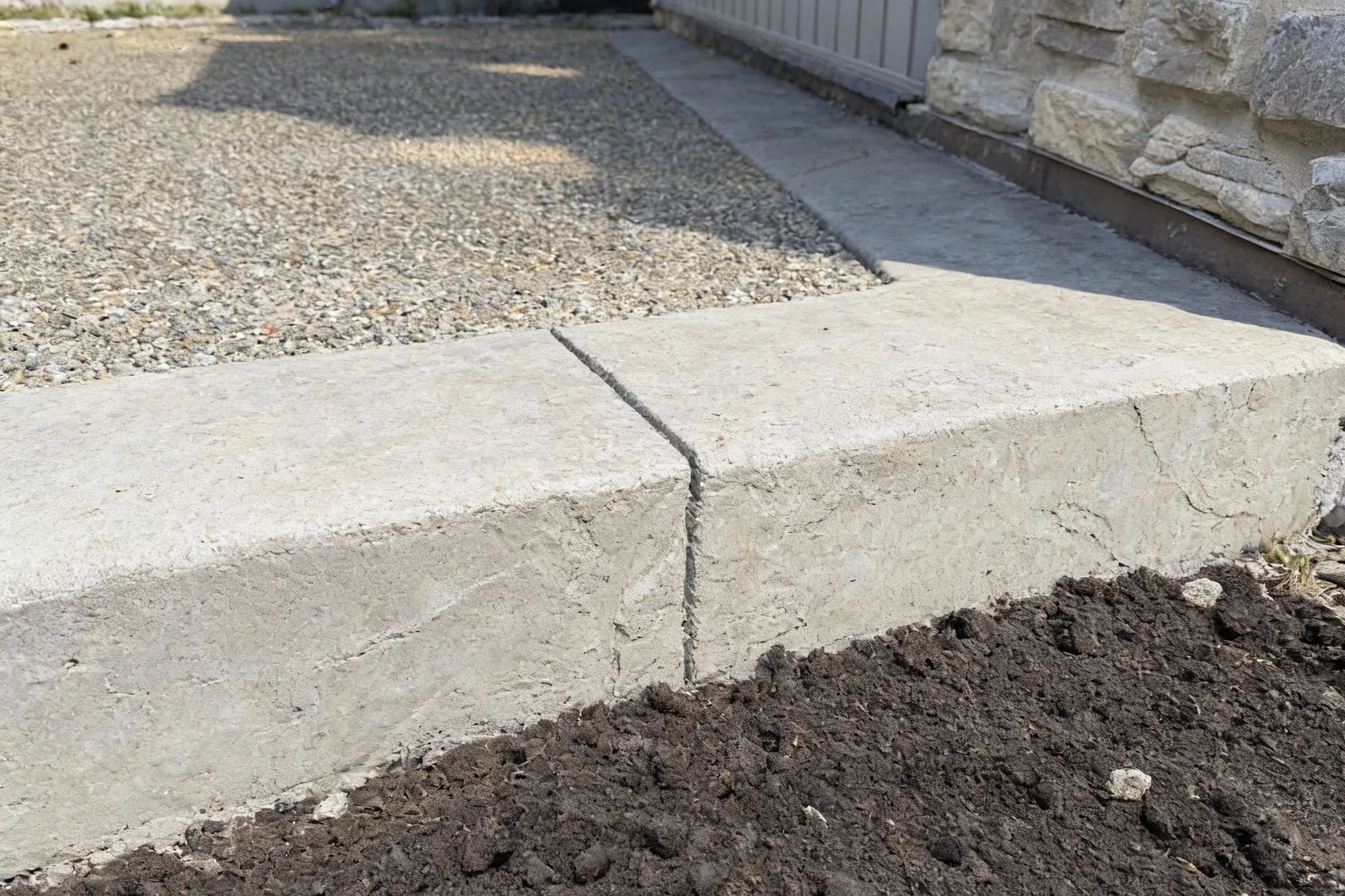
If the base is stable and the damage is at the edge and the surface, the step is a repair job: the broken edge and treads are formed and re-poured in a 32 MPa air-entrained mix, and the crack is injected so water stops moving through it. If the step has settled because the ground under it keeps washing out, we fix the water first, then lift or rebuild. Fixing the surface alone would only buy a winter.
Cracks: which ones are surface work and which are not
Not every crack means the same thing. A hairline crack in a walk that has not moved is a cosmetic matter. A crack that is widening, or has one side sitting higher than the other, is a sign that something under or around the concrete is moving. Polyurethane injection foams up and stops active water within minutes; epoxy cures to a structural bond in one to three days. Which one fits depends on whether the crack is wet and whether it has to carry load.
A crack that keeps opening in a basement wall is a question for the foundation, not the surface, and we will send you that way rather than patch over it.
When a crack is a foundation question
A crack in a walk or a garage slab is a repair job. A crack in a basement wall that leaks every spring, or one that keeps growing, is a different question. For those, see our foundation repair and basement waterproofing work. We sort out which job your house needs at the free visit.
Straight answers
Should I repair or replace the cracked concrete at my Elmira home?
It depends on the base. Repair wins when the damage is local and the base under it is still sound: one or two cracks, a slab that settled on one side, surface pitting or a broken step edge. Replacement wins when the slab has cracked all over, the base has failed across the whole area, or the surface has scaled so deep there is nothing sound to bond to. The written quote says which side of that line your concrete is on, and why.
Can you lift a sunken walk or slab instead of replacing it?
Often, yes. We pump material through small holes drilled in the slab to fill the void under it and float it back to grade. Mudjacking uses a slurry and wants a day or two before traffic; polyurethane foam takes traffic the same day. Before we lift, we find out why the base washed out, so the slab does not sink again.
How much does concrete repair cost in Elmira?
There is no honest flat rate. The cost moves with the size of the area, how far the damage goes, the condition of the base, the repair method, access and the season. The visit and the written quote are free, and the number on the quote is the number on the invoice unless you change the job.
Can you repair worn concrete on a farm in Woolwich?
Often, yes. Cracked or worn shop floors, equipment pads and farm driveways can be repaired when the base under them is sound. If the base has failed, the quote says so and sets out the replacement. The visit and the written quote are free.
How do I know if the damage on my Elmira steps is a repair or a rebuild?
Look at what has moved. Spalled edges, pitted treads and a crack in the surface usually mean a repair, as long as the base under the step is still stable. If the step has dropped, pulled away from the house or keeps settling after being fixed, the ground under it is the problem and has to be dealt with first. We check this at the free visit and the written quote says which it is.
How long should I wait before sealing new concrete?
About a month. New concrete cures for roughly that long before its first sealer goes on. After that, sealing exposed surfaces every 2 to 3 years helps keep salt and meltwater out of the surface.
Keep reading
- Concrete Repair & ResurfacingThe full method: crack injection, slab lifting, resurfacing, step repair and sealing.
- Concrete Contractors in ElmiraEverything else we pour and repair in Elmira and the Woolwich farm country.
- Concrete Driveways in ElmiraWhen a driveway is past repair: a new slab built for loam or clay ground.
- Foundation RepairBasement wall cracks that leak or keep growing need a foundation repair, not a surface patch.
- Basement Waterproofing in ElmiraSpring water coming in below grade needs a waterproofing fix first.
Tell us about the job.
Send the details and we'll get back to you within one business day with next steps. If water is coming in right now, check the box and we flag it urgent.
Get a straight quote
Free · no pressure · 1 business day