HomeServicesConcrete DrivewaysToronto
Concrete Driveways in Toronto
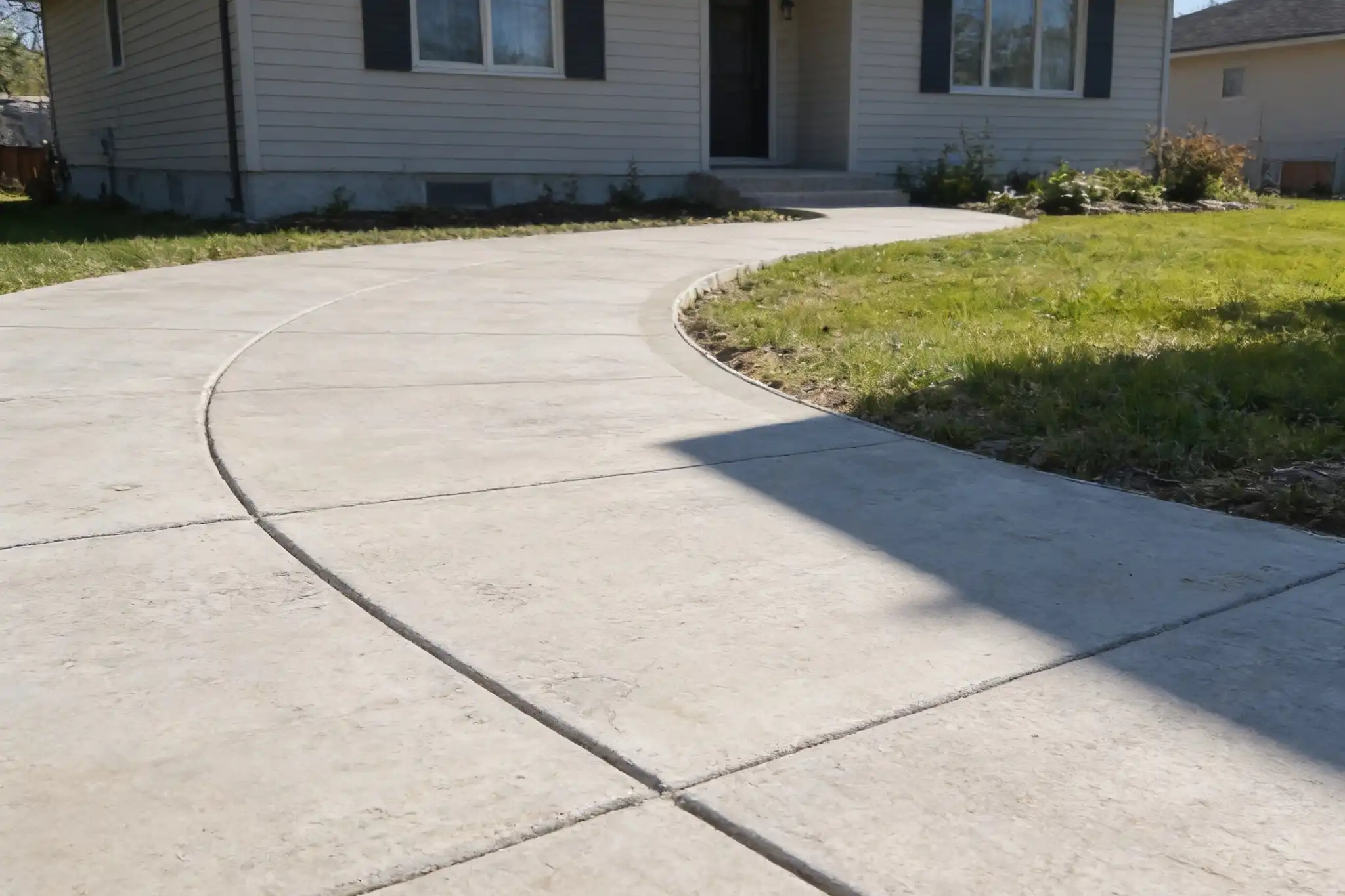
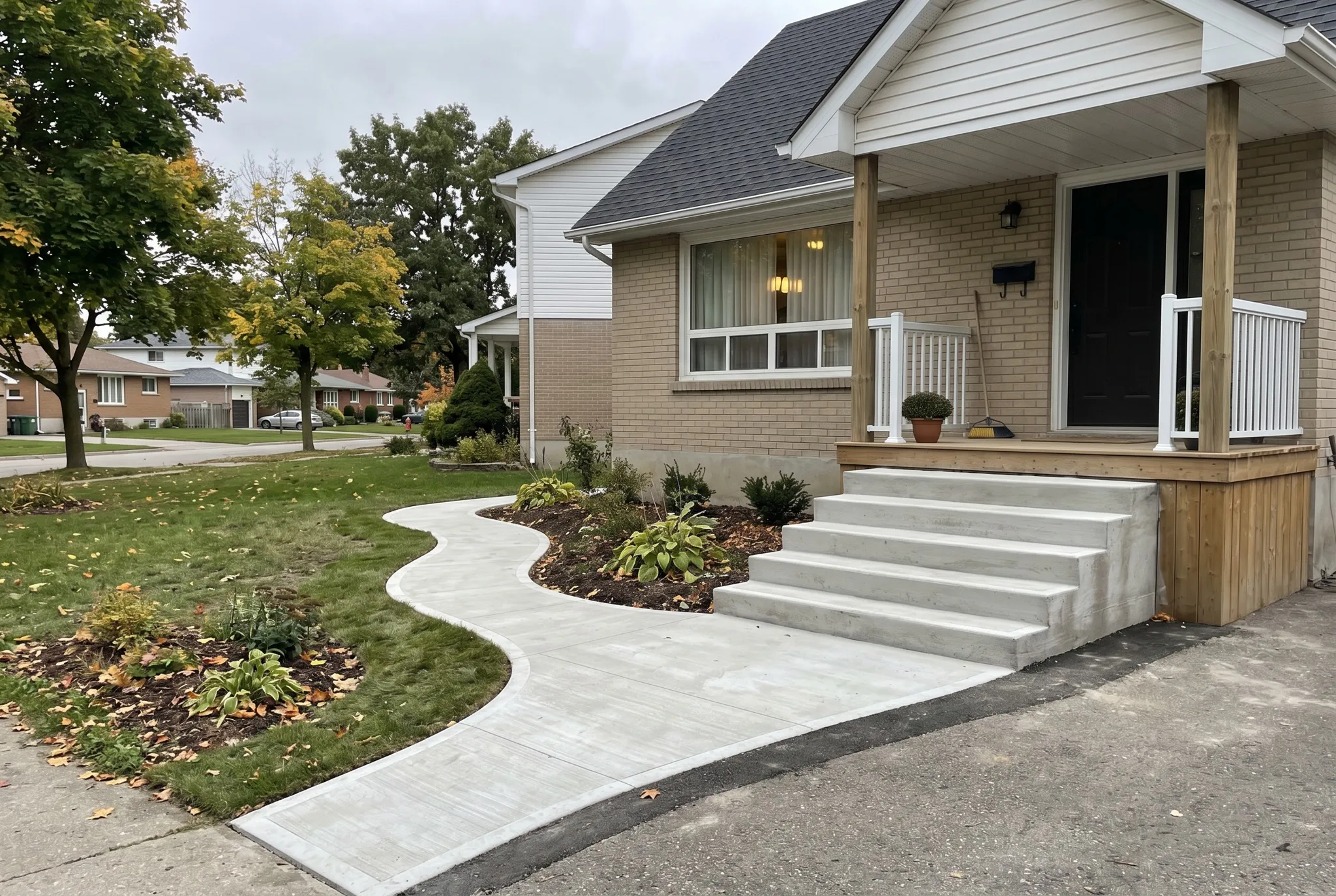
We pour new and replacement concrete driveways across Toronto, built for the lots they sit on: narrow mutual and right-of-way drives where a truck cannot reach the back, the old slabs that have to come out first, and the lacustrine clay near the lake that heaves under a thin base. Union-certified crews, a free written quote that holds, and a lifetime warranty on labour. Toronto sits at the far end of our range, so city jobs go onto planned trips with real dates, never a same-day promise.
Get a straight quote
Free · no pressure · 1 business day
Reviewed June 2026
Every job is priced individually, not off a price list. Tell us about yours and you get an accurate, no-pressure quote in writing.
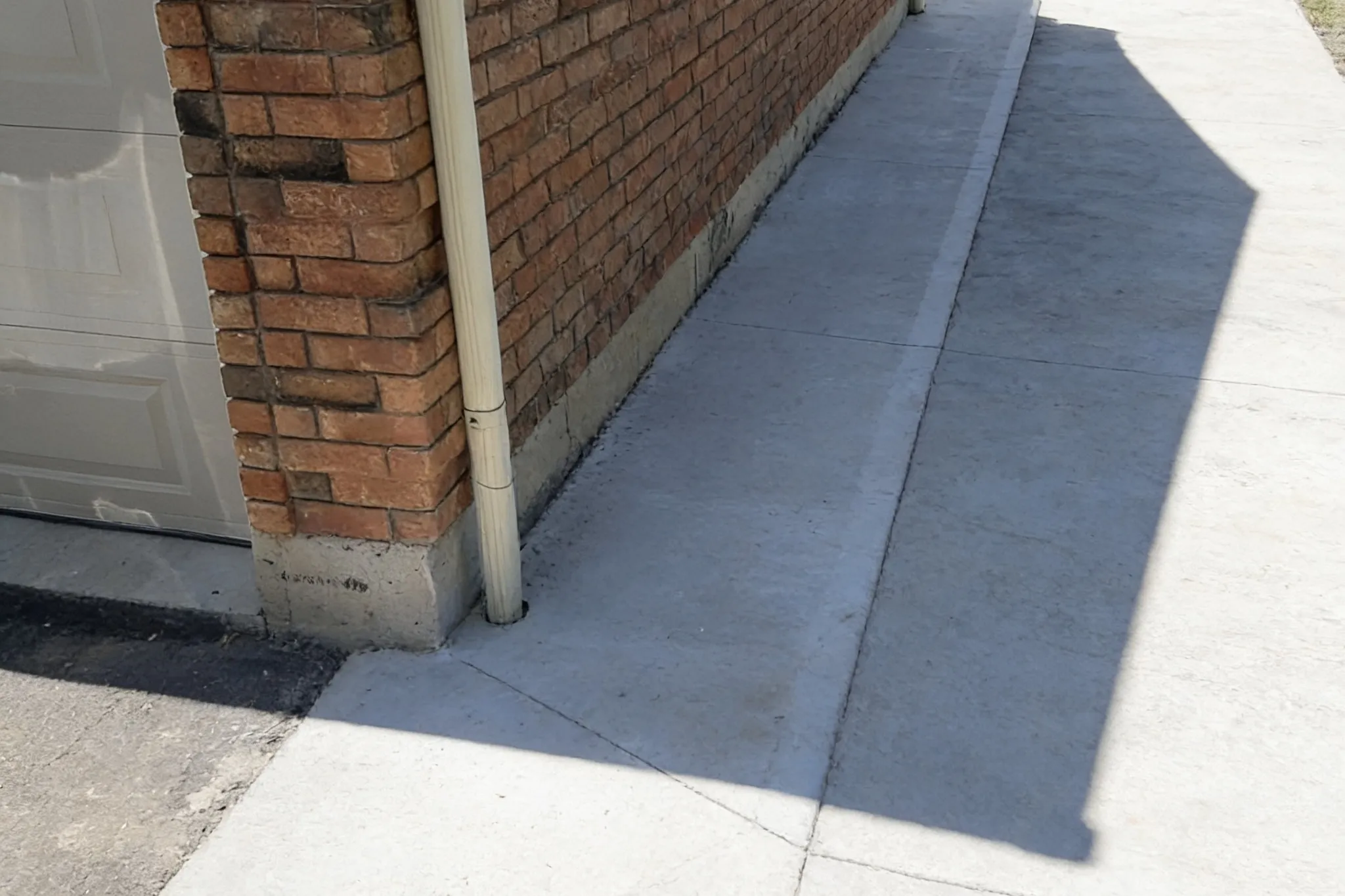
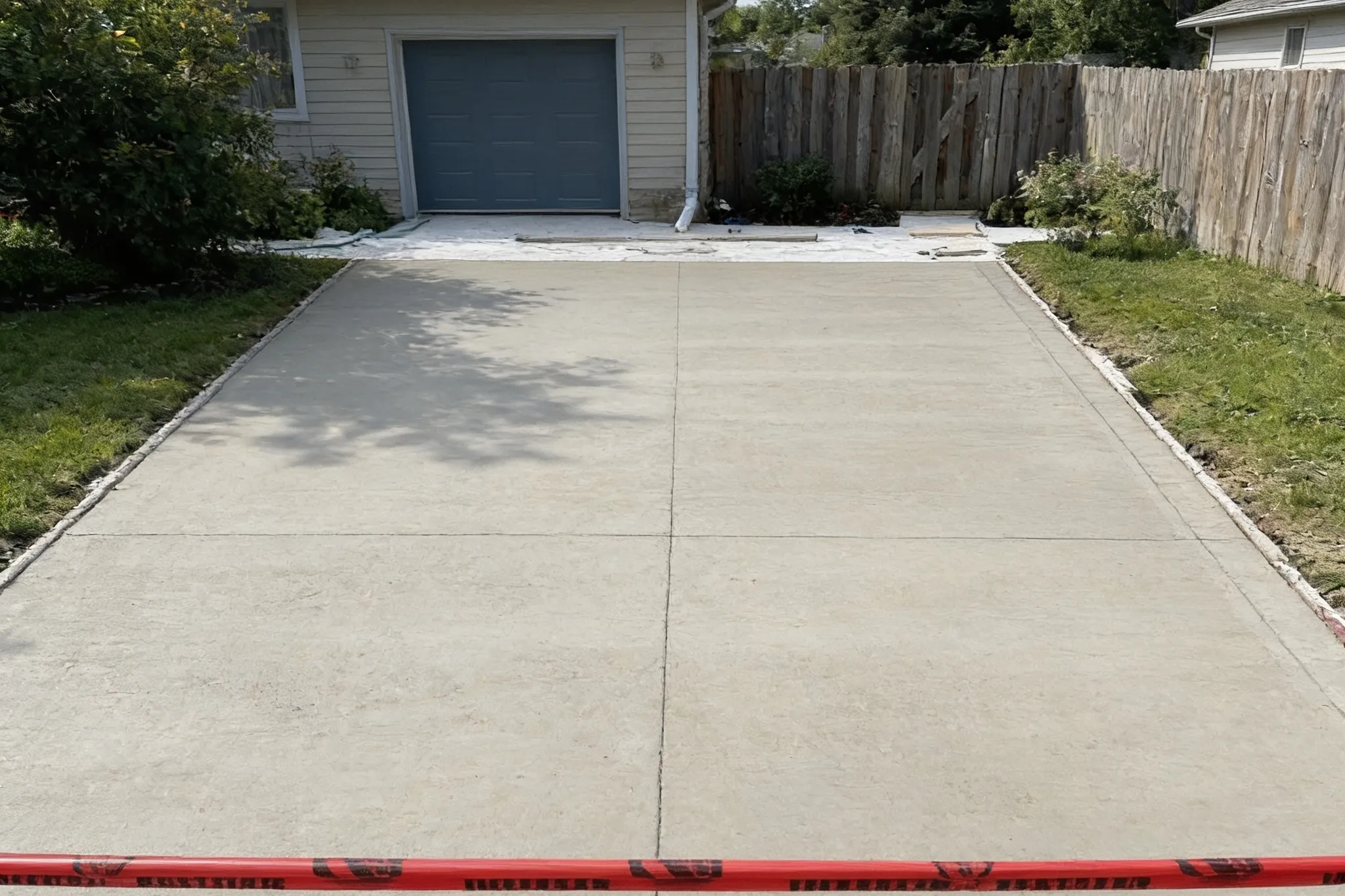
A Toronto driveway is rarely a blank slab on an open lot. The old city went up close and tight, so most jobs start with what is already there: an old driveway between two century houses, a mutual drive shared with the neighbour, a right-of-way barely wider than one car running back to a garage that has not held a car in years. Half the work is figuring out how concrete even gets back there before any of it gets poured.
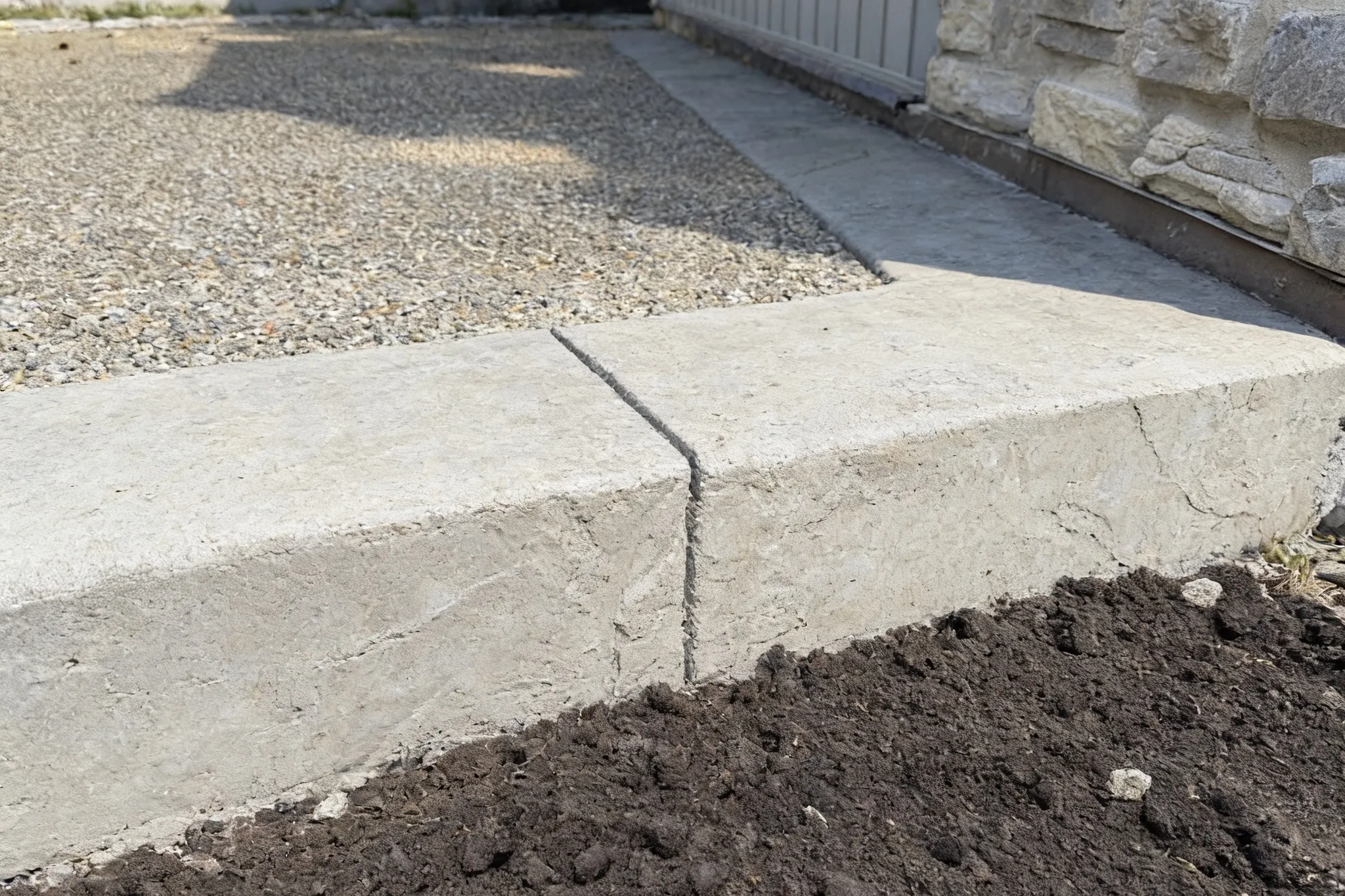
Then there is the ground. The flat lowland along the lake runs to fine clay and silt, the kind that holds spring melt right where frost can reach under a slab and lift it. Pour onto a thin base over that clay and the driveway cracks and heaves before it has earned its keep. The mix on top matters, but on Toronto clay the base under it decides whether the slab lasts twenty years or two winters.
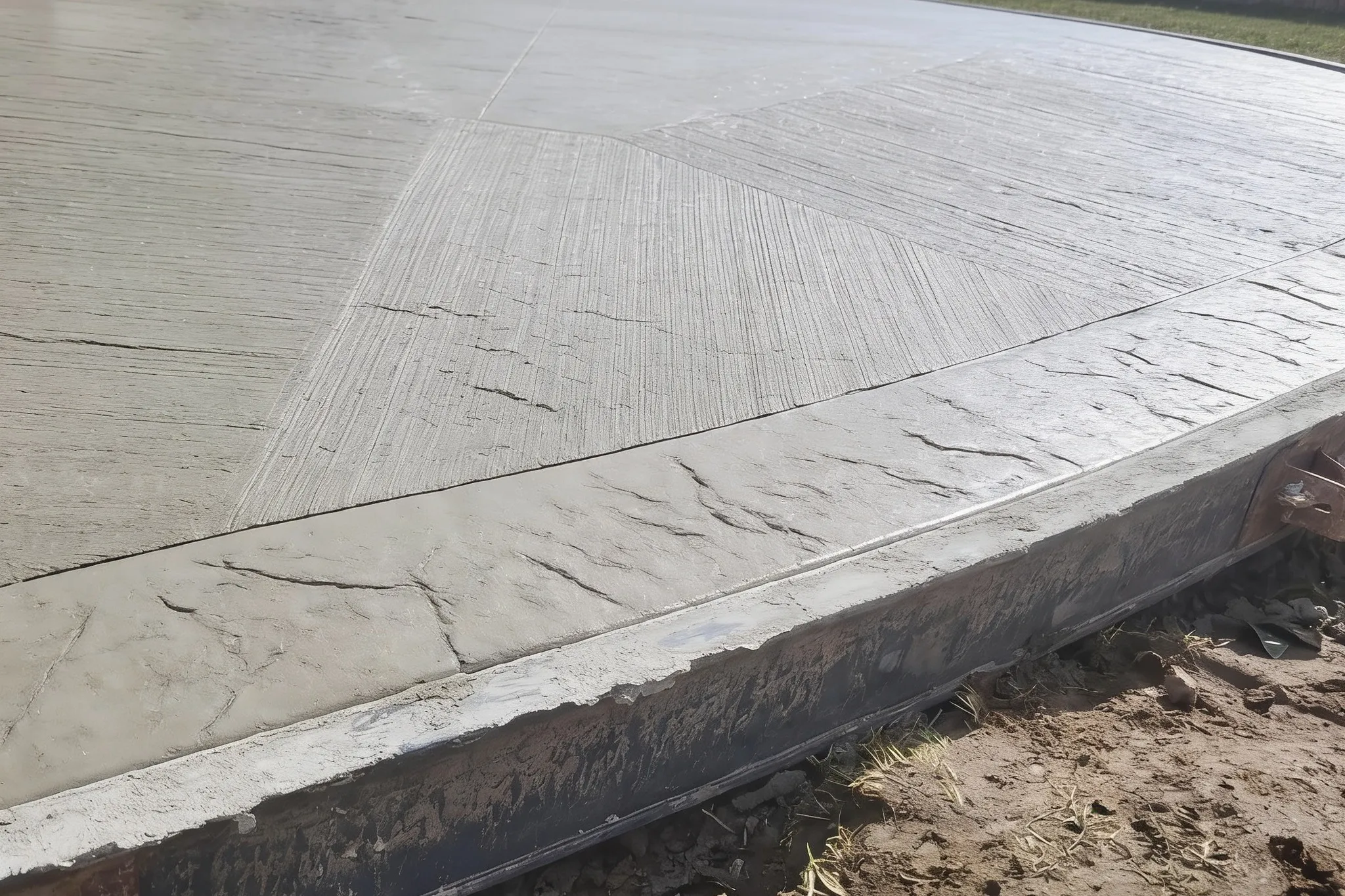
The full spec, the 32 MPa air-entrained mix, the compacted granular base, the saw-cut control joints, the 48-hour cure before vehicles, lives on our concrete driveways page. This page is about what a Toronto driveway needs in particular: the access, the tear-out, the clay, and the front-yard rules the city actually enforces. The quote is free and written, and the number we give you is the number you pay.
Tight lots, mutual drives, and how the concrete gets back there
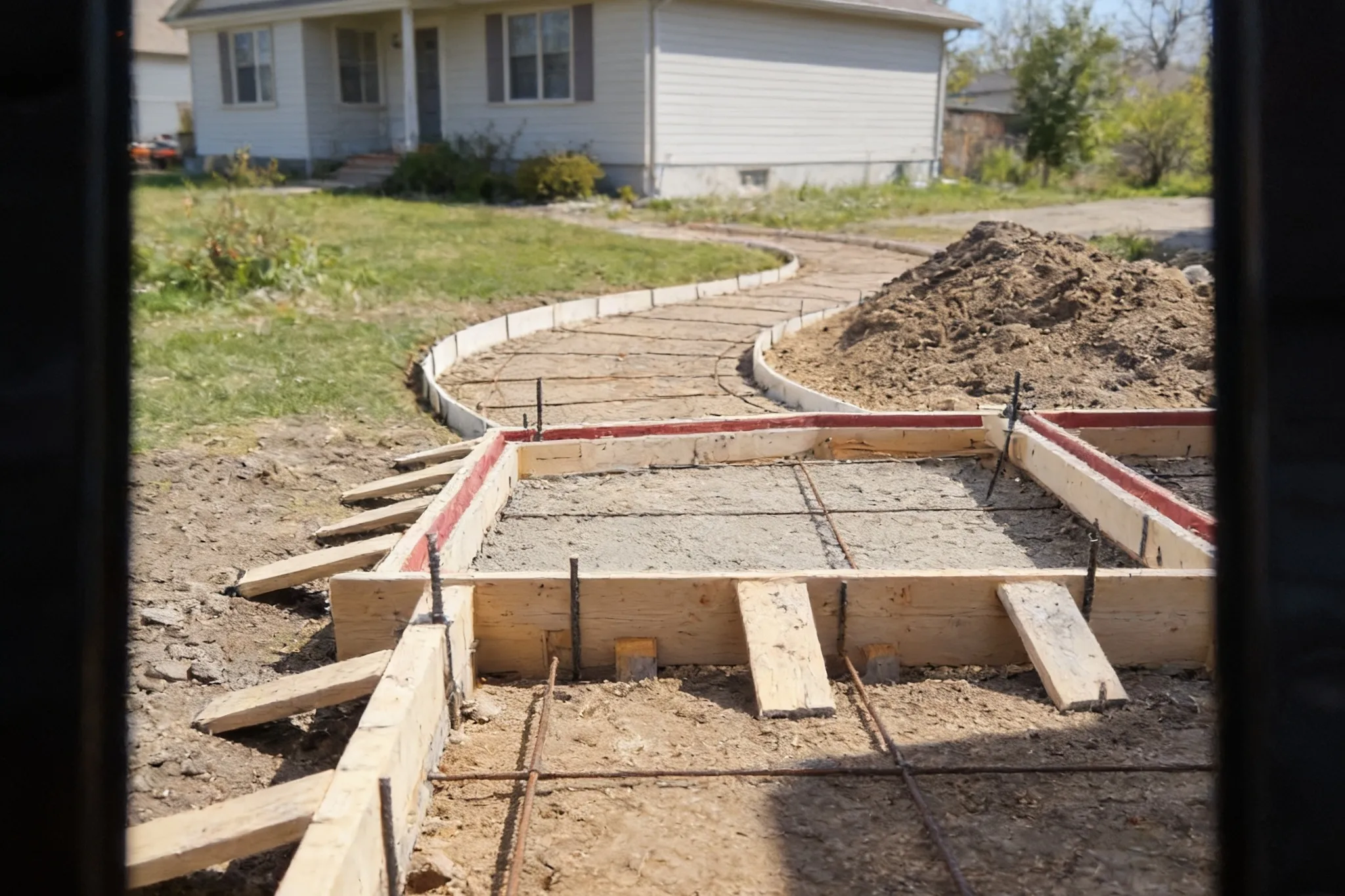
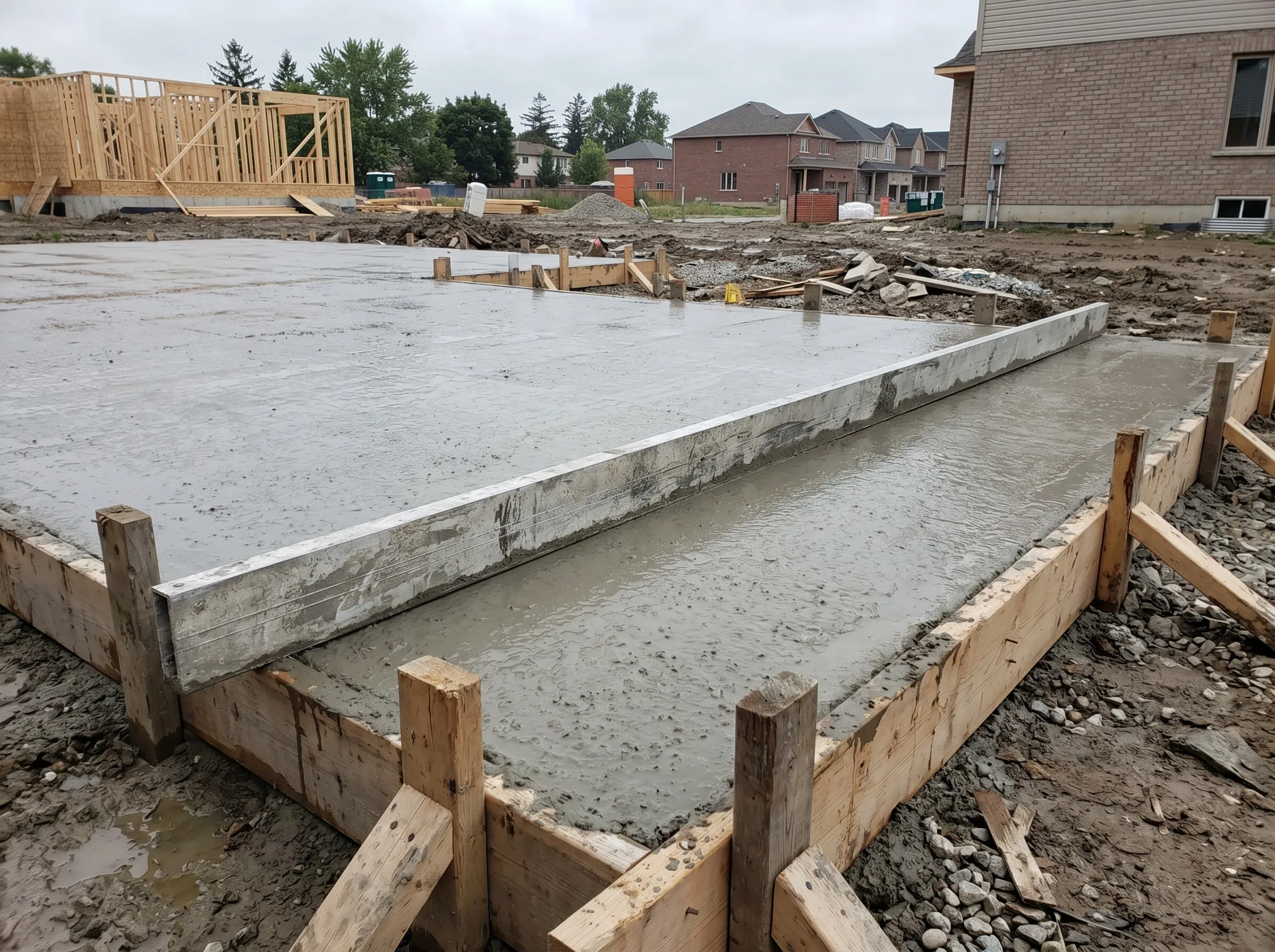
On a lot in Leslieville or the Annex the pour is the easy part. The planning is the hard part. Mutual driveways and registered rights-of-way through the old neighbourhoods were laid out decades ago for rear garages, and most of them fit exactly one car width, too narrow for a ready-mix truck and a chute to reach the back of the lot. So we plan access first: where the truck parks on the street, whether we run a pump over the house, whether the pour goes in by wheelbarrow down the side. We sort that at the site visit, before pour day, not while the concrete is going off in the drum.
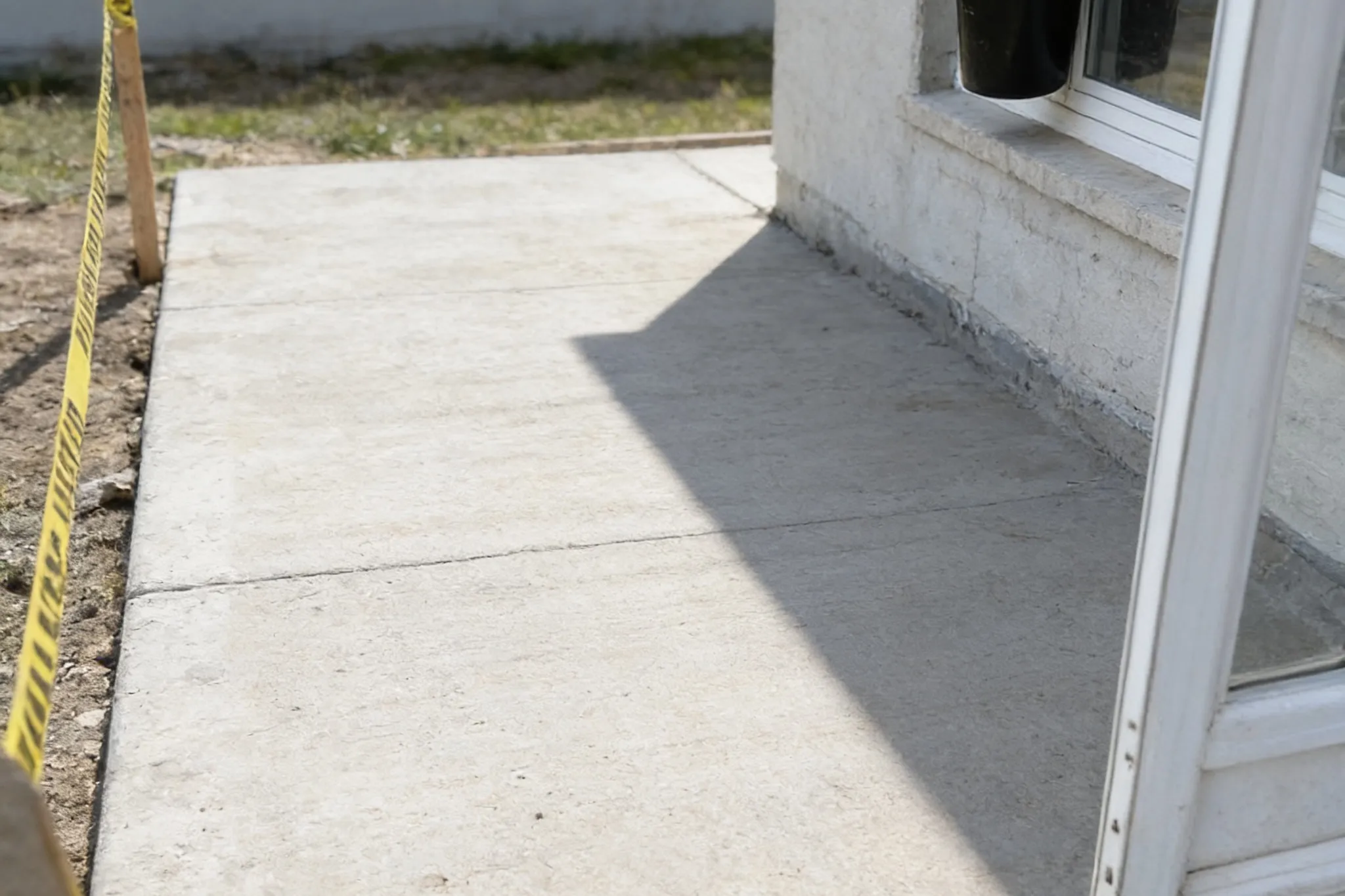
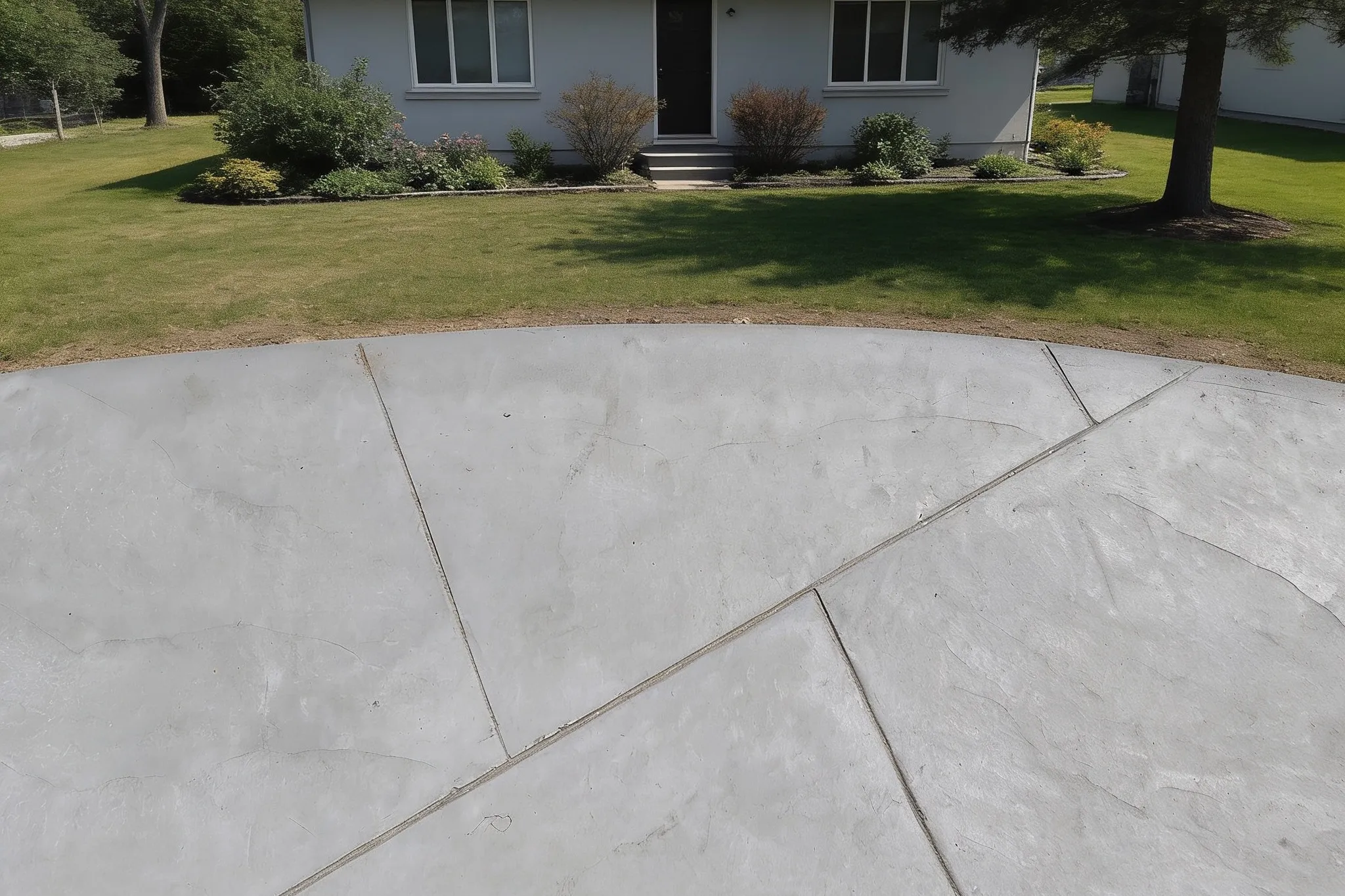
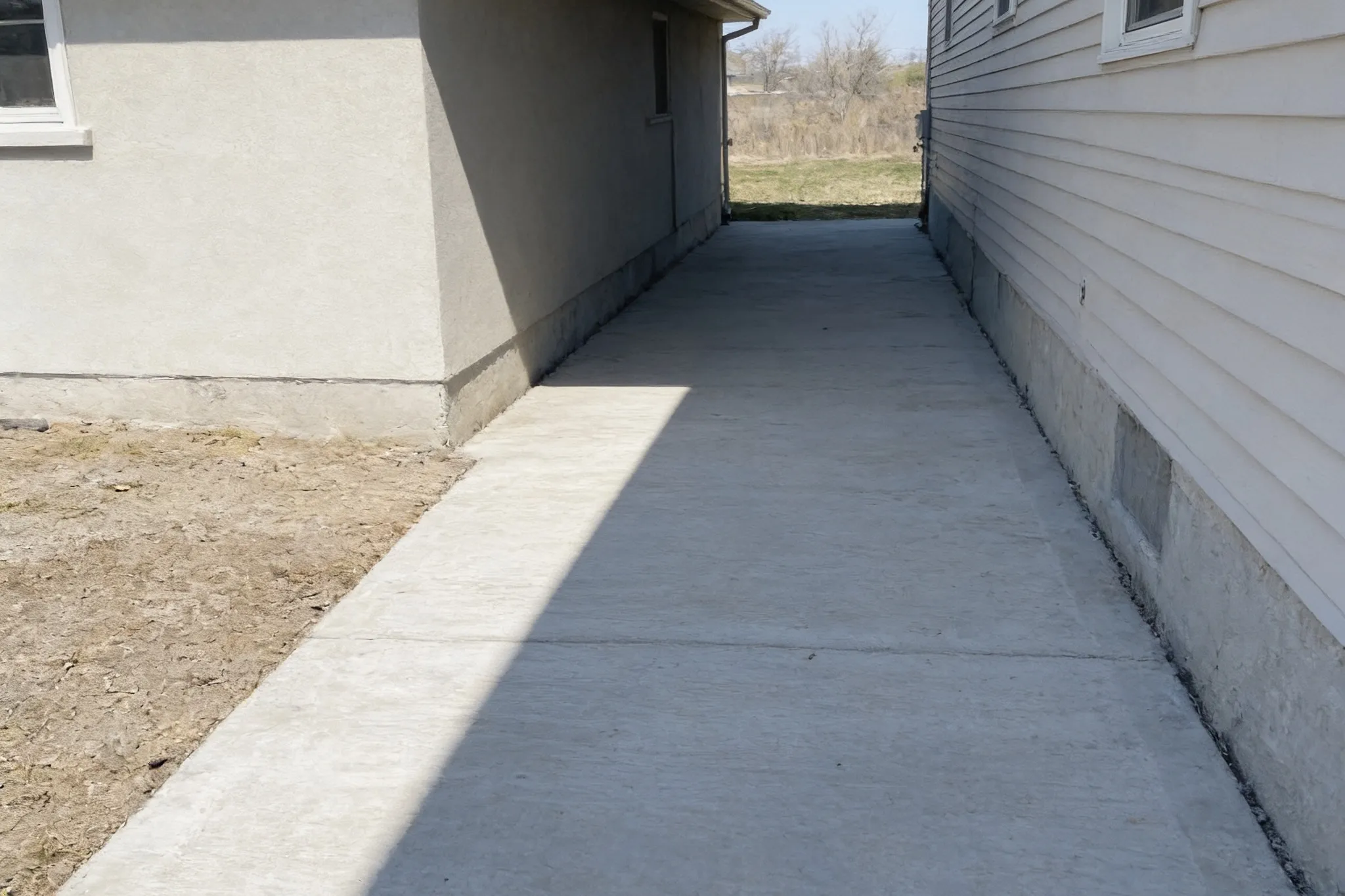
Sharing a drive with a neighbour adds a step. A mutual driveway is a shared right-of-way, so a new pour on your half has to tie cleanly into theirs, hold the line on the boundary, and grade so water sheds off both sides instead of pooling against a foundation. We pour to the existing surface and the property line, keep the neighbour's access open through the work, and leave a joint that reads as one driveway, not a patch against a patch.
Tear-out first, then a base built for lakeshore clay
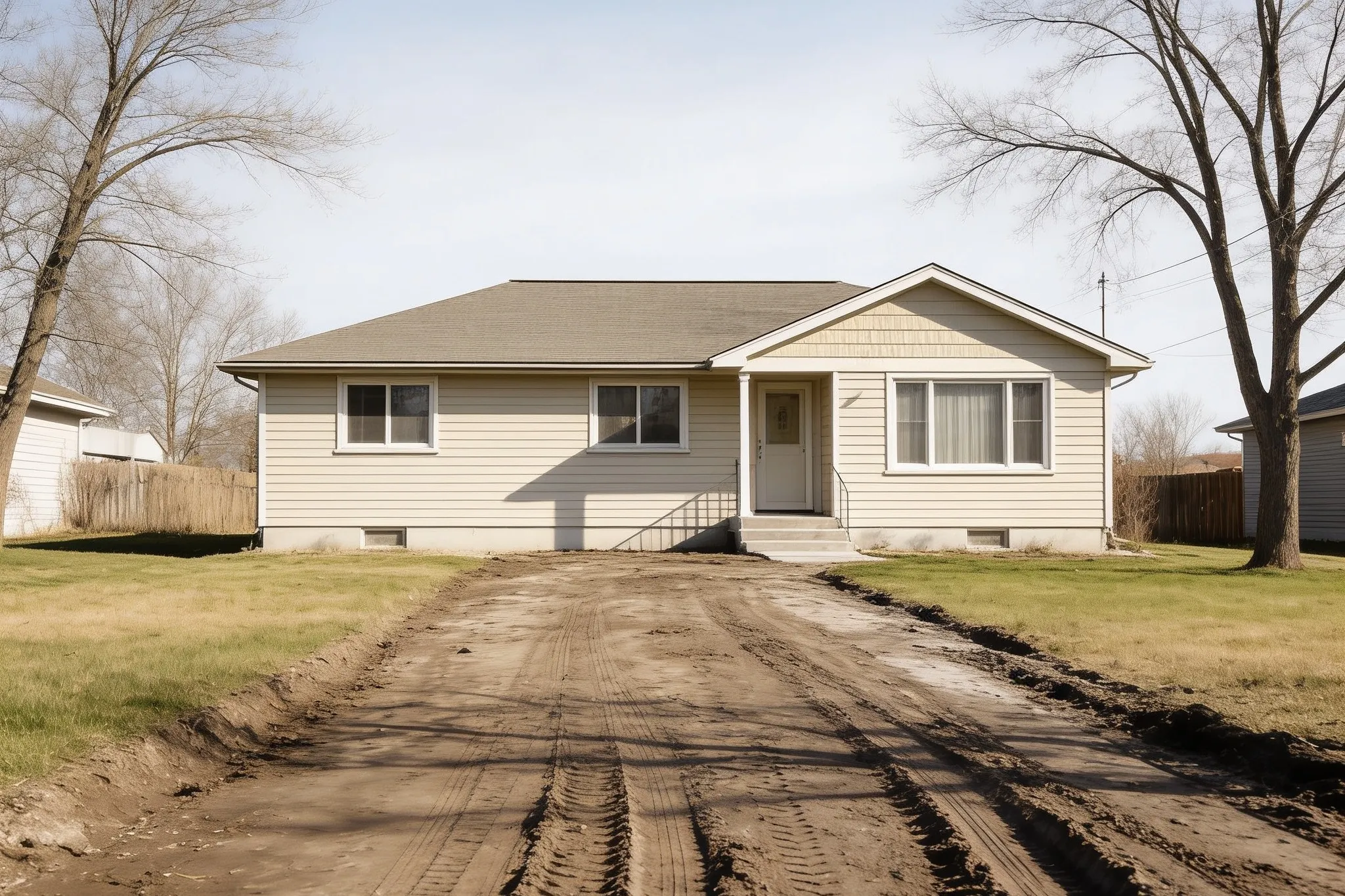
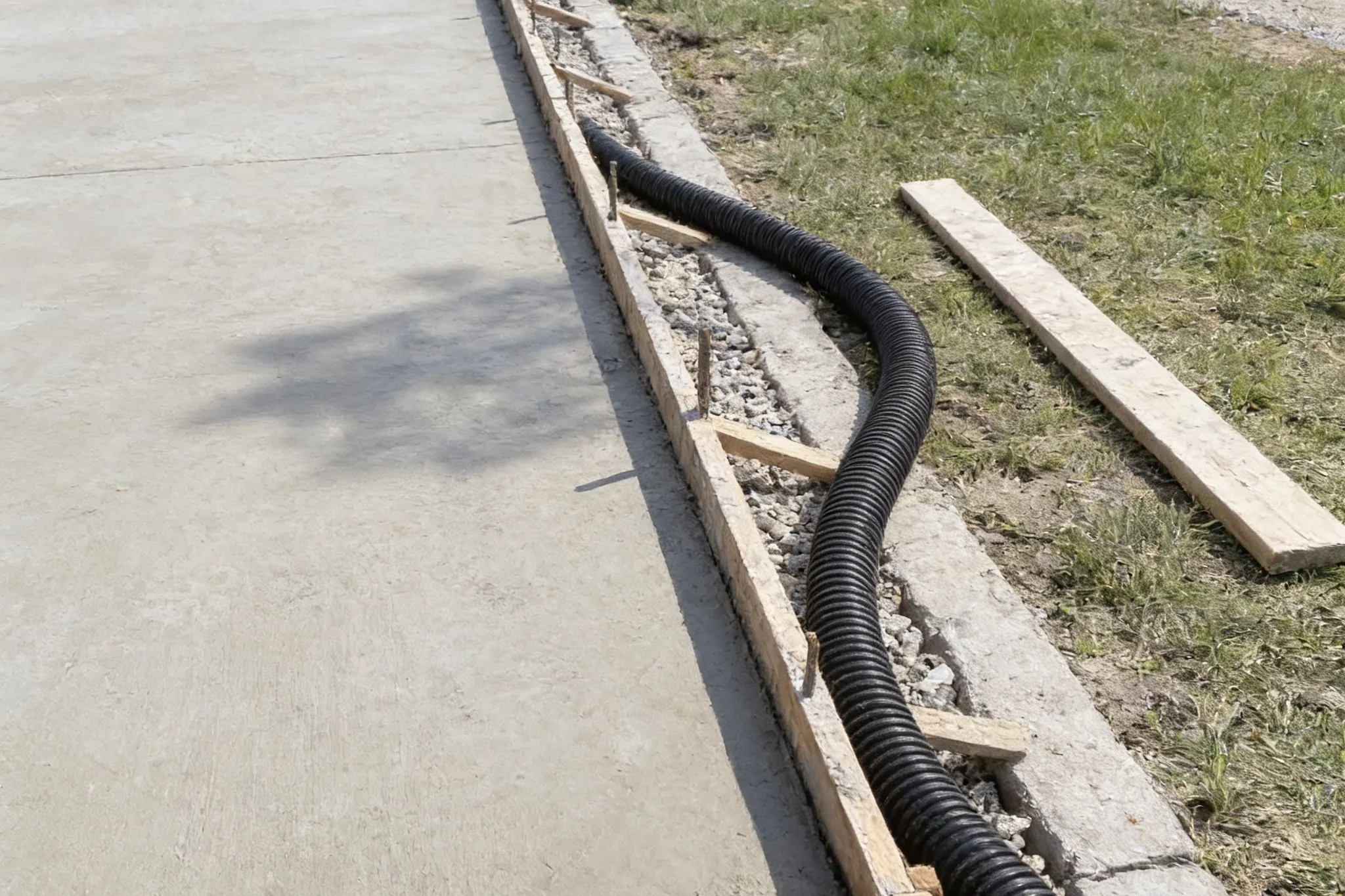
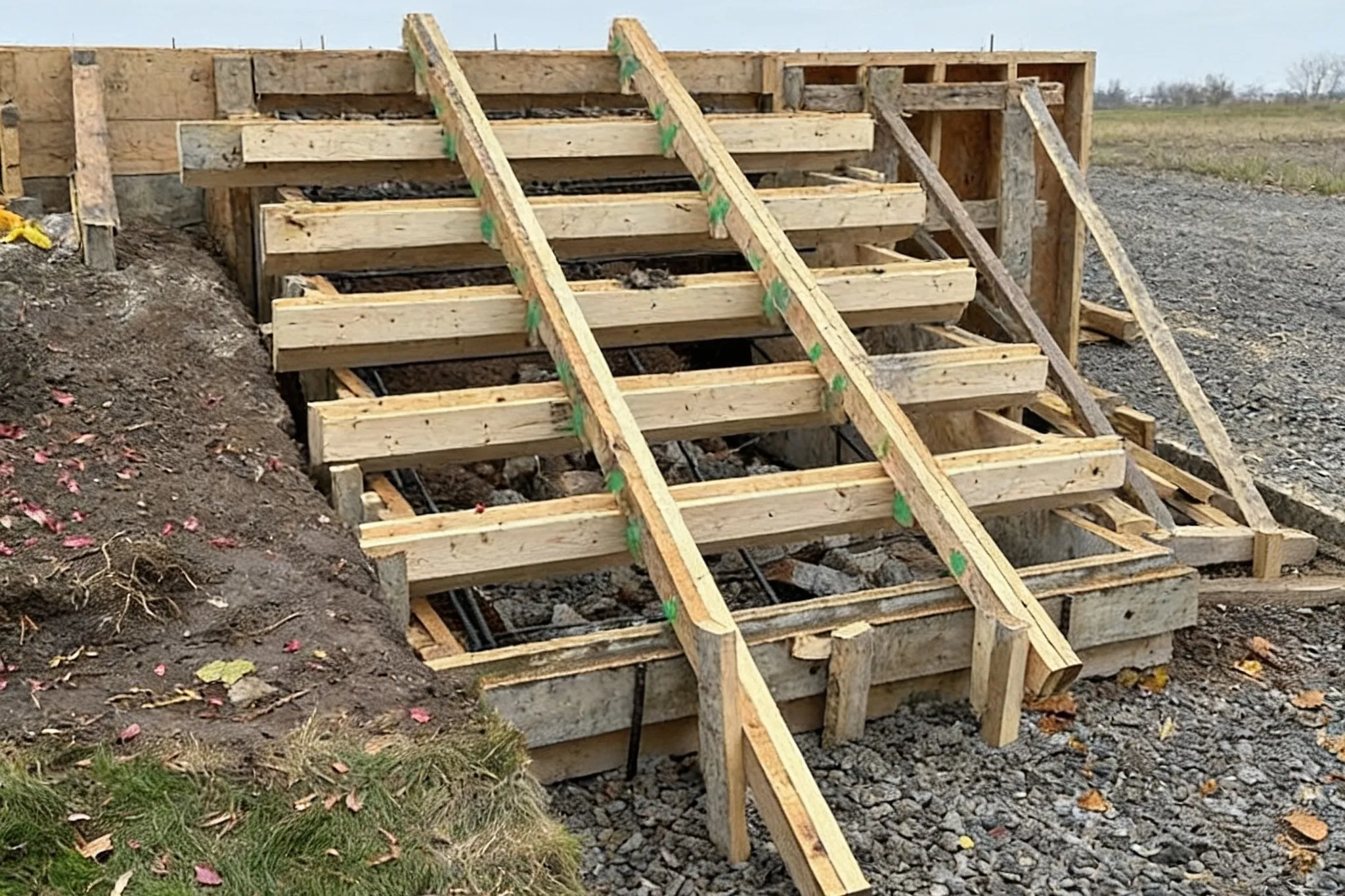
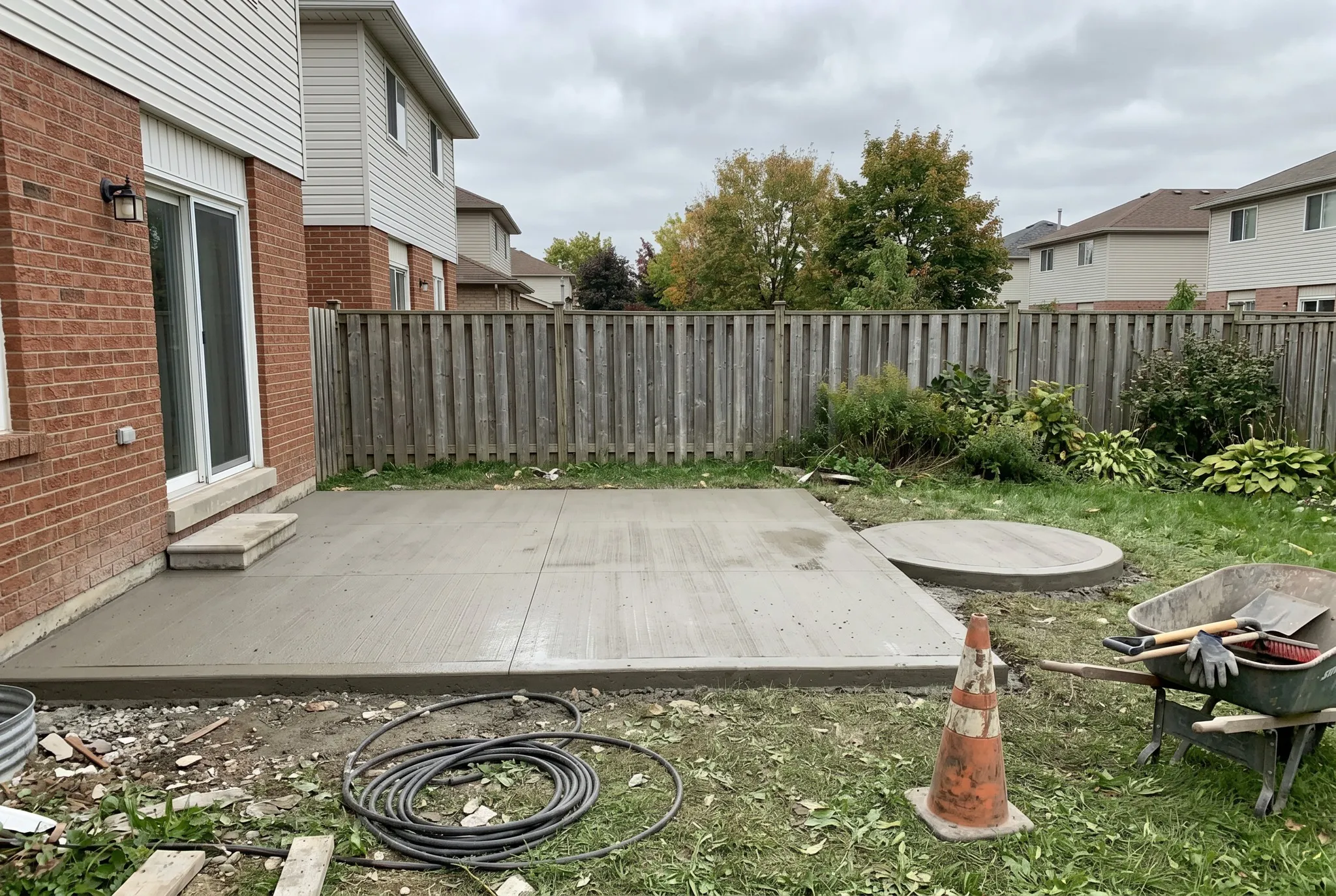
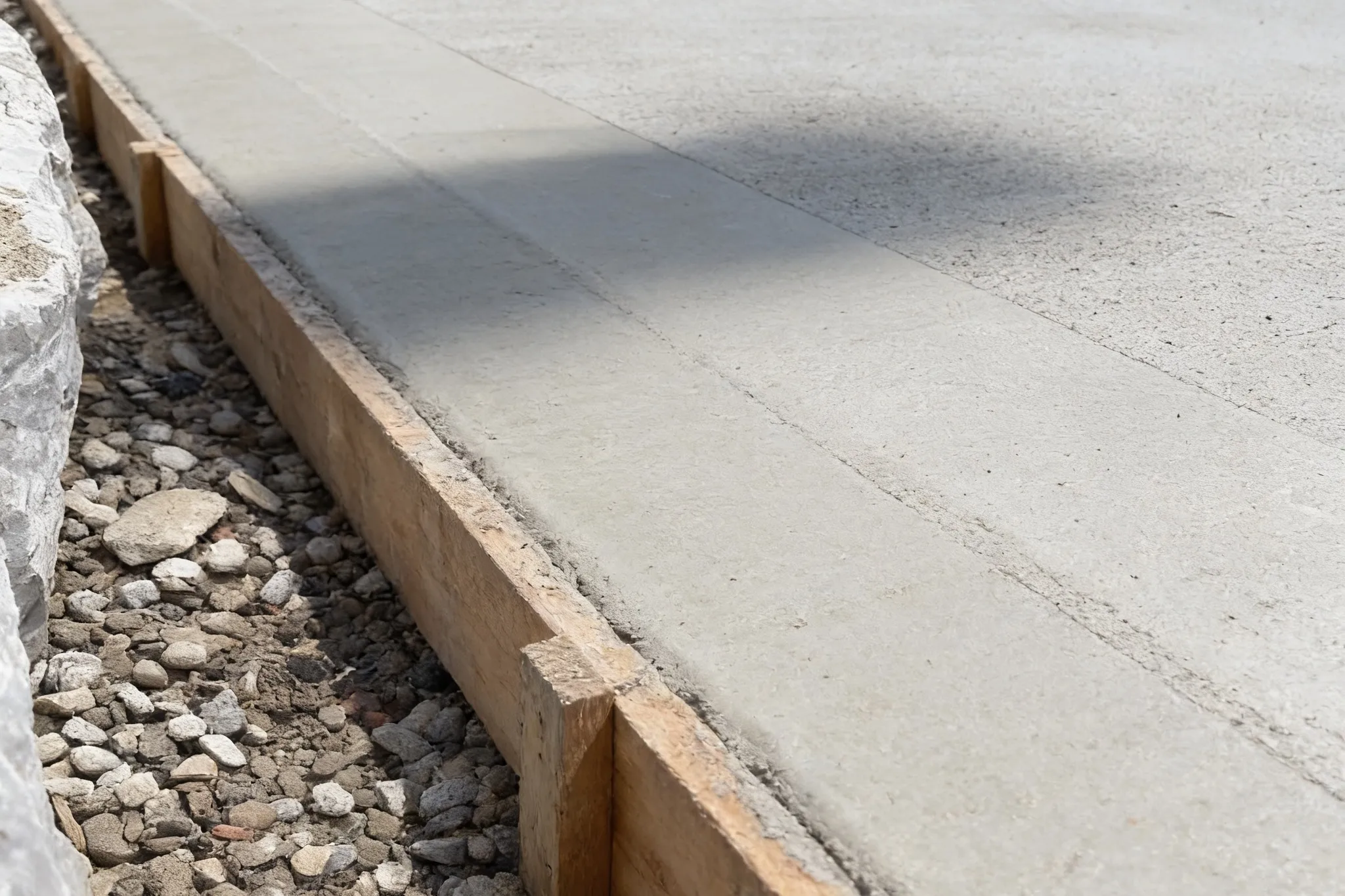
Most Toronto driveways are on their second or third life, so the old slab comes out before anything new goes down. We break it up, haul it away, and get a real look at the ground underneath, which on the lake plain is usually that fine clay and silt. Clay is the hard base to build on. It holds water against the underside of a slab, and when that water freezes it lifts the concrete, then drops it when it thaws, over and over through a winter. The fix is not thicker concrete, it is a deeper compacted granular base that drains, graded to move melt away from the slab and the house.
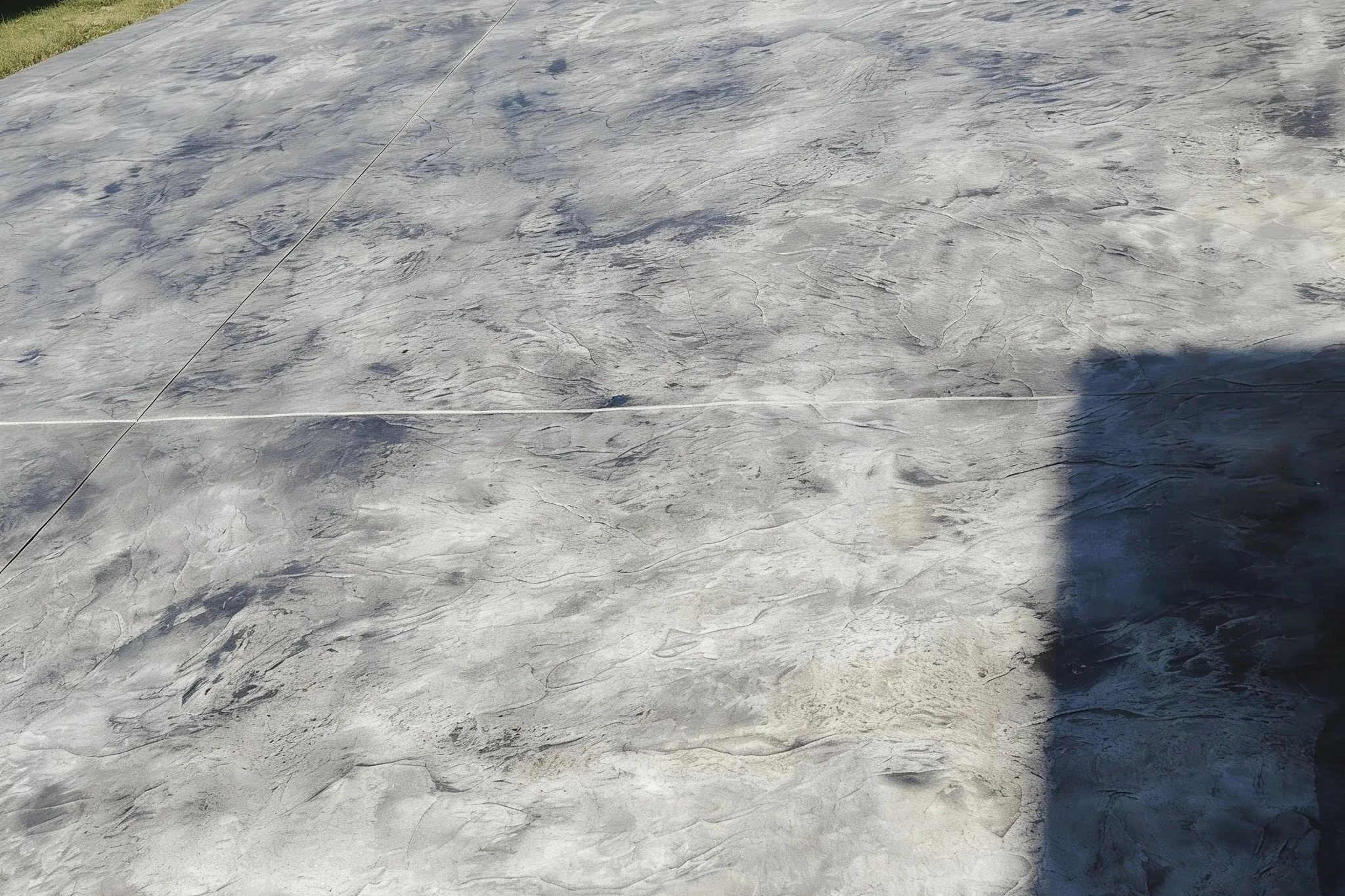
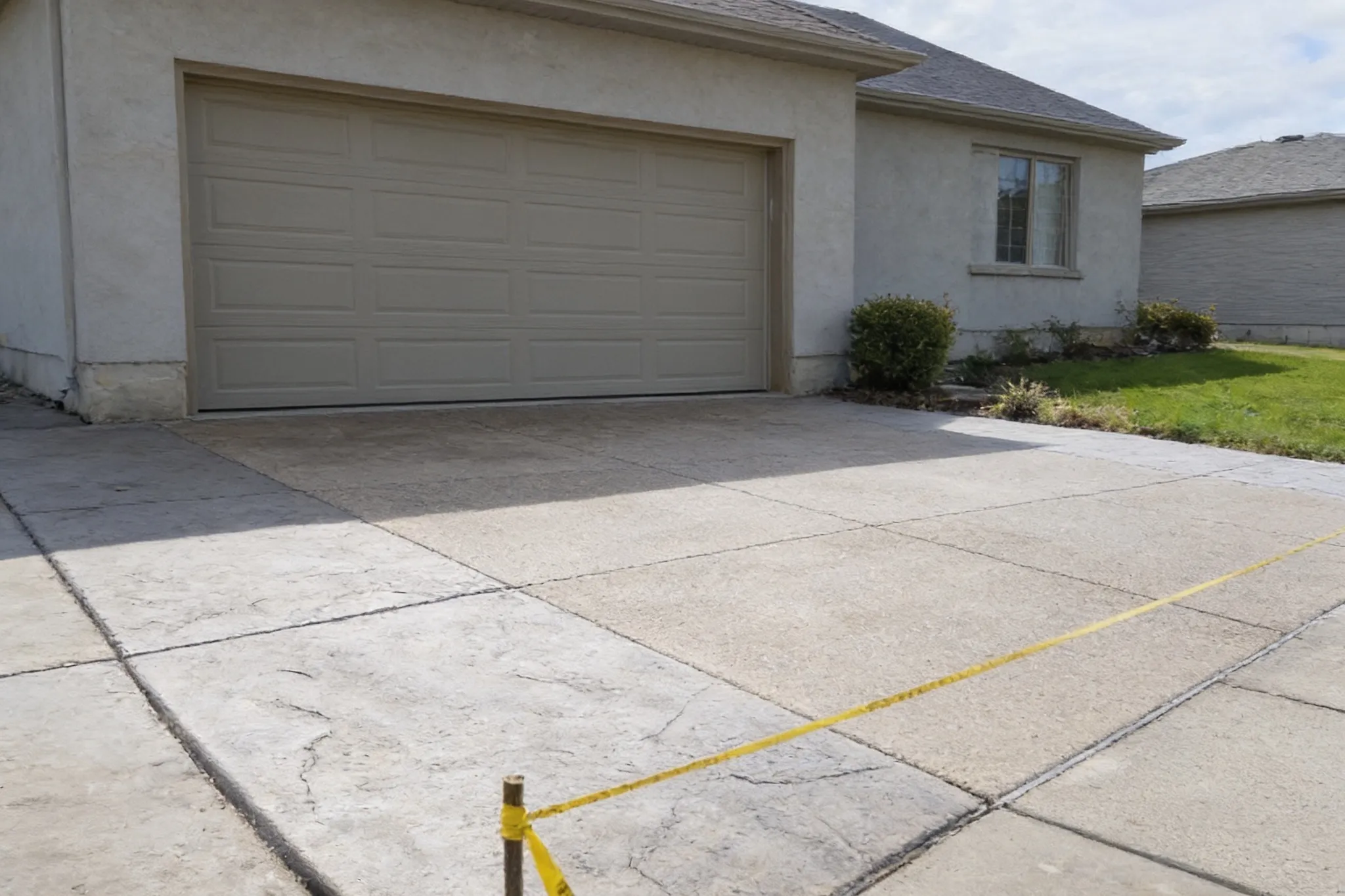
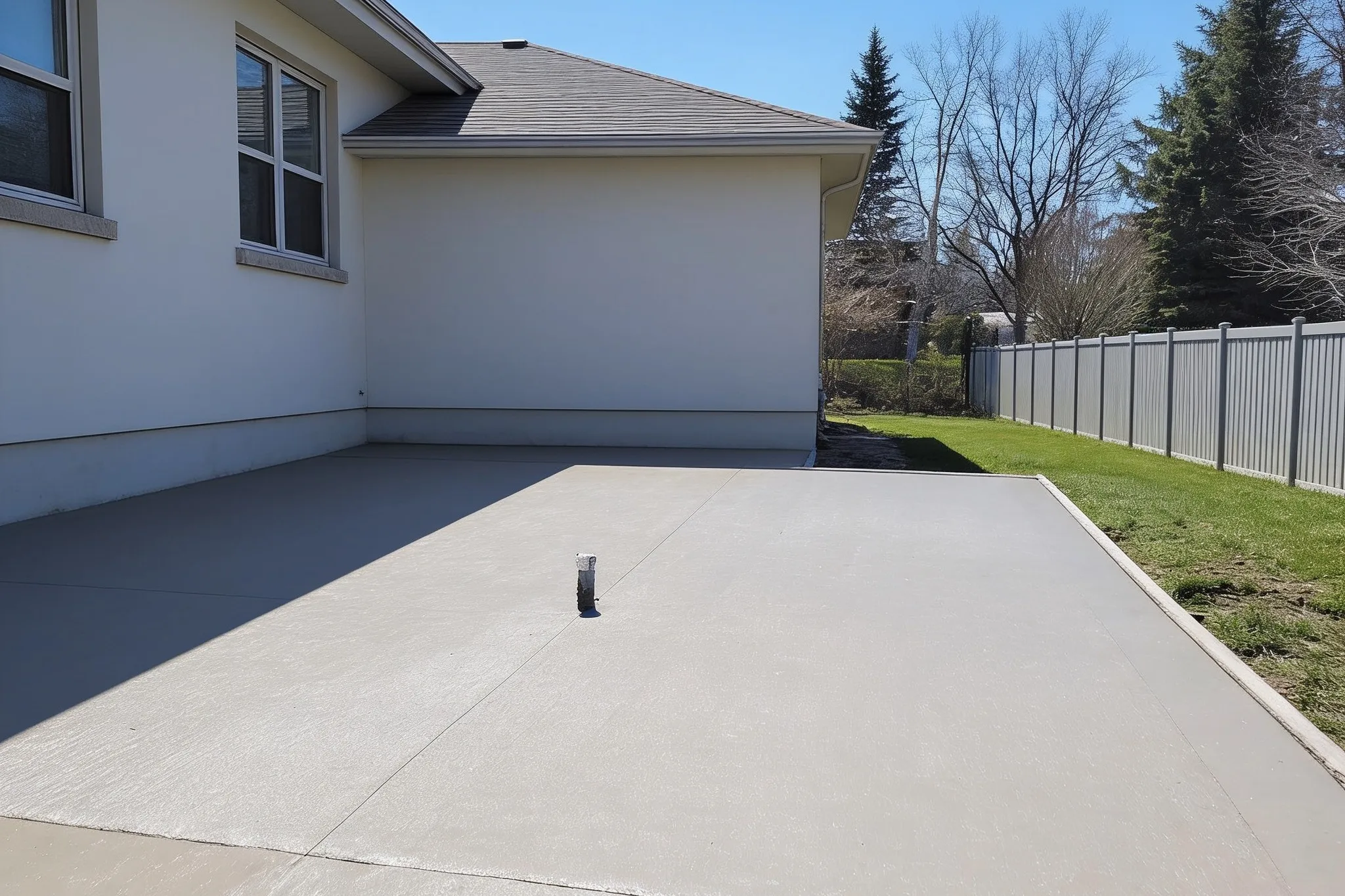
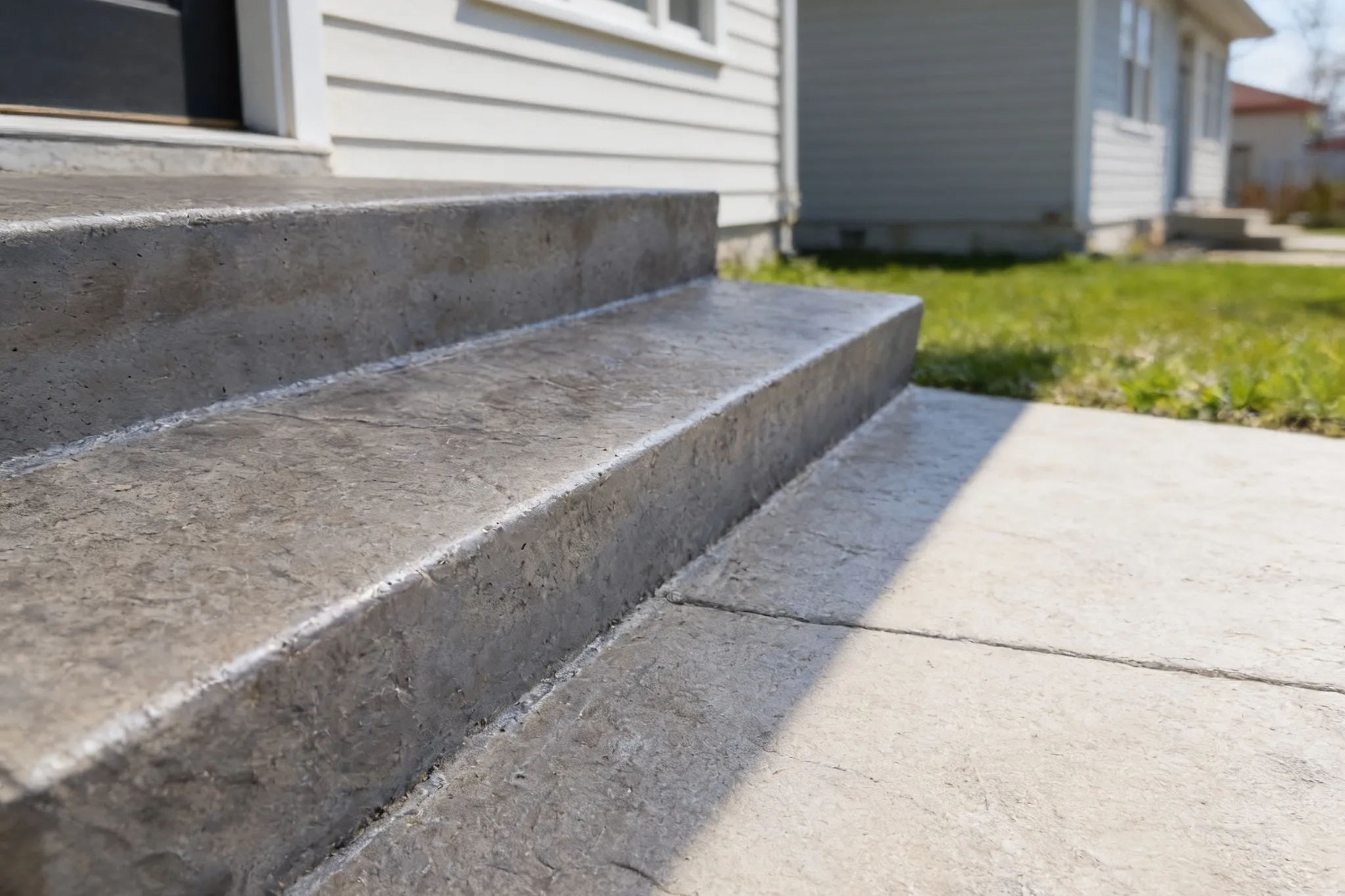
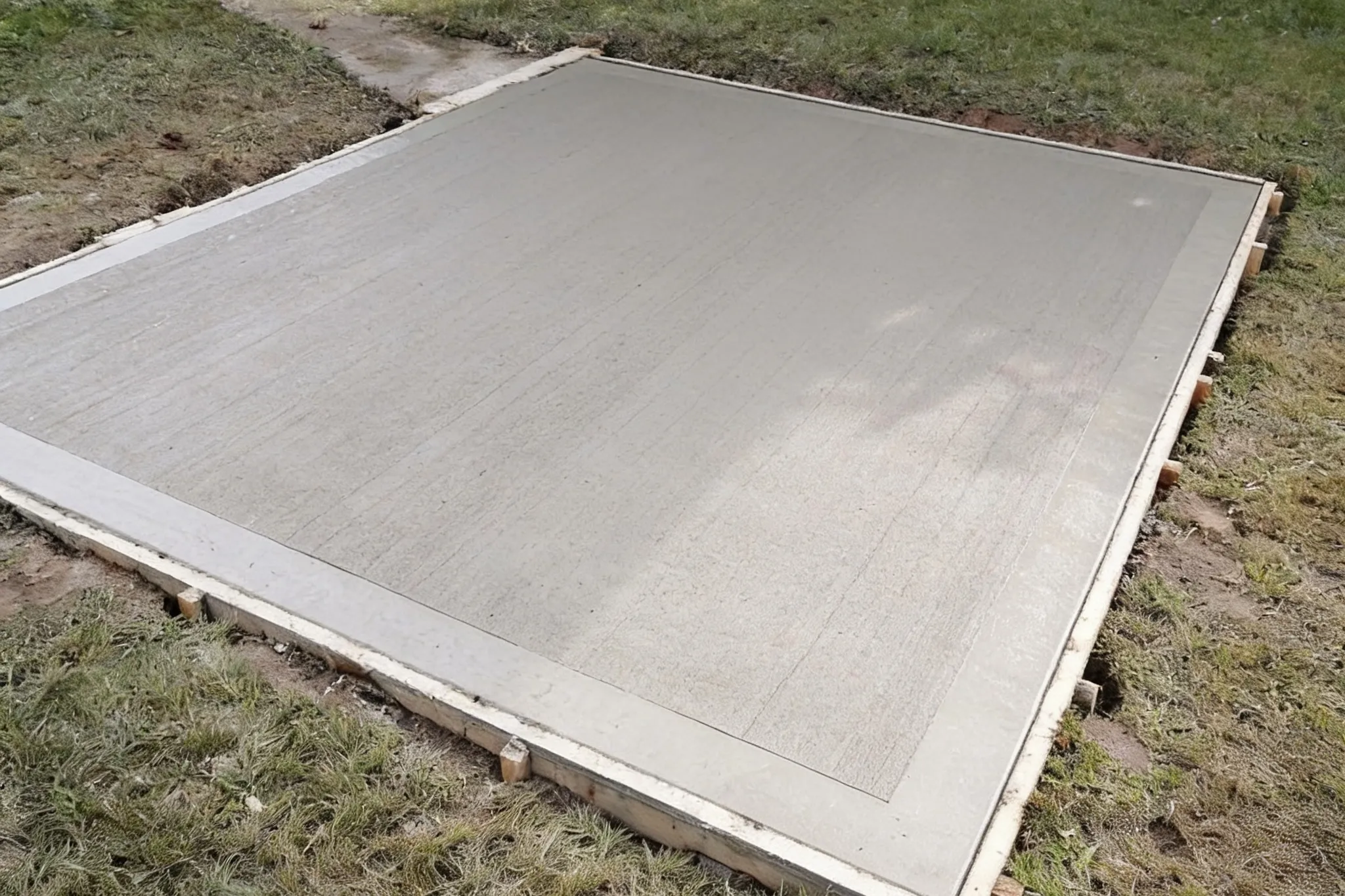
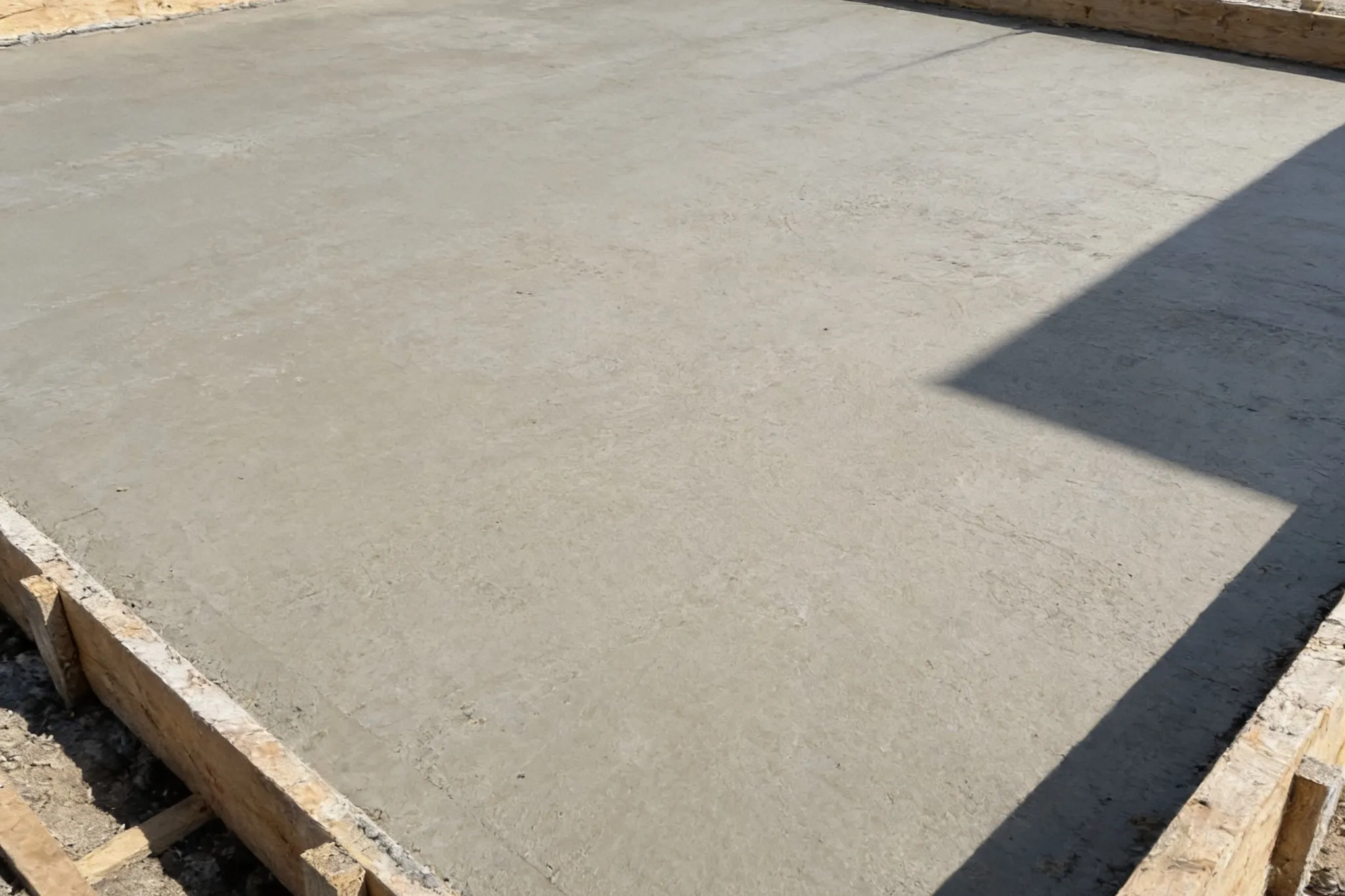
On top of that base we pour 32 MPa air-entrained concrete on every driveway, the mix built for freeze-thaw and de-icing salt, with the entrained air that stops the surface scaling you see on cut-rate work. One straight piece of advice for a new Toronto slab: keep the salt off it the first winter while it is still curing to full strength. Use sand for grip instead, seal it once spring comes, and the surface holds up for decades.
Front-yard parking pads and the city's rules
Plenty of old Toronto homes have no driveway at all, just a parking pad cut into the front yard, and that is not a pour you can simply book. The City of Toronto regulates front-yard parking under Municipal Code Chapter 918 and the zoning by-law: a pad in the front yard needs a front-yard parking permit, the city only grants one where there is no other on-site or laneway parking, the surface has to be permeable, and the permit does not transfer when the house sells. Several downtown wards are excluded from new permits entirely.
We do not pull your permit or promise you will get one, that part is between you and the city. What we do is build to what the approval allows: the permeable surface the by-law calls for where that applies, the dimensions on your permit, and a base and grade that drain instead of running water back at the house. If you are still at the application stage, get the permit sorted first, then bring us the approved drawing and we quote to it.
Straight answers
My driveway is a narrow mutual drive shared with my neighbour. Can you still pour it?
Yes, this is common work in the old city. A mutual drive is a shared right-of-way, often only one car wide, so the first job is access: we work out at the site visit how a truck reaches the back of the lot, or whether the pour goes in by pump or wheelbarrow. We keep your neighbour's access open through the work, tie the new surface cleanly to the boundary, and grade it so water sheds off both halves. The narrow lot changes the planning, not whether it can be done.
Do I need a permit to pour a parking pad in my Toronto front yard?
Usually yes. The City of Toronto regulates front-yard parking under Municipal Code Chapter 918 and the zoning by-law, and a front-yard pad needs a front-yard parking permit. The city only issues one where you have no other on-site or laneway parking, the surface has to be permeable, the permit does not transfer when you sell, and some downtown wards are closed to new permits. We do not pull the permit for you. Get the approval first, then bring us the drawing and we build to exactly what it allows.
There is no room for a concrete truck to reach the back of my lot. How does that work?
It is a normal situation on a tight Toronto lot, and we plan for it before pour day. Depending on the access we either set the truck on the street and run a chute, bring in a concrete pump to reach over or around the house, or move the pour by wheelbarrow down a narrow side yard. We figure out which one at the site visit so the method is settled before any concrete is ordered, and the access plan goes in the written quote rather than turning into a surprise on the day.
How much does a concrete driveway cost in Toronto?
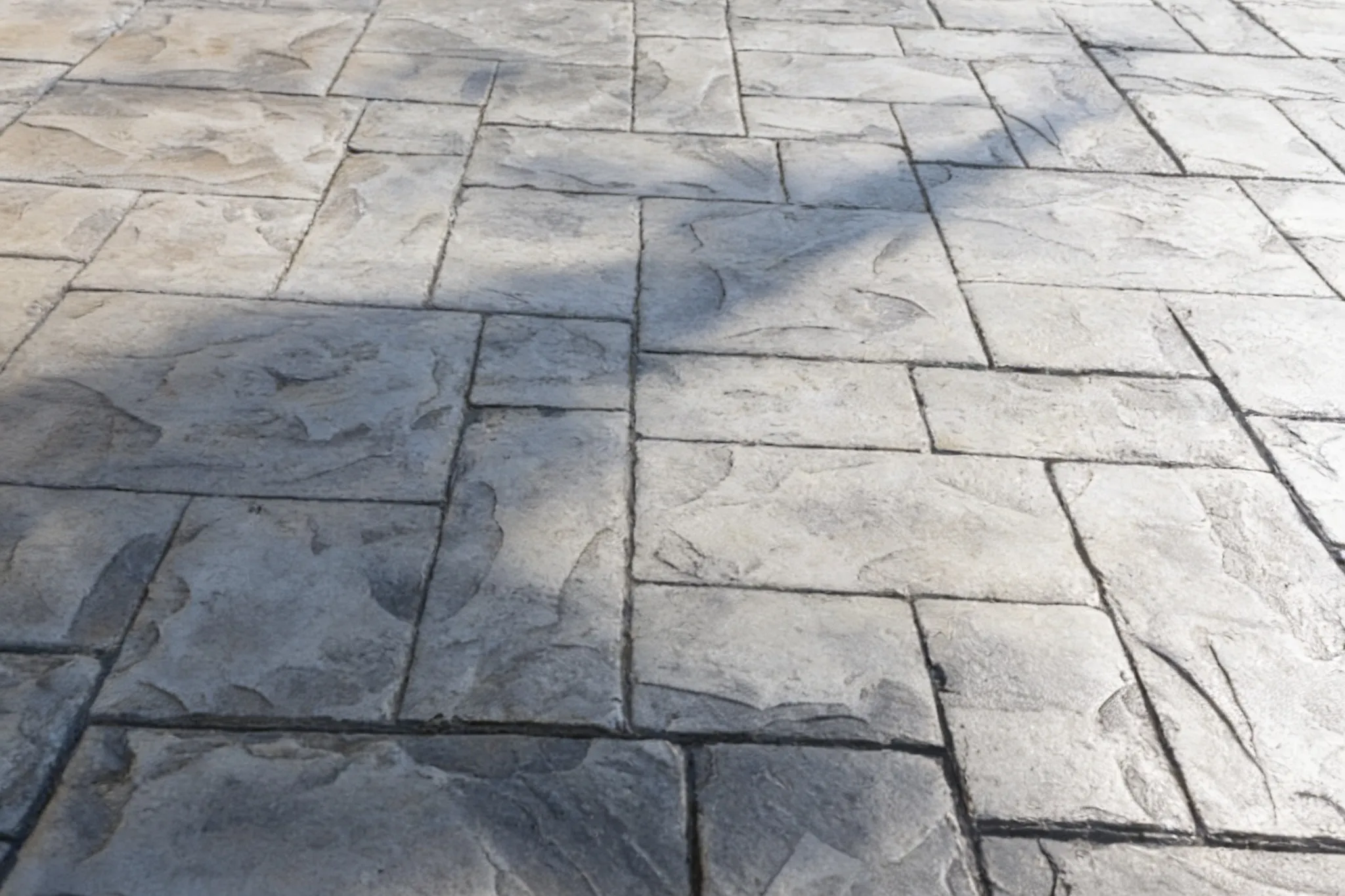
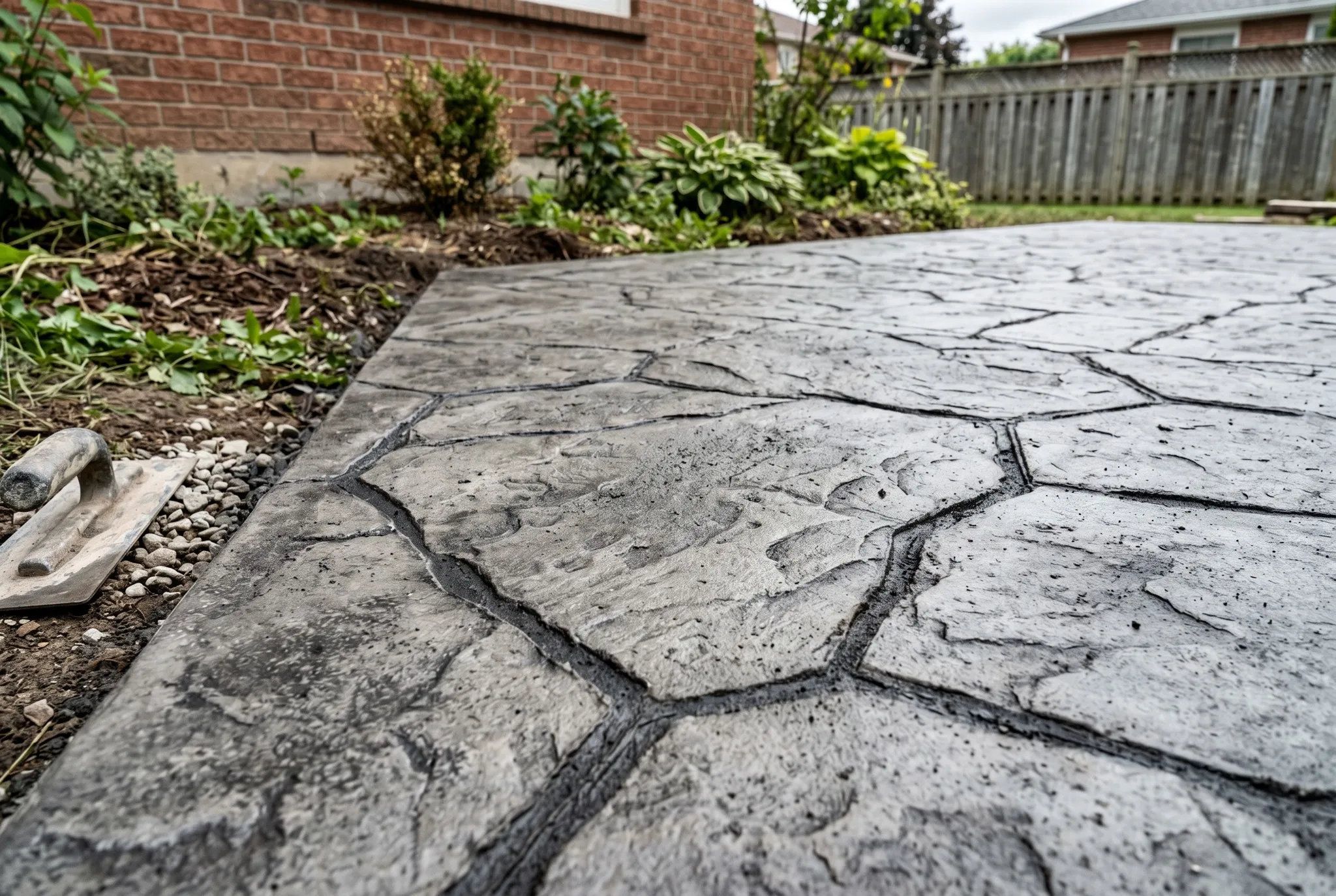
Size sets the floor, then the finish, the base the clay needs, how the concrete reaches the lot, and whether an old slab has to come out, which on a Toronto lot it almost always does. A plain broom finish sits at the low end and a stamped or exposed-aggregate surface costs more on top of it. A flat per-foot number ignores the access and tear-out that actually move the price here, so we quote yours after a free site visit, and the number we give you is the number you pay.
Can you replace a cracked, heaving driveway on an old downtown street?
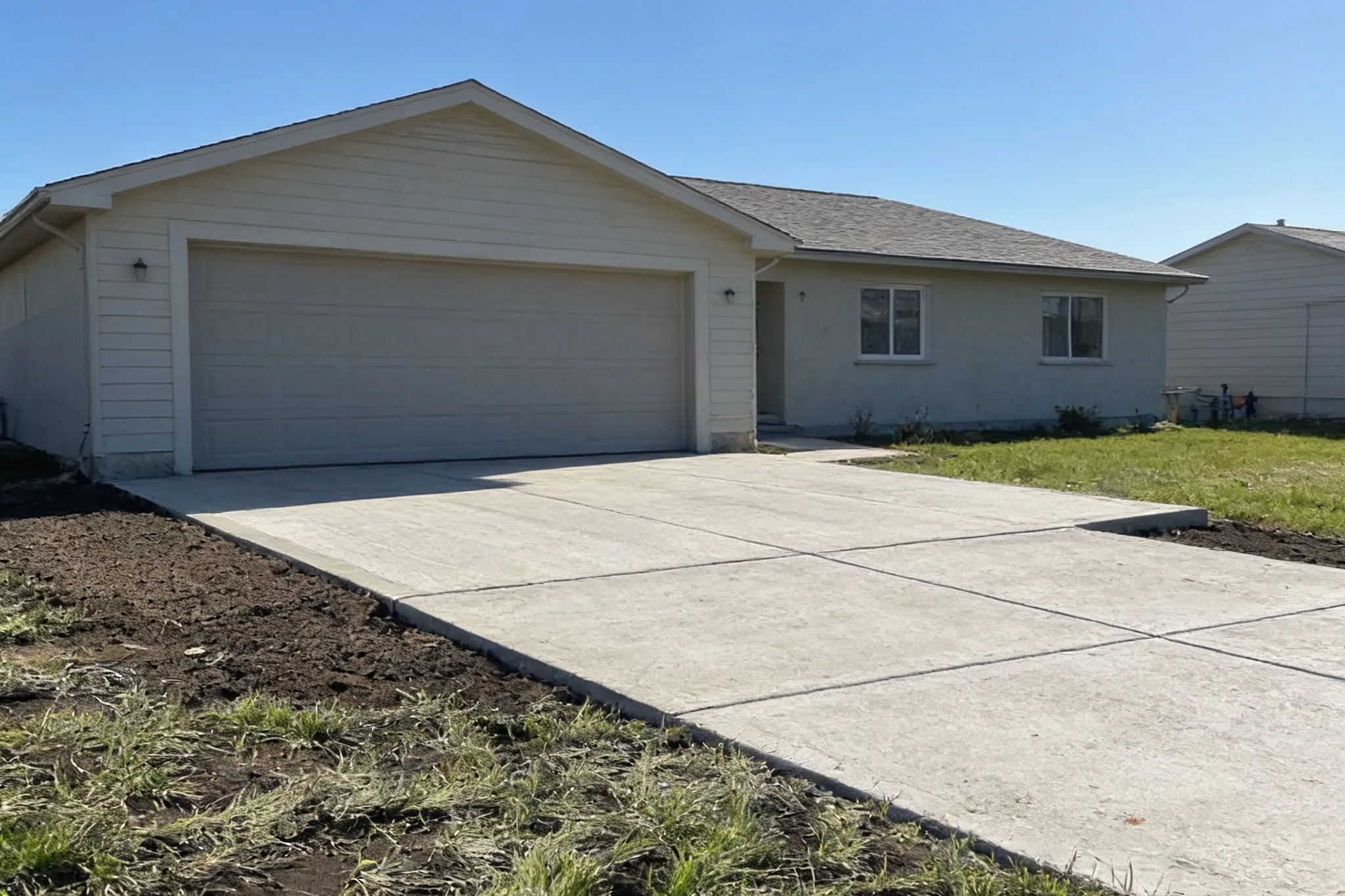
Yes, and it is most of what we pour in the old city. We tear out and haul away the old slab, get eyes on the clay underneath, fix whatever base problem caused the heaving, and pour fresh on a proper compacted base so the new driveway does not repeat the old one's life. On the lake-plain clay that base depth is the whole game. Hauling the old concrete off your lot is part of the written quote we give you up front, not a line that appears at the end.
Keep reading
- Concrete Driveways across Southern OntarioThe full method: the 32 MPa mix, base depth, control joints, finishes and cure times.
- Concrete Contractors in TorontoEverything else we pour and repair across the city, from waterproofing to walkways.
- Concrete Removal & DemolitionA Toronto driveway replacement starts with tearing out the old slab. Here is what that involves.
Tell us about the job.
Send the details and we'll get back to you within one business day with next steps. If water is coming in right now, check the box and we flag it urgent.
Get a straight quote
Free · no pressure · 1 business day