HomeServicesBasement WaterproofingToronto
Basement Waterproofing in Toronto
Basement waterproofing is the most-searched concrete job in Toronto, and the reason is the city itself: a century of brick housing sitting on Lake Iroquois clay near a high water table that was never sealed for the water it holds. We waterproof both ways, an interior weeping-tile and sump system or an exterior dig and membrane, and pick the one your wall actually needs after seeing where the water gets in. The written quote is free, the labour carries a lifetime warranty, and a leak that is active right now gets flagged urgent.
Get a straight quote
Free · no pressure · 1 business day
Reviewed June 2026
Every job is priced individually, not off a price list. Tell us about yours and you get an accurate, no-pressure quote in writing.
If you typed basement waterproofing into a search bar in Toronto, you are part of the single biggest wave of demand the city generates for any concrete trade. That is not random. The old city was built on the flat lacustrine clay of the Lake Iroquois plain along the lake, the water table sits high under the downtown streets, and the housing on top is some of the oldest in the country: brick homes from the late 1800s and early 1900s standing on rubble-stone, early block and the first poured-concrete foundations, none of them sealed the way a basement is sealed today.
Clay does not drain, it stores. After a wet Toronto spring the ground around a century foundation stays saturated for weeks, and saturated clay pushes. That pressure finds the cove joint where the floor meets the wall, a silted-up tie hole, a hairline crack in old block, and forces water through. Rolling waterproof paint over a century downtown wall holds none of that back. The real answer is either catching the water at the footing and pumping it out, or sealing the wall from the outside, and which one your house needs is a question for the wall, not for whatever a salesman is pushing this month.
We install both systems and call it straight after we see where the water comes in. The full method, the weeping tile, the sump pit and pump, the exterior membrane, and how we decide between them, lives on our basement waterproofing page. This page is about why Toronto in particular stays wet, neighbourhood by neighbourhood, and how we handle it across a city this old. Send the form for a free written quote, and if water is coming in right now, check the urgent box.
Why Toronto basements take on water, from the lake clay up
The whole old core sits on the bed of a vanished lake. When glacial Lake Iroquois drained it left a flat plain of fine clay and silt across the shoreline of Lake Ontario, and that is the ground most of downtown and the old streetcar suburbs are founded on. Fine clay is the worst soil to own a basement in, because it holds spring melt and summer rain tight against a foundation instead of letting it soak away.
Near the lake and through the lowest streets the water table also runs high, so an old basement is effectively sitting in damp ground for much of the year. Hold that water against a wall and it becomes hydrostatic pressure, the steady push of standing groundwater looking for a way in. In Toronto that push almost always finds the cove joint, the seam where the basement slab meets the foundation wall, before it finds anything else.
The ravines sharpen it again. The Don, the Humber and the smaller buried creeks cut deep valleys through soft clay and sand, and homes anywhere near those slopes sit on ground that drains slowly and stays wet late into the year. Whichever corner of the city you are in, the fix is the same idea: stop managing the leak and give the water a real path away from the wall.
Century brick and the silted clay weeping tile under it
A Toronto brick home from before the First World War was not built to be dry the way a new build is. The foundation is usually rubble stone, early concrete block, or one of the first poured walls, and water moves through stone and block across whole joints and faces, not at one tidy crack you can inject and forget. That is why a single spot repair so often fails on these houses: the wall is leaking in ten places at once.
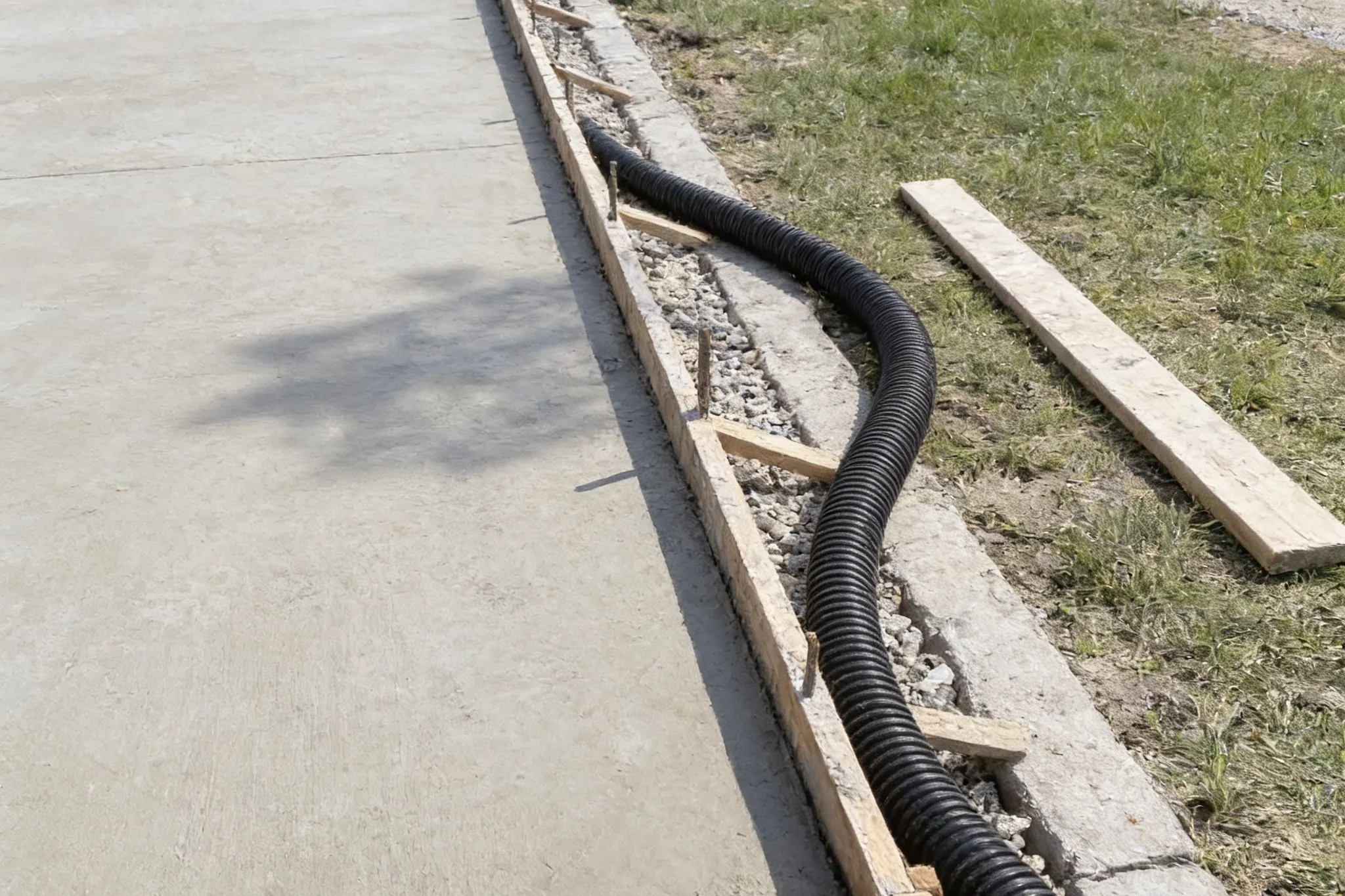
Underneath, the original drainage is the catch. Most of these homes were built with clay weeping tile at the footing, short lengths of unsealed clay pipe meant to carry water away. A hundred years on, that pipe has silted up, crushed, or collapsed, so the water that should drain at the footing just pools there and loads the wall. When we open a Toronto job and find old clay tile, replacing the drainage is usually half the work.
That is what steers the method. On a leaking century wall under steady pressure, an interior weeping-tile system that runs fresh pipe along the inside of the footing and carries everything to a sump pit and pump is often the durable answer, and it can be done from inside without excavating the whole lot. Where the wall itself is failing from decades of wet, the outside dig and a membrane is the job that keeps that wall dry instead of forever managing the leak. We tell you which one your wall is asking for.
When waterproofing meets underpinning on the oldest homes
On a lot of older Toronto houses the basement was never meant to be lived in, so the ceiling is low and the floor is shallow. When owners lower that floor to make real living space, the job is underpinning: excavating below the existing footing and rebuilding it deeper, one bay at a time, while the house stands. It is engineered work on a permit, and on the rubble-stone foundations common in the old core it is slow, because grout has to be packed into a very irregular wall.
The reason it matters here is that underpinning and waterproofing are the same dig. Once the floor is open and the footing is exposed, the new weeping tile, the gravel, the vapour barrier and the sump go in as part of the rebuild, so the basement comes out both deeper and dry in one pass. If you are weighing a basement lowering on a Leslieville or Annex home, the waterproofing decision rides along with it rather than waiting for the next wet spring.
One city, very different houses, from the Beaches to Scarborough
Toronto is not one housing stock, it is several, and the waterproofing changes with each. The old-Toronto cores, the Annex, Riverdale, Leslieville and the Beaches, are almost entirely century brick on stone or early block, which is the heaviest waterproofing territory in the city: full interior systems, exterior membranes and the occasional underpinning dig.
The postwar bungalow belts read differently. The red-brick bungalows across Etobicoke, North York and Scarborough went up in the 1950s and 60s on poured foundations, newer than the core but old enough that the original weeping tile is past its life and the footings predate current frost rules. Those basements leak too, just more often at a crack or a tired tile line than across a whole stone wall, so the system is sometimes lighter. We size the job to the house in front of us, not to a city-wide template, and Toronto sits at the far end of our range, so the work goes onto a planned trip with a real date rather than a same-day truck.
Straight answers
Why does my old Toronto basement get water through the floor and not just the walls?
Because of where the pressure finds the gap. The city sits on Lake Iroquois clay that holds melt and rain against the foundation, and with a high water table downtown that standing water becomes hydrostatic pressure pushing up and in. The weakest seam in most century basements is the cove joint, the line where the slab meets the wall, so water shows up at the floor edge before it shows anywhere else. A real system collects that water at the footing and pumps it out, and the quote names where it is getting in.
Interior weeping tile or exterior membrane for a century Toronto brick home?
The wall decides that, not whoever is quoting it. An interior weeping-tile system runs fresh pipe along the inside of the footing to a sump pit and pump, clears most leaking walls, and installs without digging up a narrow downtown lot or a mature front garden. The exterior route, a full dig to the footing and a membrane bonded to the outside face, is the heavier job, and it is what keeps a crumbling stone or old-block wall dry rather than just catching what gets through. Where it is a close call on a Toronto home, we walk you through each option against your own wall so the call is yours to make.
Can you waterproof a rubble-stone or early-block foundation in the old core?
Yes, and those are the norm in places like the Annex and Riverdale. Stone and old block leak across whole joints and faces rather than at one neat crack, so injecting a single spot rarely solves it. On those walls we are usually running an interior system that picks up water along the full length of the footing, or sealing the outside face with a membrane once the wall is dug clear. We look at how the wall was actually built, because a century rubble-stone wall and a poured one are genuinely different jobs and we quote them that way.
Why does my old clay weeping tile keep failing, and do you replace it?
Most pre-war Toronto homes were built with short lengths of unsealed clay pipe at the footing, and after a hundred years that pipe silts up, crushes or collapses. Once it stops draining, water pools at the footing and loads the wall, which is why an old basement that was fine for decades suddenly goes wet. When we open a job and find failed clay tile, replacing the drainage with proper weeping tile run to a sump is usually a core part of the fix, not an extra.
We want to lower our basement. Is that the time to waterproof too?
Almost always, yes. Lowering an old Toronto basement means underpinning, excavating below the footing and rebuilding it deeper one bay at a time, and that opens the exact same ground a waterproofing job needs. With the floor up and the footing exposed, the new weeping tile, gravel, vapour barrier and sump go in as part of the rebuild, so the basement comes out deeper and dry in one pass instead of two separate disruptions. It is engineered work on a permit, so we plan it around your set of drawings.
How much does basement waterproofing cost in Toronto?
There is no flat rate, because an interior system and a full exterior dig are not the same job and posting one number for both would mislead you. What moves the figure on a Toronto home is depth to the footing, access on a lot with no rear lane, how many walls are wet, whether the old clay tile has silted up and has to be replaced, and whether the basement is also being lowered. We write a real figure after seeing where the water comes in, the site visit and the written quote cost nothing, and the number we give you is the number you pay.
Water is coming in right now. What do I do?
Send the quote form and check the box that says water is actively coming in, and we flag it urgent. In the meantime, move anything valuable off the basement floor, and if it is safe, get roof water away from the house by extending a downspout, because one dumping right beside an old foundation feeds the exact pressure causing the leak. We get back to every request within one business day, and because Toronto is the far end of our range, flagging it urgent is what gets it onto the soonest planned trip.
Keep reading
- Basement Waterproofing across Southern OntarioAcross the old lake-clay cores and the bungalow belts, this is how we weigh an interior weeping tile against an exterior membrane dig.
- Concrete Contractors in TorontoEverything else we pour and repair across the amalgamated city, from the old cores to the bungalow belts.
- Foundation RepairWhen a single crack in an old Toronto poured wall is the whole leak, not a wall wet end to end, injection is the lighter fix.
Tell us about the job.
Send the details and we'll get back to you within one business day with next steps. If water is coming in right now, check the box and we flag it urgent.
Get a straight quote
Free · no pressure · 1 business day